

Lot 70
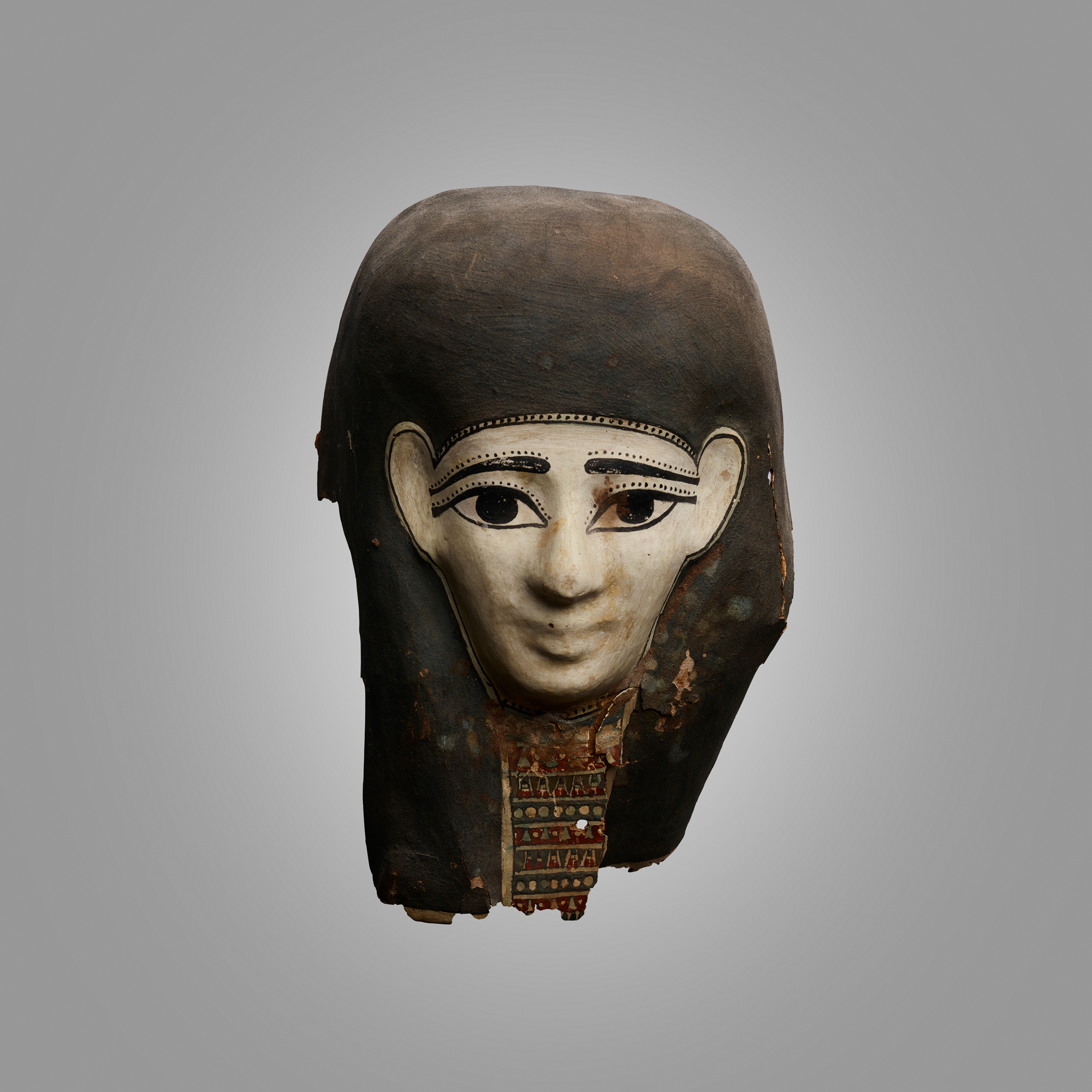
ANCIENT EGYPTIAN CARTONNAGE MASK
PTOLEMAIC PERIOD, C. 2ND - 1ST CENTURY B.C.
Auction: 26 November 2026 from 14:00 GMT
Description
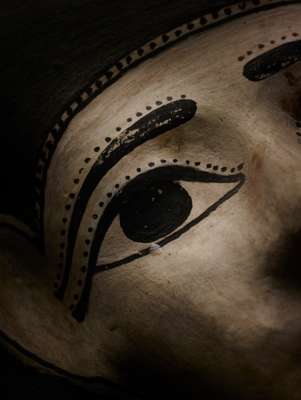
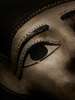
painted pigment over cartonnage, the white face with almond eyes and large black irises, with cosmetic lines extending beyond the eyes and accentuating the eyebrows, the ears emerge from in front of the dark blue wig, with painted details of the collar below executed in red, white and green
Dimensions
35cm tall
Provenance
Acquired by Stanley J. Seeger (1930–2011) at Christie's, London, Antiquities, 15th May 2002, lot 613
Thence by descent.
Footnote
The ancient Egyptians believed that the first to achieve eternal life following death was the god Osiris. Following his murder by his brother Set, Osiris’ body was scattered throughout Egypt. It was Osiris’ devoted wife Isis who travelled across the country, collecting body parts with the aid of the other gods, to restore her husband. Thus, Osiris became the first mummy and the mythological basis for Egyptian embalming practices.
It is through painted scenes such as this that we can understand how the deceased wished to be transfigured, achieving eternal life in the same way as Osiris himself. This is further emphasised by the use of white paint to the face, reflecting a change in funerary artistic conventions during the Ptolemaic and Roman periods, when the earlier preference for gilded faces increasingly gave way to white-painted examples. Whilst gold represented the incorruptible flesh of the gods, white was similarly associated with purity, sacredness and divine radiance. Its luminous appearance could therefore evoke the supernatural nature of the gods, allowing the deceased to be presented as a divine being. As such, the use of white on a mask such as this was not simply an aesthetic choice, but helped to express the deceased's transformation into an immortal being in the hope of eternal life.