

Lot 20
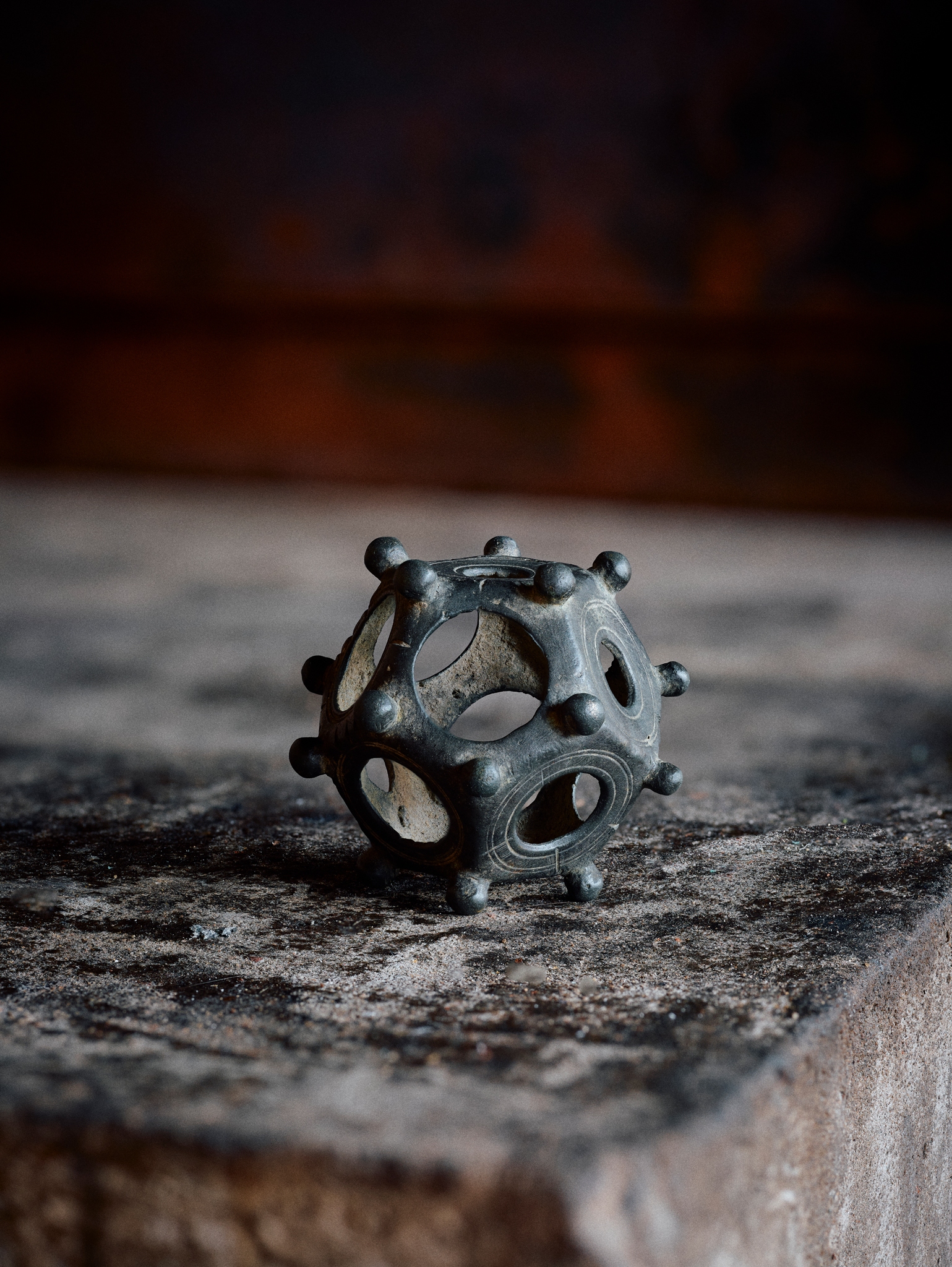
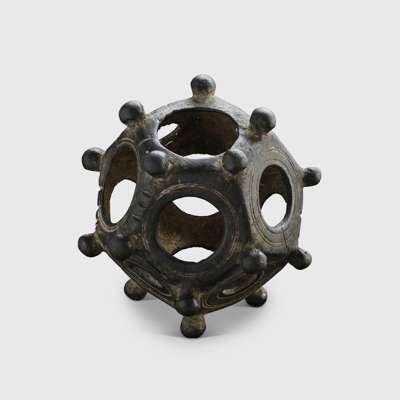
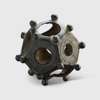
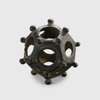
ROMAN BRONZE DODECAHEDRON
DORSET, UNITED KINGDOM, C. 2ND - 4TH CENTURY A.D.

Auction: 26 November 2026 from 14:00 GMT
Description
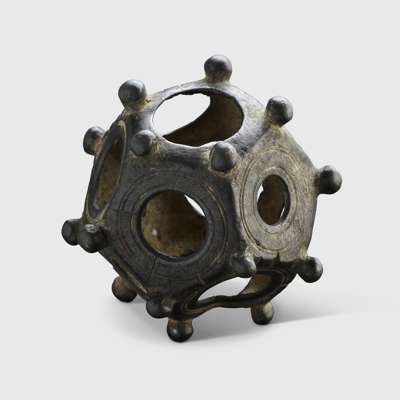
cast copper alloy, with twelve faces and holes of various sizes on each face and a small sphere on each corner; each perforation is decorated with concentric bands and carved lines
Dimensions
4.5cm tall, 69g
Provenance
Private collection, acquired 2025 at a local antique fair, Somerset, United Kingdom, subsequently reported and recorded with local finds liaison and Portable Antiquities Scheme;
Previously in a private collection, southwest England, found whilst fieldwalking in Dorset, 1980s.
Footnote
Among the most mysterious objects to survive from the ancient Roman world are the so-called dodecahedra. First brought to the attention of archaeologists in the 18th century, these unusual twelve-sided objects have continued to puzzle academics for almost three-hundred years. Over one-hundred examples are now known, yet despite extensive theories, their precise purpose remains unknown.
Dating from the 2nd - 4th centuries A.D., they are found almost exclusively in the north-western provinces of the Roman Empire, with the majority originating from the territories of modern-day France and Britain. A handful have been discovered further east, as far as modern Hungary and Serbia, yet none have been recorded in Spain, North Africa or the eastern Mediterranean, nor the Roman heartland of Italy.
Formed of copper alloy, these hollow objects are typically between 4 -10cm in diameter, with twelve pentagonal faces, each pierced by a circular aperture of varying size. Small spherical knobs project from each of the twenty corners, while some examples feature concentric engraved circles surrounding the openings. Their casting would have required considerable skill, suggesting that they were relatively valuable objects.
Numerous theories have been proposed to explain their function, ranging from candleholders, dice and gaming pieces to astronomical instruments, surveying devices and measuring tools. One particularly intriguing suggestion is that they were used in textile production, perhaps as implements for knitting gloves. Their variously sized openings could, in theory, have accommodated different finger widths, allowing individual fingers to be knitted to a consistent size. Others have suggested that they served a religious or ceremonial purpose, perhaps as objects used in divination or ritual practices.
Despite this range of interpretations, none has been proven. No surviving Roman text describes the objects, nor have they been identified in contemporary paintings, mosaics or sculpture. Their discovery in a variety of settings, including settlements, military sites, religious contexts and burials, has done little to resolve the mystery.