

Lot 19
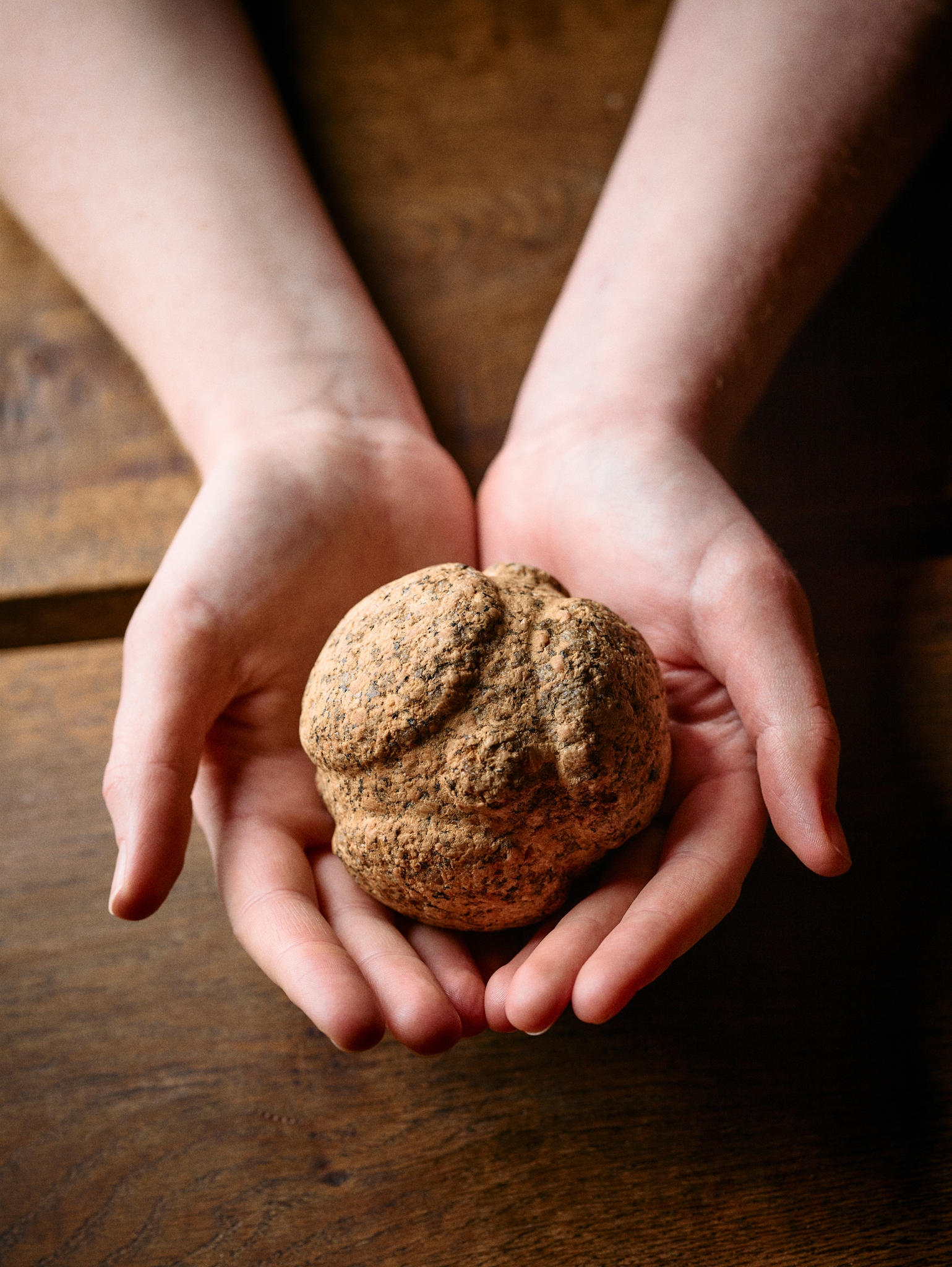
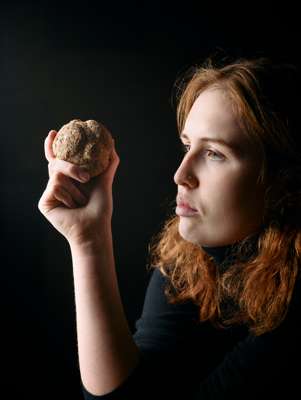
SCOTTISH NEOLITHIC STONE BALL
NORTHEAST SCOTLAND, NEOLITHIC, C. 3200 - 2600 B.C.


Auction: 26 November 2026 from 14:00 GMT
Description
pink granite carved into a petrosphere, and adorned with eight raised bosses, four large and four small, evenly spaced across its surface to create a balanced form
Dimensions
7.4cm wide, 503g
Provenance
Found in Aberdeenshire, north-east Scotland, during the 1990s and subsequently held in a private collection. Accompanied by a certificate disclaiming Crown title, issued under Treasure Trove Scotland reference number TTNC2026/0494.
For another example also carved from pink-red granite, see the specimen held at The Hunterian Museum, Glasgow. Although granite was commonly used for Scottish carved stone balls, pink-red granite appears to have been a relatively uncommon choice. Notably however, the earliest Scottish carved stone ball to enter a museum collection was itself carved from pink granite, entering The Hunterian as part of the 1783 founding bequest of the antiquarian Dr William Hunter.
Footnote
The carved stone sphere is an icon of Scottish prehistory, remarkable for their geometric precision and the enduring mystery surrounding their purpose.
Carved between four and a half and five thousand years ago, more than five-hundred examples are known, with the vast majority discovered in northeast Scotland, though they have been found as far afield as Orkney, Ireland and northern England. Made from a variety of stones, their forms and decoration vary considerably, yet each sphere was shaped with considerable care, its surface transformed into a precise arrangement of raised bosses, often alternating in size to create a striking geometric pattern. This care and elaborate decoration suggest that they were valued for reasons beyond any obvious practical use.
Their function remains uncertain. More practical explanations have suggested that they functioned as mace heads or elaborate slingstones. Whilst others have argued that they may have served as oracles, tactile memory aids through which oral histories were remembered and passed down in a pre-literate society, or as “tokens” granting the holder the right to speak during communal gatherings. Further evidence for their possible ritual importance comes from the Ness of Brodgar in Orkney, where a carved stone ball was deliberately placed beneath a wall during construction, raising the possibility that these objects held an apotropaic significance, offering protection to a building and its occupants. Whatever their original purpose, the simple fact of the considerable time and skill required to carve one is confirmation of their prestige. There is considerable evidence that these objects, whatever their purpose, were passed down through generations, no doubt acquiring further significance as they become entangled with stories, traditions and beliefs.
The people and societies that carved these stones were deeply connected to the materials from which objects were made and the places from which they came. The arrival of farming had brought about a new material existence, as the cultivation of crops and the rearing of domesticated animals tied people to places in new ways, while large scale monuments transformed their experience of landscape and place. Monumental sites may also have provided settings in which the movements of the sun and changing seasons were observed, helping communities understand the cycles of the natural world upon which their agricultural lives depended. It also brought about a revolution in the types of objects that people made, carried and valued.
Certain stones may have been regarded as more than simply raw materials, possessing qualities that set them apart from the ordinary world. Across Neolithic Britain, particular materials appear to have been sought out, exchanged and deposited in ways that suggest they carried meanings beyond their everyday utility. Stone axes fashioned from Langdale tuff, for example, were transported over considerable distances from their source in the Lake District, reaching communities across Britain and Ireland, with some examples also found in continental Europe. The choice of material may therefore have been as important as the object itself, with particular stones valued for their rarity, appearance, place of origin or perceived qualities. In this context, the carved stone ball can be understood not simply as an example of skilled craftsmanship, but as an object whose significance may have been inseparable from the natural properties of the stone from which it was made.
In this context, the pink granite from which the present example was carved takes on an interesting dimension. Its surface is flecked with quartz, which catches the light and creates a gentle shimmer as the object is turned. To a Neolithic viewer, this may have been more than an attractive feature. The stone seems to possess a life of its own, changing subtly in appearance as it moves between light and shadow. Its colour and its lustre distinguish it from an ordinary piece of rock, giving it a quality that might have seemed unusual or even extraordinary. We cannot know how its makers understood these properties, but it is possible that such qualities were interpreted through a spiritual worldview in which the natural world was alive with meaning.
When discussing the stone axes of the unrelated Corded Ware culture of Central and Northern Europe (c. 2900 – 2350 B.C.), the archaeologist André Grisse (2000) wrote:
"These artefacts convey a spiritual and ideological message. Their forms, shaped by mathematical principles… bore invisible geometric traces, suggesting their creators' advanced understanding of design and symbolism. Those who carried these objects were likely not just warriors but also scholars or astronomers, connected to earthworks."
The makers of Scottish carved stone balls similarly inhabited a world in which monumental architecture, symbolic objects and observations of the natural world and heavens were closely intertwined. As Stewart-Moffitt (2022) suggests, these spheres may have served as expressions of shared cultural identity, their carefully ordered forms conveying a significance beyond their physical function. Like the stone axes discussed by Grisse, they invite us to consider whether mathematical precision and skilled craftsmanship were not simply aesthetic choices, but ways of giving form to ideas and beliefs that remain elusive today.
Beauvarlet, M. (2000) La Hache de Pierre à Travers le Monde. Paris: Editions Errance.
Garrow, D. and Wilkin, N. (2022) The World of Stonehenge. London: British Museum Press.
Stewart-Moffitt, C.L. (2022) The Circular Archetype in Microcosm: The Carved Stone Balls of Late Neolithic Scotland. Oxford: Archaeopress.