

Lot 177
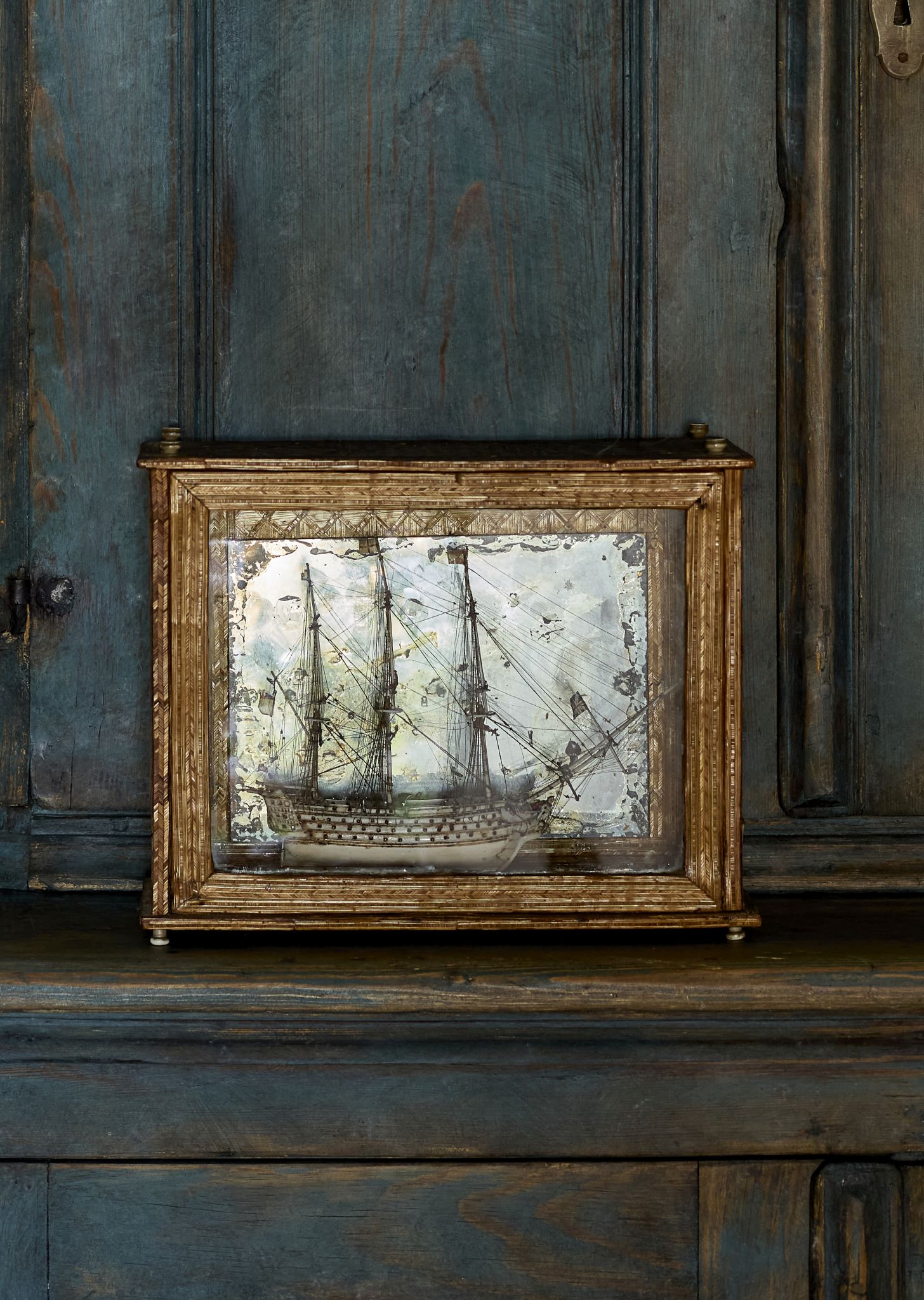
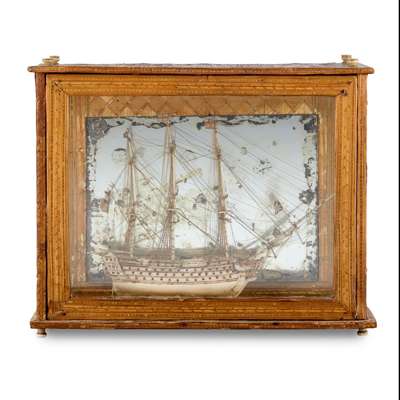
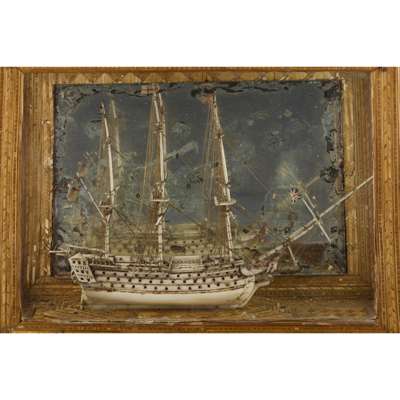
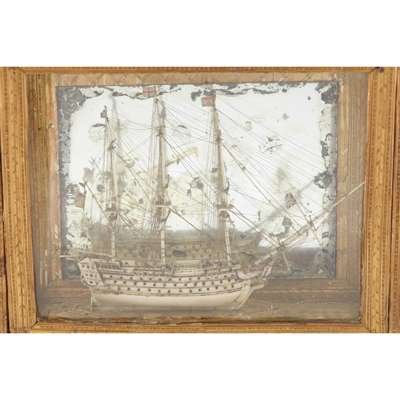
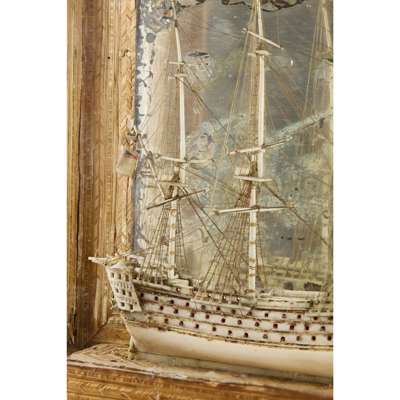
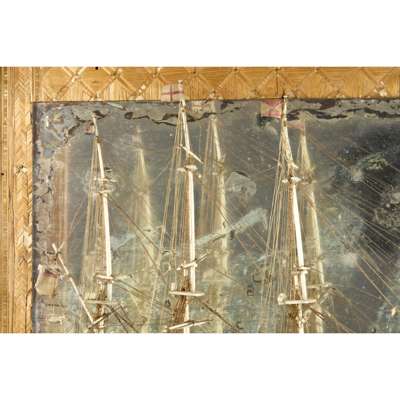
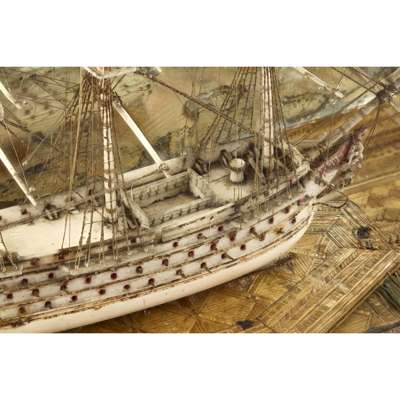
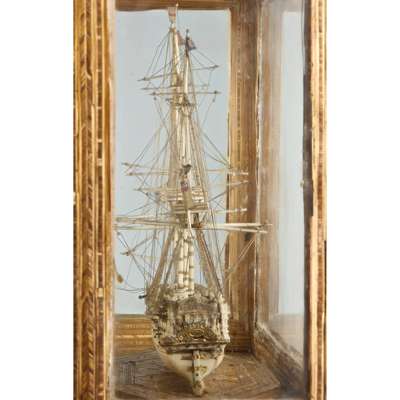
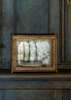
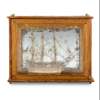
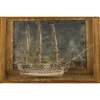
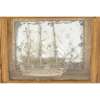
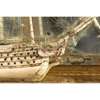
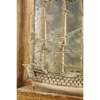
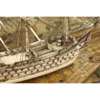
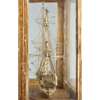
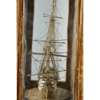
NAPOLEONIC PRISONER-OF-WAR BONE MODEL OF A THREE MASTED SHIP IN A STRAW-WORK DISPLAY CASE
EARLY 19TH CENTURY
Auction: Day One | Wednesday 18 Feb at 10am | Lots 1 to 352
Description
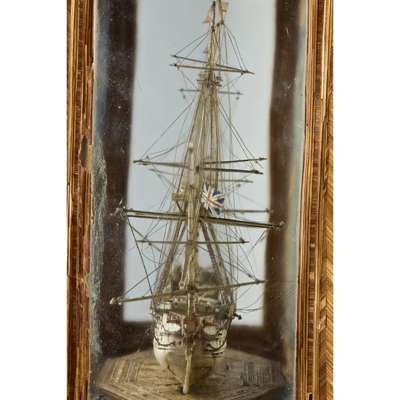
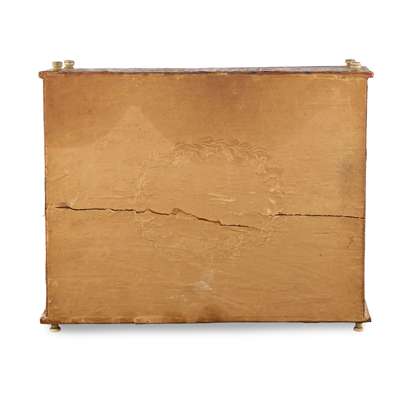
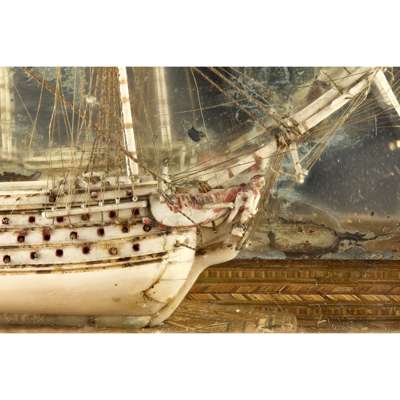
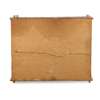
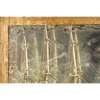
rigged with deck fittings, lift boats and a British ensign, polychrome figurehead, mounted on an octagonal straw-work base, within a straw-work parquetry case with a mirrored back and glass front and sides, the top with turned bone finials, with similar turned bone feet
Dimensions
23cm high, 28cm wide, 11cm deep
Footnote
Prisoners-of-war captured by the British during the French Revolutionary Wars (1792-1802) and the Napoleonic Wars (1803-1815) were housed in on shore prisons or prison ‘hulks’ (a dismantled war or merchant ship) in various parts of England and Scotland. The conditions would have been overcrowded and grim. Although many nationalities were represented in these prisons the majority were French. Unlike in Britain, where soldiers were recruited primarily from the lower orders of society, in France there was a system of universal conscription, which meant that the French prisoners came from all walks of life and had a wide variety of skills and experience. When faced with years of confinement and boredom craft skills could be put to use in the production of ship models, which could be sold at prison markets. Prisoners would form working groups to produce large numbers of models. The main materials used were wood and bone, but baleen, thread and straw were also used. Bone ships models are both an art form and a record of ships of the period. They were made from memory so there are representational inaccuracies. The models were built to be sold or traded at prison markets. The bone used was saved from food rations, as beef portions were common fayre. The bones were collected and treated. Duties included sorting bones according to size and quality. Prisoners would be responsible for cleaning and bleaching the bones using several different techniques: sunlight, sulphur dioxide, hydrogen peroxide, lime, and soaking in potash lye. Bones would need to be prepped and cut very thin for planking. Tools were also constructed such as small lathes for turning intricate parts of the ship. Other supplies were procured from items like barrels, broken glass, and more. Other needed materials would be supplied by the guards. Silk threads were traded and often human hair was used for rigging. Prisoners made other items such as toys, automatons, games, and straw work. The mirror backed case of the current lot is an example of marquetry straw work. It is likely that some prisoners had worked in the already well-established straw marquetry trade before the wars, pooling and sharing their skills in the prisons, along with those of conscripted marquetry workers. Ship models range in size range in size from two inches to seven feet long. Delicate, intricate and highly detailed ship models reveal the incredible skills and ingenuity of imprisoned craftsmen, and they never fail to fascinate.