

Lot 324
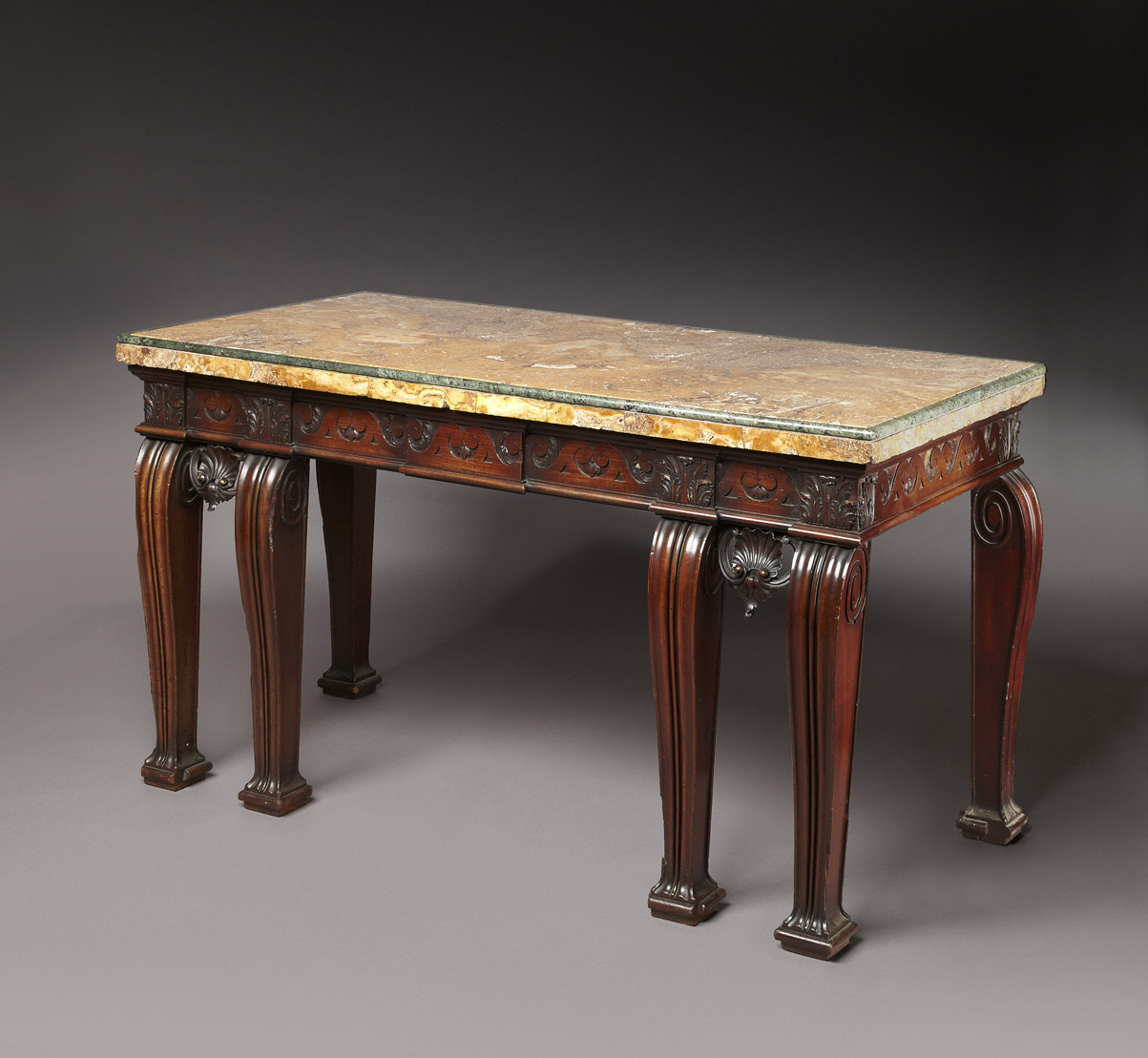
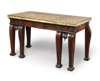
IMPRESSIVE GEORGE II MAHOGANY AND ALABASTER SIDE TABLE IN THE MANNER OF WILLIAM KENT
CIRCA 1750
Auction: 23 October 2013 at 12:00 BST
Description
the rectangular alabaster veneered top with a moulded verde antico edge above a wide frieze with carved acanthus and Vitruvian scrolls, the apron with pierced and carved pendant shells, raised on six reeded volute scroll legs ending in spreading square feet
Dimensions
151cm wide, 85cm high, 73cm deep
Footnote
Provenance:
From the estate of Diana, Countess of Albemarle
Note:
Note: This robust and stately table bears similarities to a pair of marble side tables designed by the neo-Palladian architect William Kent for the dining room alcoves at Houghton Hall in Norfolk (fig. 1) The use of shell motifs below the frieze between the exterior pairs of legs, and the placement of the rear legs at ninety degrees from the front legs are design elements that can be seen in the Houghton tables. While the frieze itself has a different outline and carved decoration, the overall feel of the table is the same, although on a much less opulent scale. Kent's designs for furniture, based on the classical architecture of Andrea Palladio (1508-1580), were meant for specific installations in the buildings he designed, and as Palladio makes no reference to furniture in his Quattro Libro dell'Architettura, Kent is left to downscale the architectural elements and incorporate them into furniture. Kent's designs were published and copied, often interpreted for a more domestic, albeit still grand, interior. A related table at Newhailes in Musselburgh, outside Edinburgh, is a pared down version of Kent's design (fig. 2). It has a much more simplified frieze of carved key design and the legs are thinner and longer, creating a lighter overall effect. The Albemarle table, with its substantial legs, which most likely were once raised on block feet as the Houghton tables are, would have been an important commission when ordered, however no records how been found to indicate who the maker may have been.
It is possible the present table comes from Quidenham Hall in Norfolk, home to the Keppel family from the end of the 18th century until the 1948. Purchased by George Keppel, the 3rd Lord Albemarle in 1800, the original early 17th century house was extended by John Bristow, a wealthy merchant, who added the Palladian East Wing and West Portico after purchasing the house in 1740. The table potentially was supplied at that time in keeping with the style of the new building and removed from Quidenham when the house was sold by the 9th Earl in 1948.