Lot 88
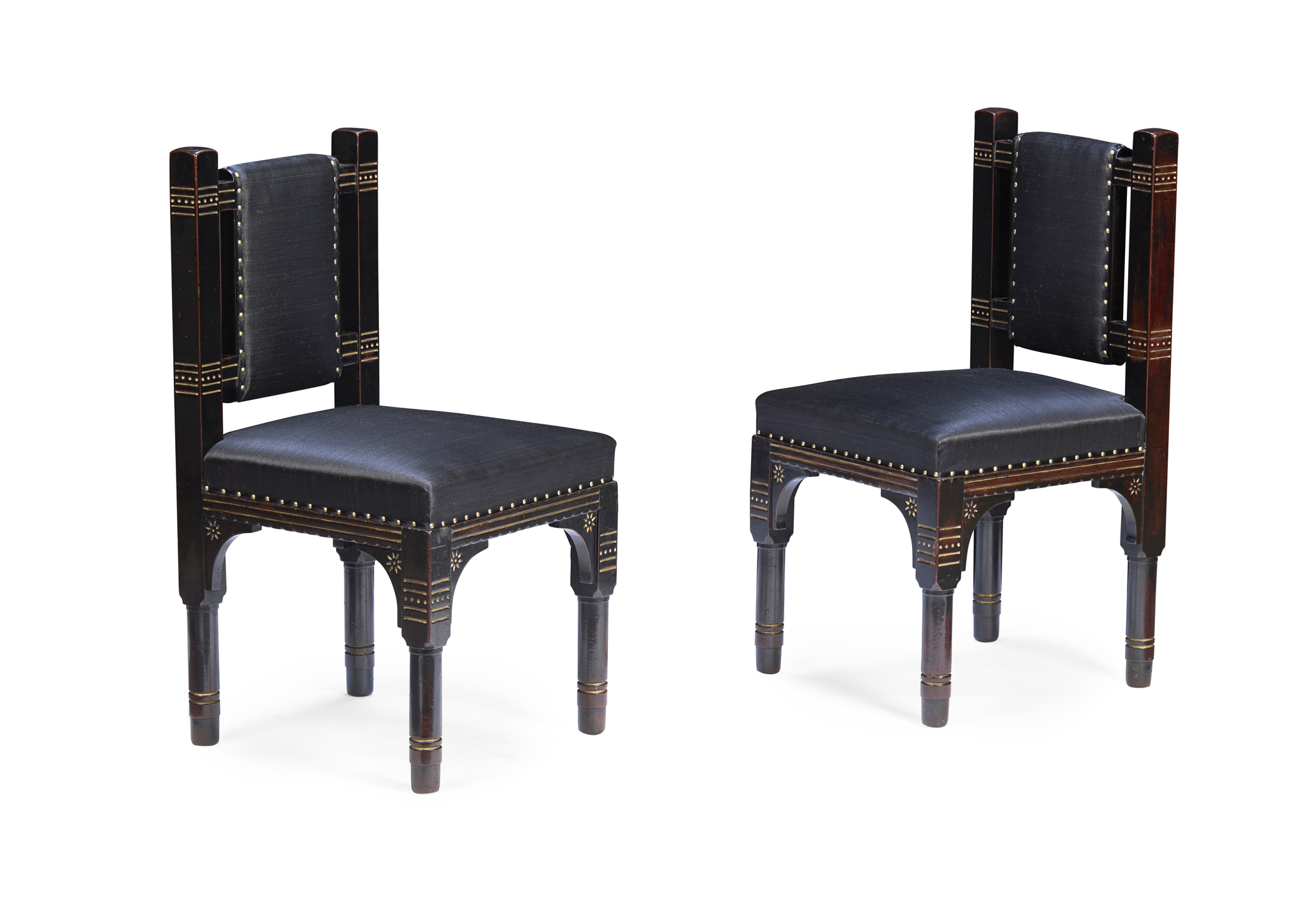
ATTRIBUTED TO CHRISTOPHER DRESSER (1834-1904) FOR THE ART FURNISHER'S ALLIANCE
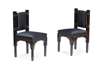
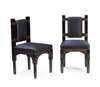
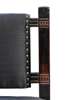
PAIR OF SIDE CHAIRS, CIRCA 1880
Auction: Day One | Lots 1 to 229 | Wed 15th April 2026 from 10am
Description
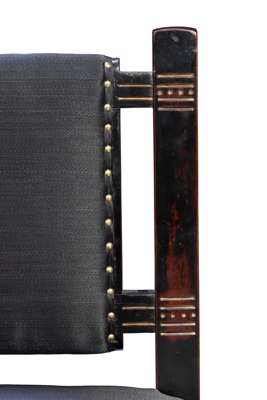
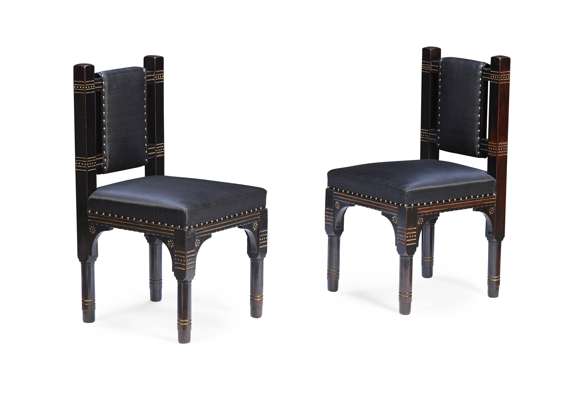
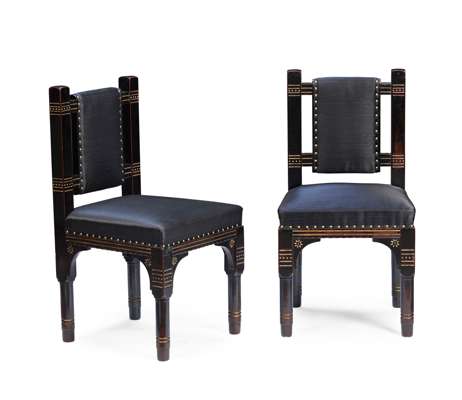
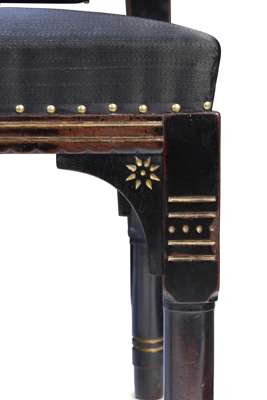
ebonised wood, with incised and gilded decoration and upholstered seats and backs (2)
Dimensions
47.5cm wide, 90cm high, 50cm deep
Footnote
Literature: Lyons H. Christopher Dresser: The People's Designer: 1834-1904, Woodbridge, 2005, pp. 136-151 for related furniture designs by Christopher Dresser.
Fine Art Society, London 'The John Scott Collection: The Designs of Dr Christopher Dresser', 2014, pp. 68-78 for examples of furniture by Christopher Dresser.
The Art Furnisher's Alliance was an association of art manufacturers founded in 1880 by Christopher Dresser. The principal objective of the organisation was to facilitate the purchase and sale of high-quality goods distinguished by artistic design and to provide a comprehensive service for the “complete artistic furnishing of a house.” George Hayter Chubb was appointed chairman, while Dresser served as Art Manager, overseeing the design of furniture, pottery, glass, and metalwork. He was assisted in this role by Holme and Arthur Lasenby Liberty.
Photographic evidence preserved in the archive of Messrs Chubb indicates that furniture marketed by the Alliance was stylistically more refined than other pieces by Dresser illustrated in The Furniture Gazette. Nevertheless, the characteristic features of Dresser’s design approach are clearly evident. These include the use of ebonised wood, the incorporation of Japanese stylistic influences, and the combination of Egyptian, Greek and Gothic motifs. Simplified and symmetrical plant forms, frequently employed by Dresser, are also visible in the decorative treatment of several chairs.
Additional objects attributed to both the Alliance and Dresser are illustrated in Christopher Dresser, 1834–1904 by Michael Whiteway. These include a table, chairs, a fireplace surround, and a coal box, all characterised by ebonised and gilded frames, linear ornament, and repeated decorative patterns. Similarly, Jeremy Cooper, in Victorian & Edwardian Furniture & Interiors, illustrates a dresser produced by the Alliance and observes that such pieces “are firmly attributed to Dresser on stylistic grounds; they have deeply incised gilt lines typical of furniture marketed by the Art Furnishers’ Alliance.”
The Alliance operated from Queen Street in London until 1883, when the company entered liquidation and its stock was dispersed through auction. This event effectively ended Dresser’s attempt to establish a single retail outlet capable of supplying all the elements required to furnish what he conceived as the artistic home.