

Lot 57
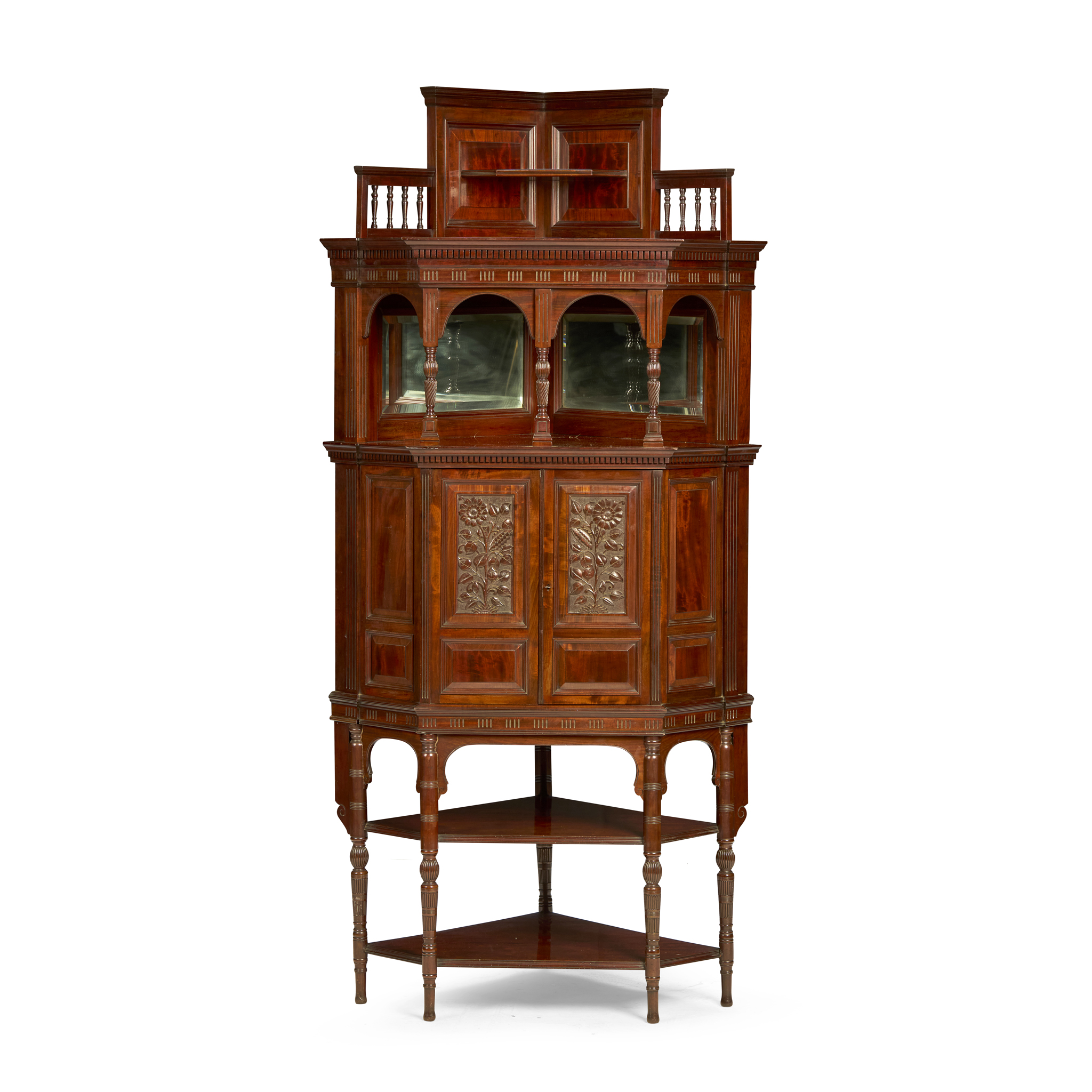
COLLINSON & LOCK, LONDON
AESTHETIC MOVEMENT CORNER CABINET, CIRCA 1876
Auction: Day One | Lots 1 to 229 | Wed 15th April 2026 from 10am
Description
mahogany, stamped DOVESTONE, DAVEY, HULL & CO/ MANCHESTER
Dimensions
87cm wide, 180.5cm high, 63.5cm deep
Footnote
Literature: Smith W. Examples of Household Taste, R. Worthington New York 1876, p. 492
Edwards C. Collinson & Lock: Art Furnishers, Interior Decorators and Designers, 1870-1900, Matador 2022, pp. 125-127 and p.128, pl. 4.38 where this cabinet is illustrated.
The current lot is a version of the corner cabinet displayed by Collinson & Lock at the Philadelphia International exhibition of 1876. This version was produced in red walnut with painted doors.
The Art Journal illustrated this corner cabinet in their review of the exhibition. They noted that "these productions are original in composition arrangement and finish: they cannot be said to belong to any style and are in no way borrowed from the past, although thoroughly in the Old English manner. It is a style that Messrs Collinson and Lock have in great measure made their own, and which, more or less, characterises all the issues of the establishment."
The American commentator Walter Smith, in a discussion about the same exhibits at the exhibition, elaborated on this cabinet and its design, explaining its importance:
“Even in a light and delicate article like the cabinet... the joinery was of the best, and an examination of the construction showed that the work was done thoroughly throughout. This, however, is not all that recommends this particular object to the reader's attention for it is a charmingly ornamental piece of furniture as well, admirably proportioned, graceful in outline, and ornamented with taste and judgement. The panels on the doors of this cabinet are exquisitely painted with figures on a gold ground. This sort of panel painting whether on wood or clay makes a very effective ornamentation for furniture and we are glad to observe that it is becoming popular in this country."
The current version with carved door panels in place of the painted ones follows the same pattern as the walnut cabinet described above and was also made in rosewood.