Lot 304
FRANCES MACDONALD (1874-1921)
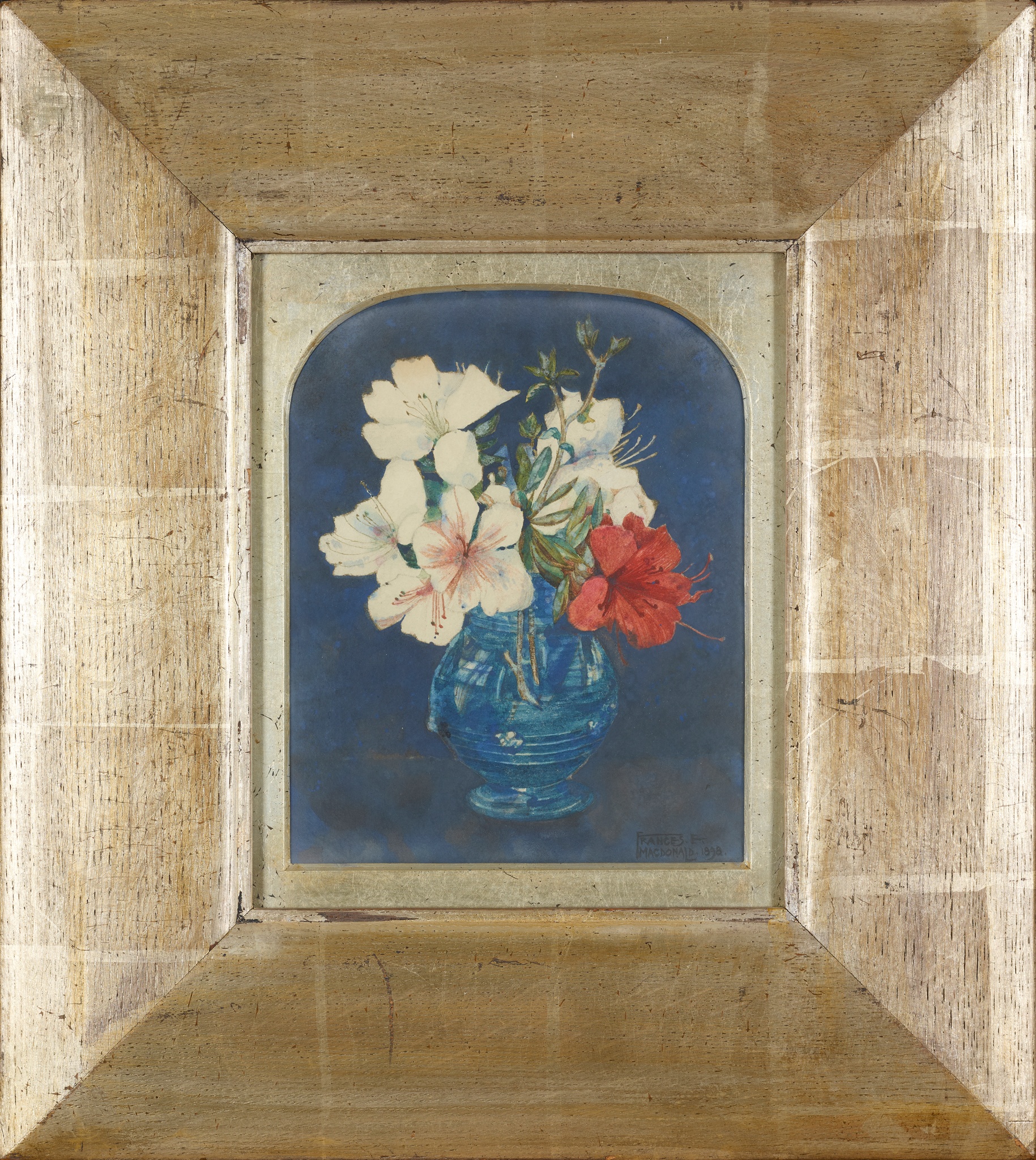
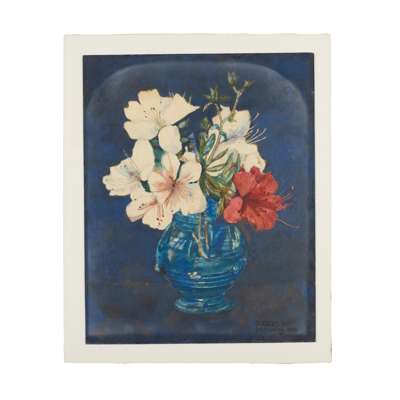
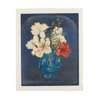
A BLUE VASE, 1898
Auction: Day Two | Lots 304 to 482 | Thurs 16th April 2026 from 11am
Description
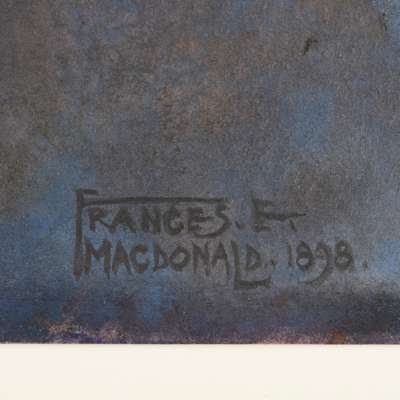
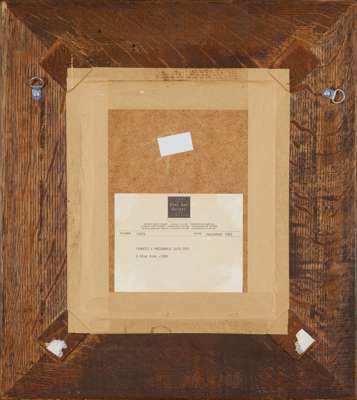
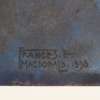
watercolour, signed and dated lower right FRANCES E. MACDONALD 1898
Dimensions
22.5cm x 18cm (frame size 46cm x 41cm)
Provenance
The Fine Art Society, London 1983
Private Collection, Switzerland
Footnote
Literature: Burkhauser, J. Glasgow Girls: Women in Art and Design 1880-1920, Edinburgh 1990, pp. 122-7
Billcliffe R. Charles Rennie Mackintosh and the Art of the Four, Quatro 2017
Born in 1873, Frances Macdonald’s early life is intertwined with that of her sister, Margaret. Following a move to Glasgow they studied at the School of Art from 1890-94, and in the early years often collaborated artistically. During their studies the Macdonald sisters met Charles Rennie Mackintosh and Herbert Macnair, collectively known as ‘The Four’ or ‘The Spook School’. It is argued that despite Mackintosh having the most radical and enduring influence on the history of design, at the genesis of the group, it was the women who were the ‘main perpetrators’, producing progressive Symbolist works, which later became known as the ‘Glasgow Style’; a Scottish branch of the Continental Art Nouveau movement.
This watercolour dates from 1898, just prior to Frances’s marriage to Herbert Macnair and is atypical of her surviving work. Just two years prior, she had produced ‘Eve’ in the symbolist style and rejecting the traditional iconography associated with the biblical figure. Indeed, her early poster work with Margaret provided radical re-imaginings of female subjects; women depicted by women redefining their visual identity at the turn of the century. By comparison therefore, ‘A Blue Vase’ is a departure, with its traditional subject matter and relatively naturalistic execution. The work is none the less skillfully executed, the azaleas sitting with a spontaneous feel to their arrangement, the eye being drawn to the singular red flower, whose colour is taken up in the rusty hues of the neighbouring foreground blooms. The title of the work puts the focus on the vase, rather than the flowers it contains, and the reflections across the glass surface give hints of the room beyond.
Married the following year, Frances moved to join her husband in Liverpool, bringing an end to exciting collaborations with Margaret. Further, the birth of the couple’s only child Sylvan prevented travel to Vienna in 1900 with the Mackintoshes to the ‘Vienna Secession Exhibition’. Whilst Frances did still exhibit, one can only speculate the effect that two months immersed in the world of Klimt and Secessionist Vienna could have had on the young artist. Despite high profile exhibition opportunities including Turin in 1902, London in 1911, and publication in The Studio, Macdonald was largely forgotten in the wider world.
Married life did not go smoothly due to financial insecurity and Macnair’s increasing dependence on alcohol. In 1908 the family returned to Glasgow but further marital unhappiness and the declining market for Glasgow style designs worsened their situation. Frances died in 1921, aged just forty-seven. Macnair destroyed most of her work and a large portion of his own, meaning little of her oeuvre survives. It is therefore possible that she produced more works similar to ‘The Blue Vase’, but they are not extant.