

Lot 185
RUSKIN POTTERY
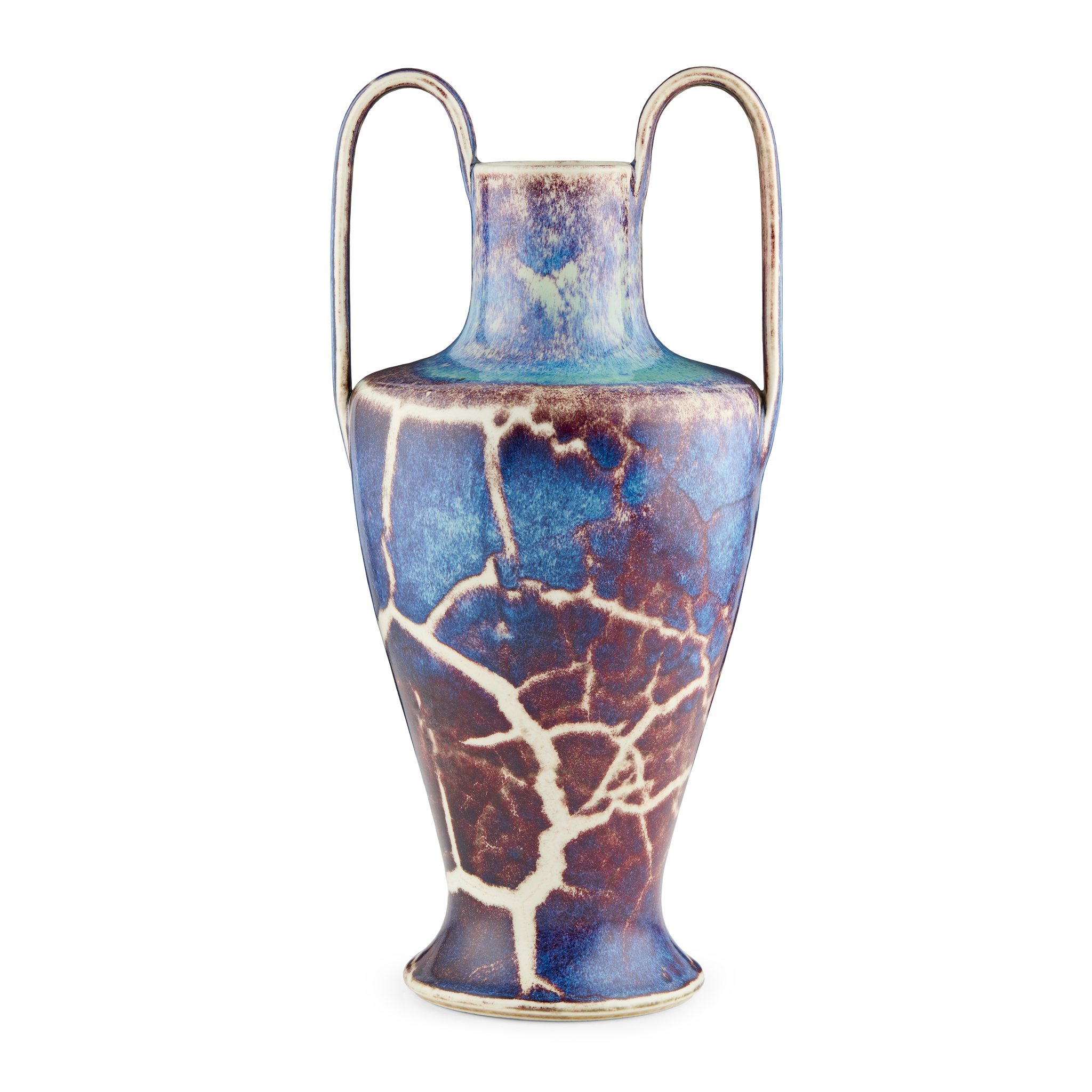
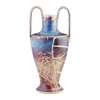
TWIN-HANDLED 'HIGH-FIRED' VASE, 1913
Auction: Day One | Lots 1 to 229 | Wed 15th April 2026 from 10am
Description
stoneware, with fissured sang de boeuf and lavender glaze over ivory, impressed RUSKIN/ 1913
Dimensions
35.5cm high
Provenance
Christie's, London, 3 December 1993, lot 242
Footnote
What most clearly distinguishes Ruskin Pottery is its development of innovative glazes including souffle, crystalline, sang de bœuf and 'high-fired' techniques. The latter was achieved through the use of copper and iron oxides, producing rich and unpredictable surface effects as in the present example. Ruskin Pottery was founded in 1898 by Edward R. Taylor and later continued by his son, William Howson Taylor (1876–1935). The pottery was based in Smethwick, Staffordshire.
Historically, Ruskin Pottery can be understood within a broader European revival of interest in ceramics, inspired by Chinese glazes and East Asian forms. During this period, potters were increasingly concerned with developing new and experimental glaze effects. From around 1903, William Howson Taylor focused in particular on the development of flambé glazes, and over the following three decades he continued to refine and experiment with these techniques. The works he produced invite comparison with those of French contemporaries such as Ernest Chaplet, Auguste Delaherche, and Clément Massier Dalpayrat. Because no glaze result could be precisely repeated, each object produced at Ruskin Pottery may be regarded as unique.
At its height, the pottery employed around twenty workers and operated five lustre kilns alongside a single high-firing kiln. Despite its success and innovation, Ruskin Pottery ceased production in 1933.