

Lot 174
NEWCASTLE HANDICRAFTS COMPANY
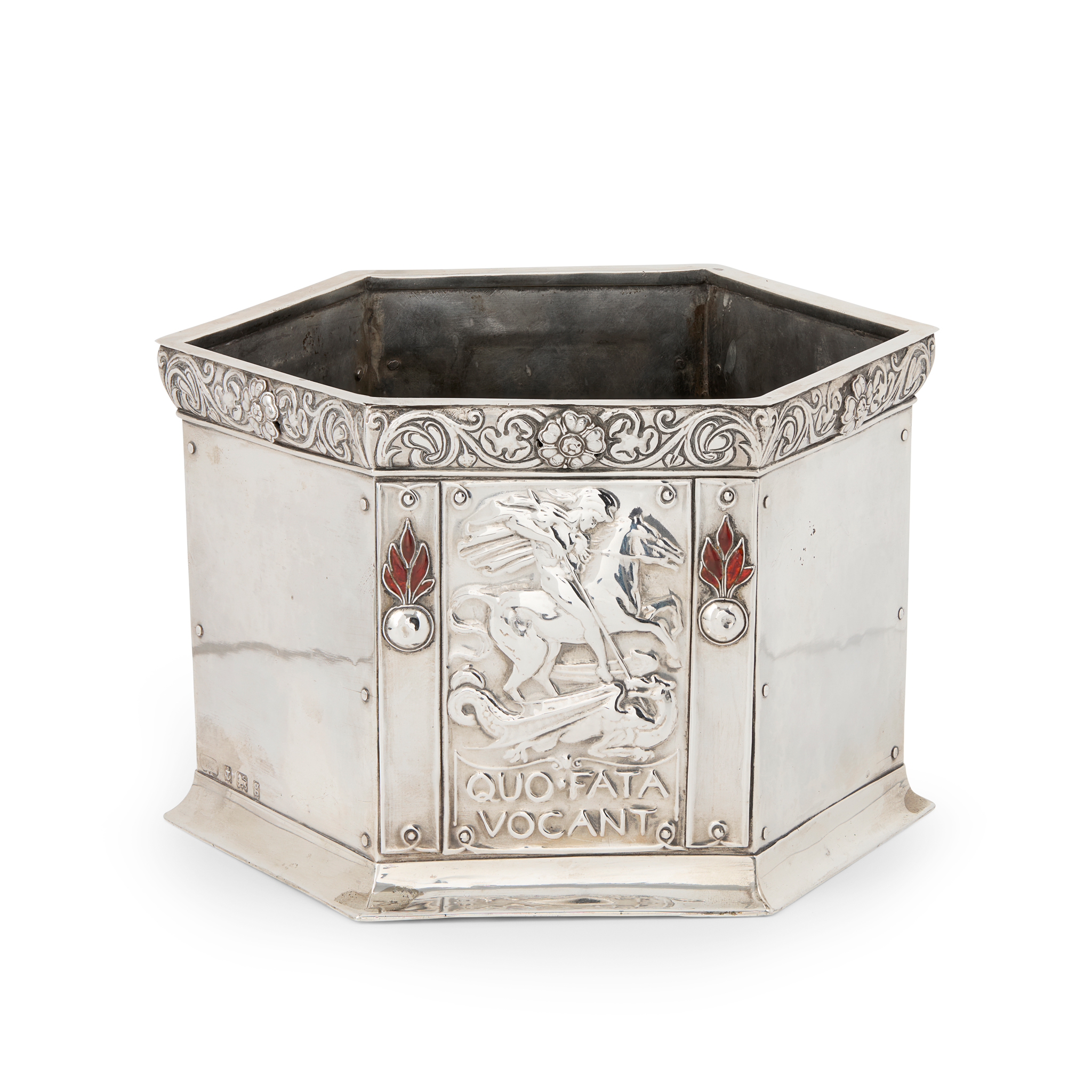
CACHE POT, 1906
Auction: Day One | Lots 1 to 229 | Wed 15th April 2026 from 10am
Description
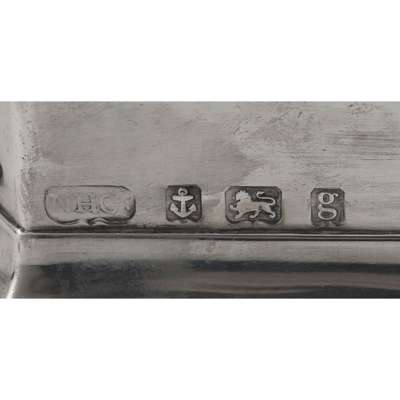
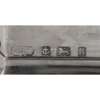
silver and enamel, inscribed QUO FATA VOCANT, stamped maker's mark NHCo, hallmarked Birmingham 1906, 611g
Dimensions
12cm high, 19cm wide
Footnote
The Handicrafts Company of Newcastle originated from the Art Department of the Durham College of Science in Newcastle upon Tyne. Its formation followed debate within the Art Committee about whether designers needed hands-on experience with the materials they worked with. Charles William Mitchell, who became Chairman in 1896 after succeeding his father, played a key role. Trained as an artist in Paris, Mitchell had exhibited widely before business responsibilities in his family’s shipbuilding firm curtailed his artistic career. Nevertheless, he remained an influential patron within Newcastle’s artistic community.
Mitchell worked closely with Richard George Hatton, the school’s headmaster, a decorative artist who shared his vision of supporting the arts. Both men recognised a divide between producing “art wares” in an academic setting and the practical challenge of earning a living through craft. To address this, Mitchell funded the establishment of the Handicrafts Company in 1899 at 37 Orchard Street, under Hatton’s supervision. Its purpose was to support students in practising the “Lesser Arts” and help them generate income from their work.
The Company produced notable works, including silver and enamel presentation caskets now held in major museum collections. After Mitchell’s sudden death in 1903, financial provisions allowed operations to continue briefly. Hatton remained involved until 1906, and the Company persisted until 1912, though it was not formally dissolved until 1932.