

Lot 79
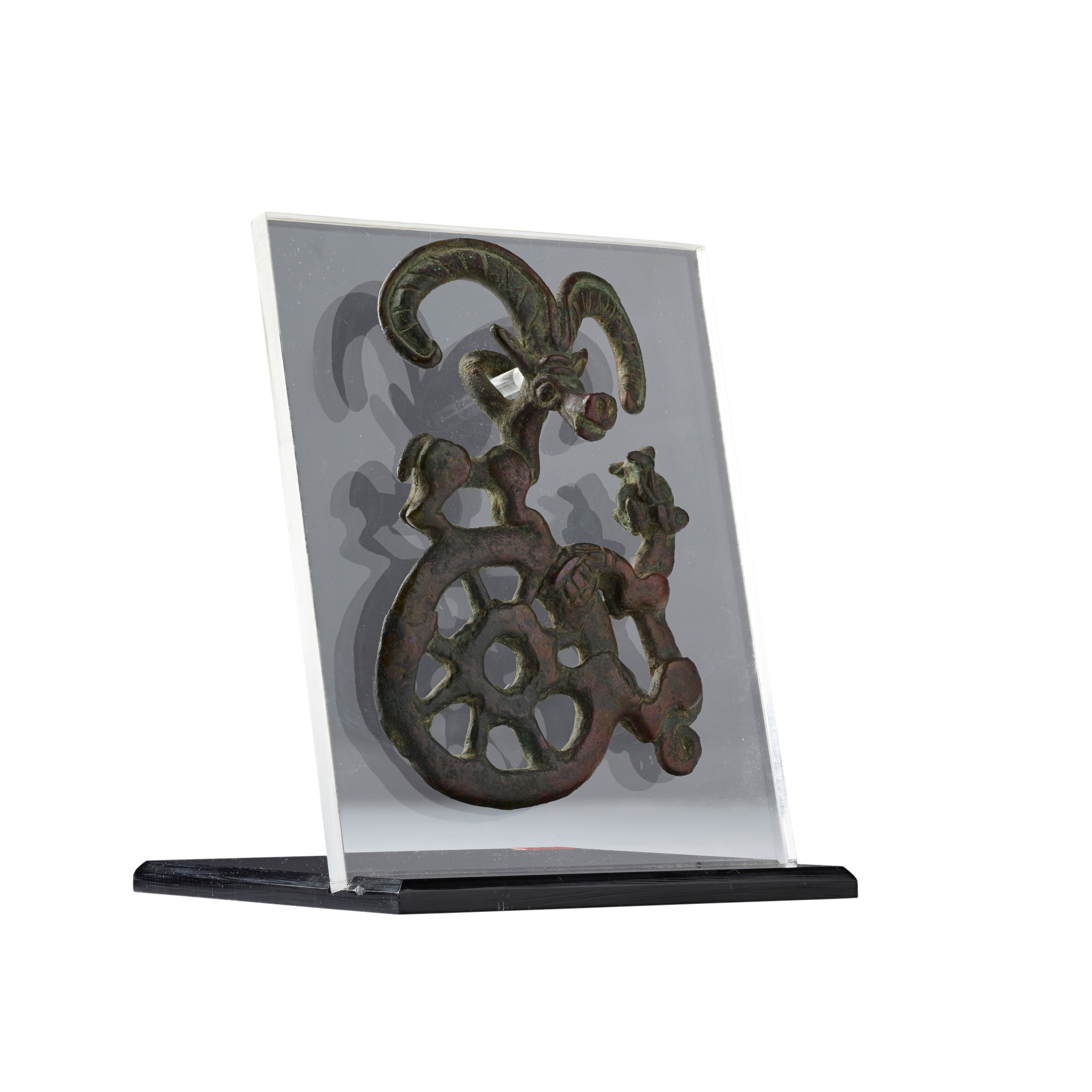
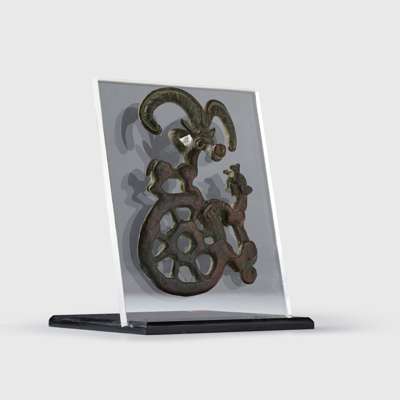
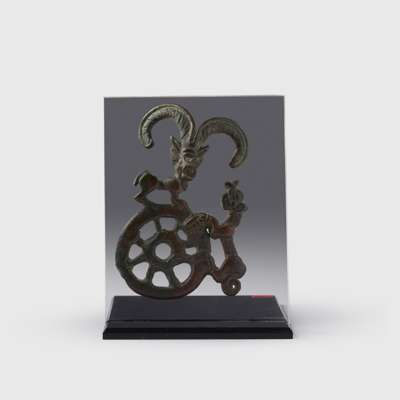
LURISTAN BRONZE HARNESS RING
WESTERN ASIA, C. 1000 – 800 B.C.
Antiquities and African & Oceanic Art
Auction: Antiquities - 31 July 2024 at 2pm
Description
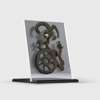
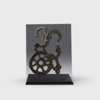
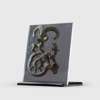
cast bronze, the spoked ring surmounted by a full figure mouflon, its ribbed horns curving round to point downwards, a feline with gaping jaws grasps the side, its legs arched, seemingly reaching up towards its intended prey, to the reverse an integral suspension loop sits behind the mouflon’s head, raised on a bespoke mount
Dimensions
10.4cm tall (unmounted)
Provenance
Provenance:
The Paul Strickland collection of Lorestan art, acquired from the below 17th December 1984, accompanied by original invoice
Hadji Baba Ancient Art, 36 Davies Street, London
Antiquities, Sotheby’s, London, 10th December 1984, lot 122
Footnote
Note:
Despite uncertainty about their exact purpose, most experts associate these objects from Luristan with horse-harness equipment, likely rings placed on the shoulders of chariot horses.
Whilst the present piece is thought to have had a practical purpose, the ancient artist has transformed it into a dynamic work of art. Scholars have also engaged in extended debate regarding the symbolism behind such objects. This particular image of the mouflon, with its exaggerated horns, is an extremely ancient motif within Lorestan and western Asia more widely, appearing in ornamental objects, pottery and pendants, it was even depicted in the petroglyphs found at Golpayegan dating to 5000 B.C.
The image is thought most likely to have been talismanic in nature, demonstrating how within much of the ancient world, even utilitarian objects could be imbued with meaning and power. Interestingly, the horned skulls of mouflons continued to be placed at the entrances of houses in rural Iran for protection into recent history (Vadati, p. 255).