

Lot 67
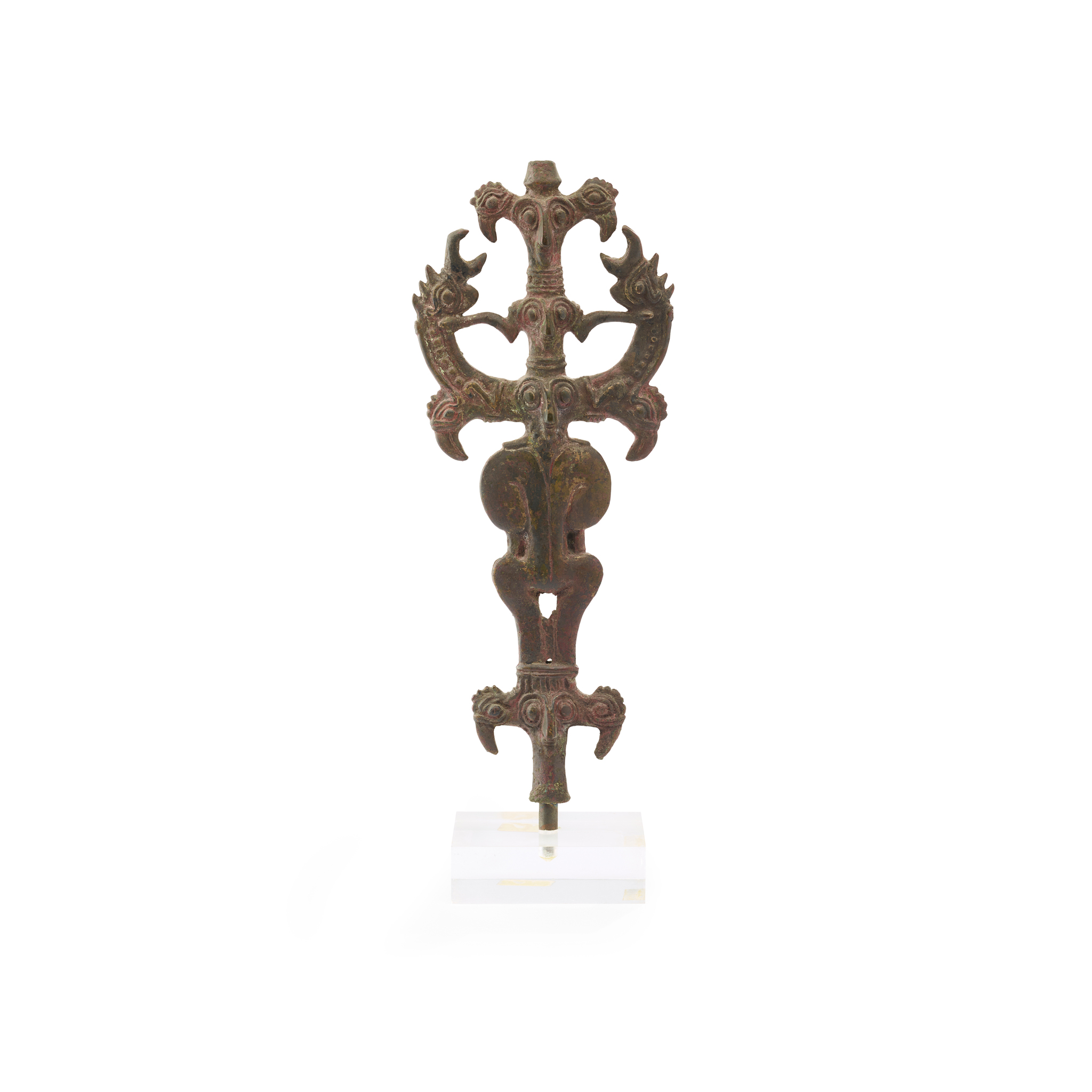
LURISTAN MASTER OF BEASTS STAFF FINIAL
NEAR EAST, EARLY FIRST MILLENNIUM
Antiquities and African & Oceanic Art
Auction: Antiquities - 31 July 2024 at 2pm
Description
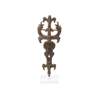
cast bronze, the hollow tubular shaft with three stacked figures, each a hybrid of human and animal form, the first (lowest) figure shown with a pair of birds projecting from the sides of the head, the second shown standing and wearing a jewelled necklace, the third gripping two mythical beasts by the neck in a sign of dominance, with the torso transformed into a human head, raised on a bespoke mount
Dimensions
21.5cm tall
Provenance
Provenance:
The Paul Strickland collection of Lorestan Art, acquired from the below 18th June 1982 accompanied by the original invoice
Mansour Gallery, 46 Davies Street, London W1Y 1LD
Footnote
Note:
In the early first millennium B.C. the inhabitants of the Zagros Mountains to the north of Persia produced a rich variety of bronze objects; from weaponry and standards to vessels and horse tack. The magnificence of the items associated with equestrianism, such as the present example, point to the nomadic lifestyle of the people who fashioned them.
The motif depicted here of an anthropomorphic figure standing between and grasping two confronted animals is a particularly ancient one. Known as The Master of Animals, it likely represented a deity or talismanic figure with dominion over nature. The Master of Animals appeared throughout the ancient Near East and Egypt for thousands of years, with its roots sitting deep in prehistory. The earliest known example appears on a terracotta stamp seal excavated in southern Mesopotamia dated to c. 4000 B.C.
The initial emergence of this motif at the time and place of the very first agricultural societies is likely not coincidental. It reflects the seminal change in our relationship with nature, from hunter gatherer to farmer. The desire to operate above, rather than within the natural world.