
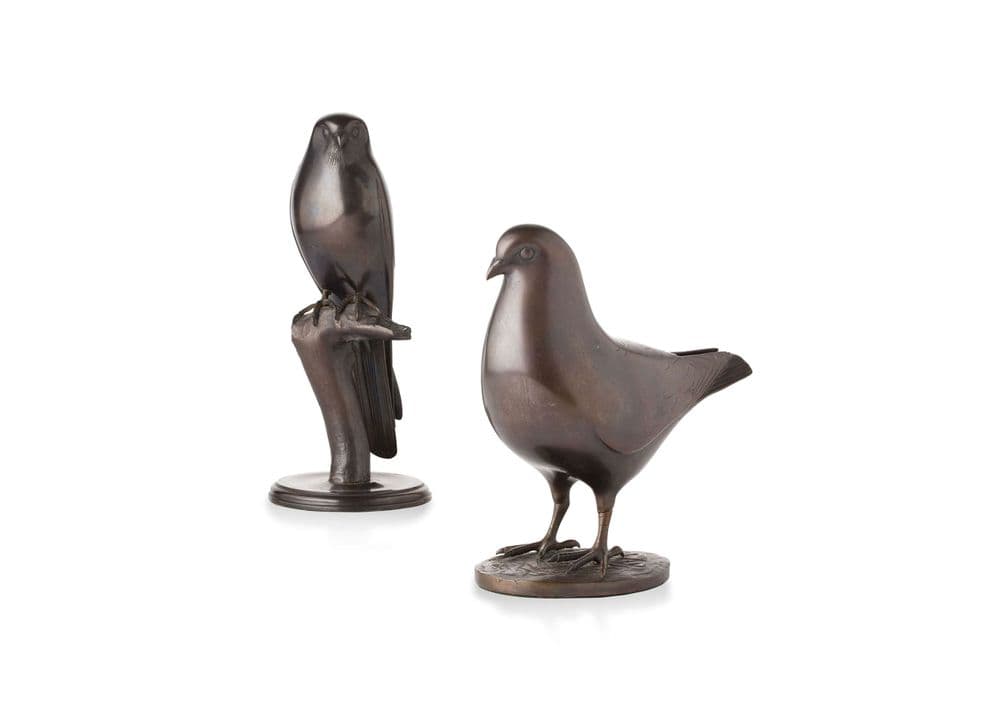
William A. Hepworth was a British sculptor renowned for his finely observed bronze works that celebrate the grace and vitality of the natural world. Born in 1934, Hepworth made a significant contribution to Modern British Art through a distinguished body of work that explores form and movement throughout the late 20th century.
Hepworth's oeuvre is characterized by a deep affinity for wildlife, with subjects ranging from the poised elegance of a standing hare to the dynamic presence of birds such as kestrels and doves. His sculptures, often rendered in bronze, exhibit a meticulous attention to detail and a profound understanding of his subjects' anatomy and spirit. Notable works include Lucius, a bronze figure of a horse, and Squirrel on a Branch, both exemplifying his ability to capture the essence of his subjects with subtlety and finesse.
Beyond his studio practice, Hepworth contributed significantly to public art in Scotland. He established the Alyth Art Foundry, through which he produced several public sculptures. Among his prominent commissions are the Torse de Femme for the J.D. Fergusson Gallery and the Queen Mother Memorial Gates at Balhousie Castle, home of The Black Watch.
Hepworth's work has been recognised and collected by institutions and private collectors alike, with pieces appearing in auctions and exhibitions. His legacy endures through his sculptures that continue to captivate audiences with their lifelike presence and artistic integrity.