Tristram Hillier was a significant figure in twentieth-century British modernism, whose precise, architectonic paintings combine surrealist atmosphere with a disciplined clarity of form. Over the course of a long and varied career, Hillier moved from the experimental avant-garde circles of interwar Paris to a more contemplative, spiritually inflected practice in post-war Britain.
Born in 1905 into a devout Catholic family, Hillier’s early life was marked by both intellectual intensity and personal upheaval. The sudden deaths of his mother and brother during the First World War left a profound impression on him and shaped his lifelong, complicated relationship with faith. For a period in his youth he seriously considered entering a monastery, an inclination that would later resurface in the subjects and tone of his mature work.
Hillier studied at Westminster School of Art under Bernard Meninsky before enrolling at the Slade School of Fine Art, where he came under the influence of Henry Tonks. Although he valued the discipline of academic training, he found the Slade’s traditionalism restrictive. A formative period in Paris during the late 1920s and 1930s exposed him to Surrealism and Cubism, and it was there that his distinctive visual language began to crystallise. On his return to England, Hillier quickly established himself within the modernist milieu, exhibiting with the Lefevre Gallery from 1931 and joining Paul Nash’s influential group Unit One, which sought to position British art within an international modern context.
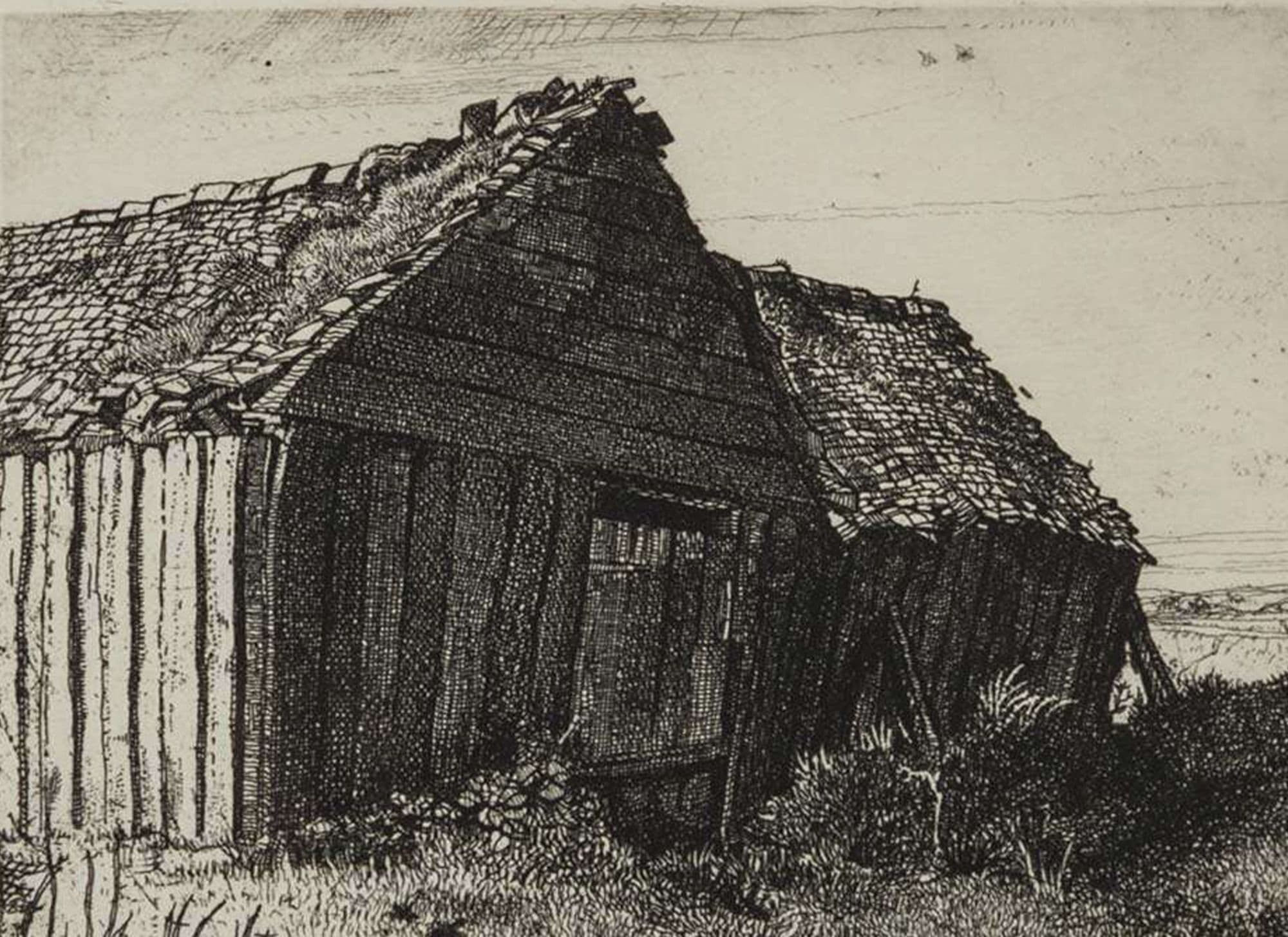
Hillier’s early work carries clear surrealist inflections: carefully constructed spaces imbued with an unsettling stillness, objects charged with symbolic ambiguity and compositions marked by meticulous precision. Yet his paintings resist overt narrative. Instead, they operate through atmosphere, a tension between clarity and enigma.
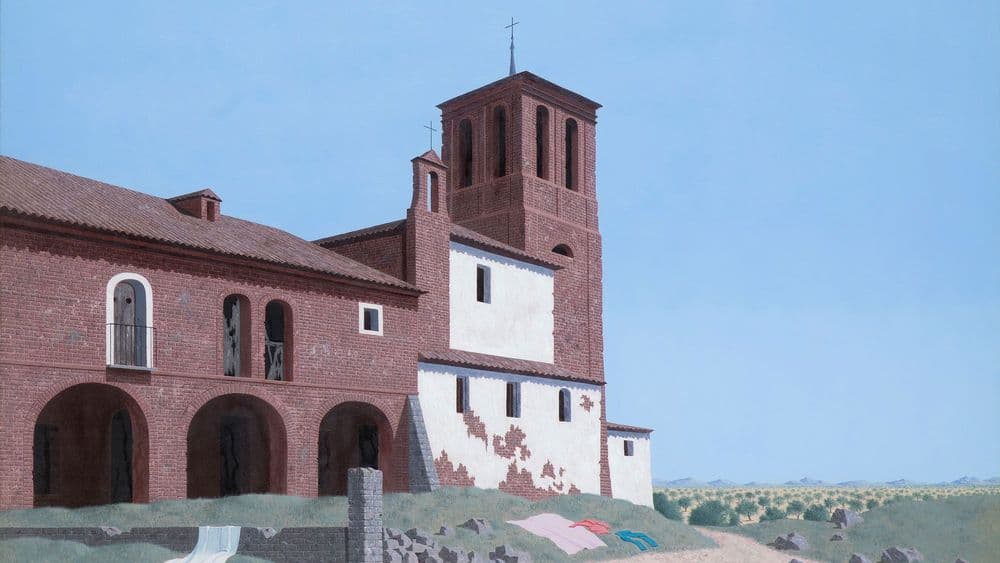
Following the Second World War, his style became starker and more restrained. His mature canvases often depict deserted architectural spaces, coastal topographies and Mediterranean settings rendered with almost photographic exactitude. These compositions are characterised by strong structural geometry, cool tonal control and an acute sense of detachment. Subtle disruptions, a cast-off garment, a shift in colour, an unexplained object introduce a quiet psychological charge.
Hillier travelled widely throughout his life, spending time in England, France, China and later Spain and Portugal. The Iberian landscape, in particular, proved enduringly significant. He worked from sketches and photographs made on his travels, developing them into carefully constructed studio paintings upon his return to Somerset, where he eventually settled in the 1950s.
It was during this later period that Hillier re-entered the Catholic Church and increasingly explored religious themes. His daily routine became disciplined and solitary, with much of his time devoted to sustained studio practice. The sense of stillness that permeates his work can be read as both aesthetic and spiritual, an expression of inward contemplation as much as modernist restraint.