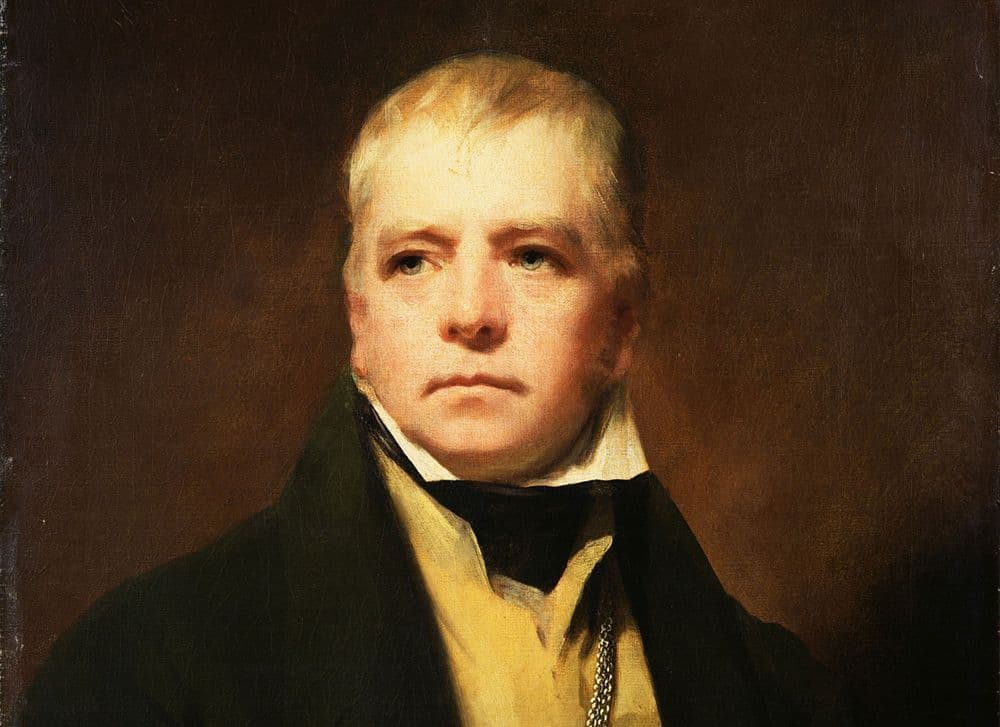
Sir Walter Scott is considered one of the greatest novelists of the Romantic period. He popularised Scottish history and culture in a way no other author has managed before or since.
While pursuing a legal career in Edinburgh, Scott developed a keen interest in contemporary German literature. His first, anonymous, publication was a translation of two poems The Chase and William and Helen: Two Ballads from the German of Gottfried Augustus Bürger in 1796. In 1799 Scott became the sheriff-depute of Selkirkshire, while continuing to practise as an advocate.
His new job gave him additional financial security without adding significantly to his workload, and he was able to realise his first great literary project Minstrelsy of the Scottish Border. Published in 2 volumes in 1802, the work reproduced the texts of 52 traditional ballads collected by Scott and his friends over the years. The financial and literary success of Minstrelsy inspired Scott to publish his own verse, with ever-increasing success: The Lay of the Last Minstrel (1805), written in medieval romance form, Marmion (1808), and The Lady of the Lake (1810), which sold 20,000 copies in its first year of publication.
His success as a poet was more than matched by the fame of his novels. Between 1814 and 1832, Scott published 23 works of fiction which later became known as the Waverley novels. The most famous of these are Waverley (1814), Rob Roy (1817), Ivanhoe (1819), and Kenilworth (1821). The novels were published anonymously until 1827, when he publicly acknowledged his authorship. Only three - Guy Mannering, The Antiquary, and Saint Ronan's Well - are set in his own lifetime. The remaining 20 are set in different periods of the past and this led to him being regarded as the inventor of the modern-day historical novel.
Scott's last great literary project was his 'magnum opus,' the collected edition of his novels. He wrote introductions to each work, new notes, and corrected the texts. Publication began on 1st June 1829, and a volume was issued monthly for four years. The project was a phenomenal success and sales exceeded 30,000 a month. Walter Scott’s books sold throughout the nineteenth century, being printed in large numbers by tens of different publishers all over the world. He retained his reputation as the most-admired and influential Scottish author until well into the 20th-century, when his popularity among the reading public declined. Nineteenth-century editions of Scott's novels are not rare or particularly valuable, but collectors are always on the lookout for first editions of his best-known works in original and contemporary bindings.
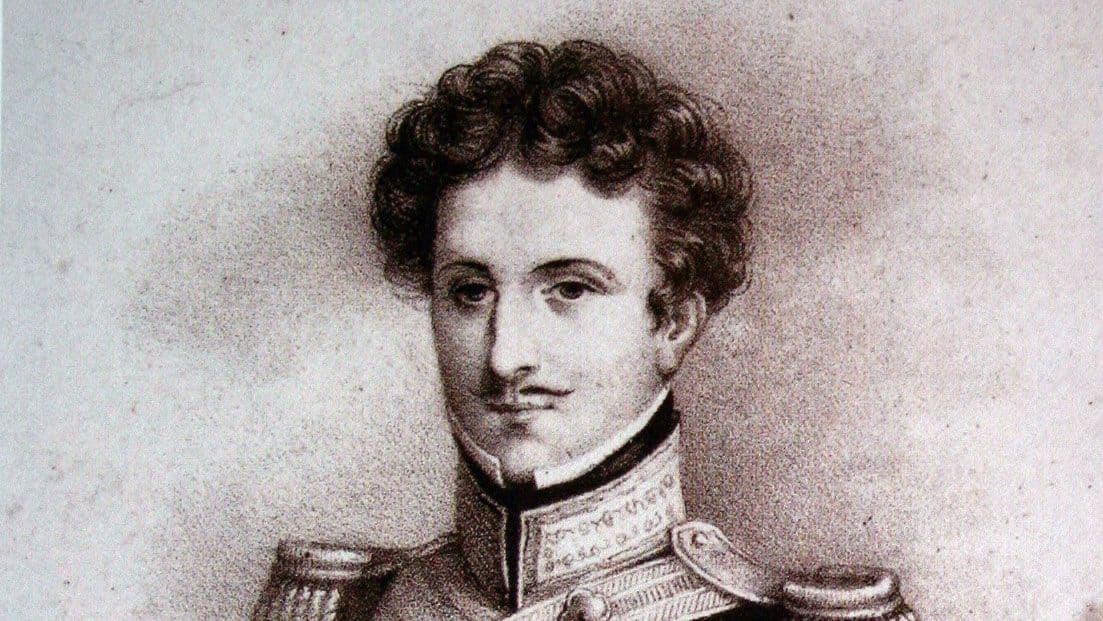
Illustrated: Henry Raeburn, Public domain, via Wikimedia Commons