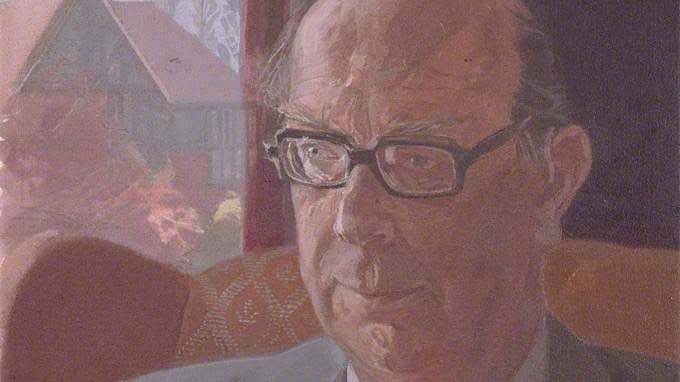
Philip Larkin is widely regarded as one of the most significant British poets of the twentieth century. Alongside his work as a novelist, librarian and critic, he produced a body of poetry distinguished by its clarity, wit and acute observations of post-war British life. His collections continue to be celebrated for their accessibility, emotional depth and enduring influence on contemporary poetry.
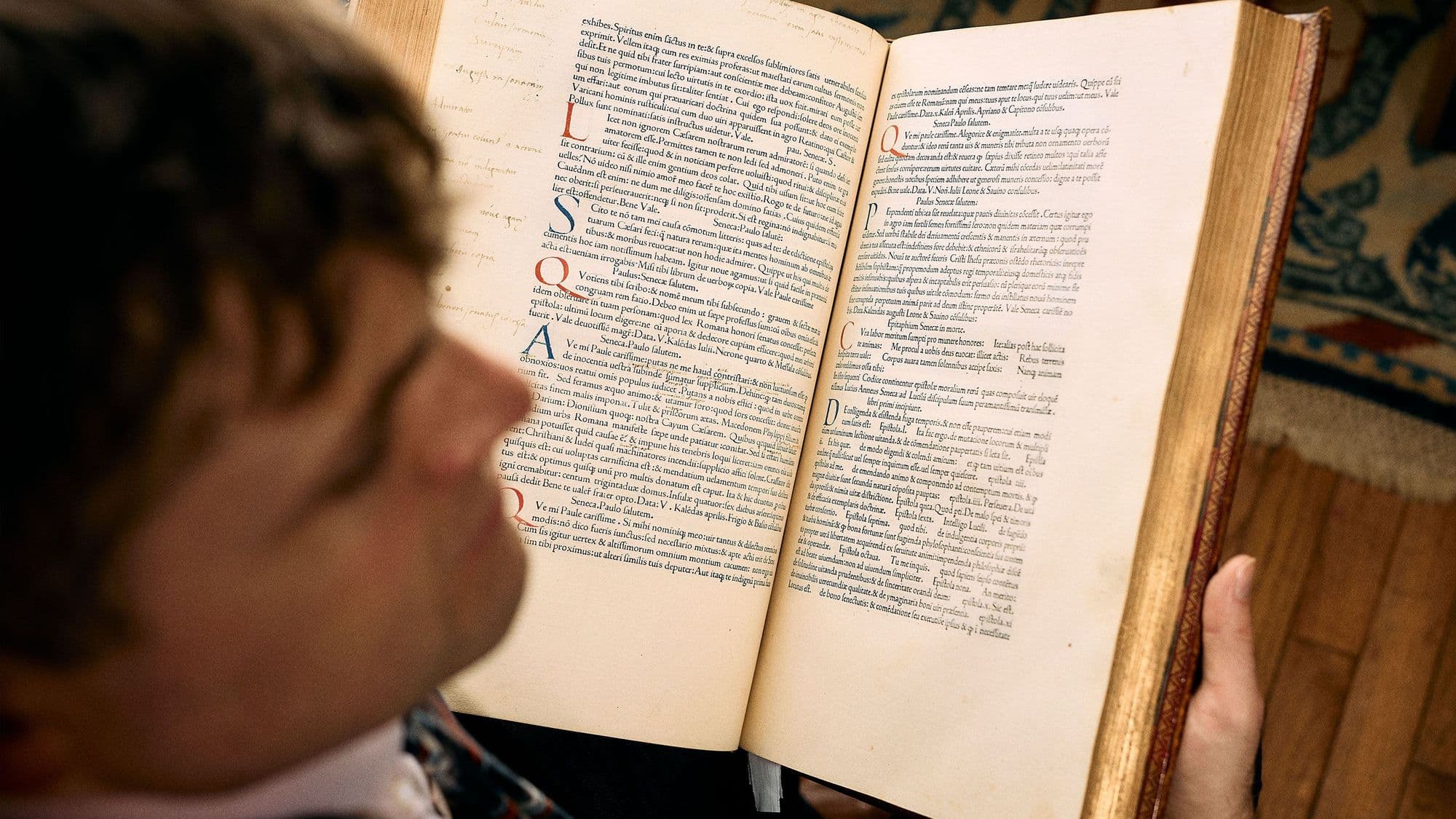
A particularly important publication in Larkin's early career was XX Poems (1951), the second printed collection of his poems, which he self-published in Belfast. Only 100 copies of the pamphlet were printed by a local printer at his own expense, making it the rarest of Larkin's publications.
Larkin decided to produce the collection shortly after arriving in Northern Ireland to work as a sub-librarian at Queen's University Belfast. Dedicated to his friend, the novelist Kingsley Amis, the volume brought together poems written during the previous five years, following the publication of his first collection in 1945. The work demonstrated his growing maturity and confidence as a poet, though he remained reluctant to approach publishers after an earlier collection, In the Grip of Light, had been rejected by six major publishing houses in 1948.
Larkin appears to have distributed many of the 100 copies of XX Poems unsolicited to leading literary figures in Britain in the hope of securing reviews. Only one recipient, the poet and journalist Charles Madge, is known to have acknowledged receipt. Madge subsequently passed the pamphlet to fellow poet D. J. Enright, who wrote the only review of XX Poems published that year.
Among the recipients was the literary critic W. J. Harvey (1925-1967). Harvey studied at the University of Oxford before holding a number of academic appointments, including Professor of English at Queen's College, Belfast, where he taught Seamus Heaney. Following Harvey's death, Heaney encouraged the publication of Harvey's poetry collection Descartes' Dream (1973). Harvey remains best known for his influential critical study Character and the Novel (1965), later described in The Cambridge Introduction to the Novel (2010) as one of two exemplary humanistic accounts of novelistic character.
Although XX Poems attracted little attention upon publication, Larkin was not discouraged. Several poems from the collection later appeared in periodicals such as The Spectator and in a Fantasy Press pamphlet published in 1954, while others were broadcast on the BBC Third Programme. Reflecting on this period later in life, Larkin remarked that "the best writing conditions I ever had were in Belfast, when I was working at the University there."
In 1955, Larkin left Belfast to become librarian at the University of Hull. Later that same year he published The Less Deceived, the collection that established his reputation and brought him widespread critical acclaim. Subsequent volumes, including The Whitsun Weddings (1964) and High Windows (1974), secured his position as one of Britain's foremost post-war poets.
Illustrated: Humphrey Ocean, CC BY-SA 4.0, via Wikimedia Commons