Pablo Picasso maintained a prolific output of paintings, sculptures, prints and ceramics throughout his life.
His career spanned nearly 80 years and when he died at age 91 in April 1973, he had become one of the most successful and influential artists in history. Picasso is credited, along with Georges Braque, with the creation of Cubism, as well as the co-invention of collage and the invention of constructed sculpture.
His personal life also causes much intrigue, having had several wives, mistresses, and muses. Throughout the 1930s and 40s Picasso entertained principally two women, Marie-Therese Walter and Dora Maar. Maar, originally a photographer and a painter, expressed her art alongside Picasso. The women in Picasso’s life greatly influenced and inspired his artwork.
Picasso's work is often categorised into periods, such as the Blue Period (1901–1904), the Rose Period (1904–1906), the African-influenced Period (1907–1909), Analytic Cubism (1909–1912), and Synthetic Cubism (1912–1919). The work following these periods tends to be executed in a neoclassical style, eventually showing characteristics of Surrealism. It is obvious that Picasso often changed his style and experimented with different theories, ideas, and techniques throughout his life.
Printmaking Throughout Picasso's Career
Picasso was a prolific and skilful printmaker, and printmaking remained central to his artistic practice throughout his career. From one of his first serious forays into the medium Le Repas Frugal from La Suite des Saltimbanques, first printed in 1904 when he was just twenty-two, to the artist’s final works produced in 1972 at the age of ninety, Picasso repeatedly turned to printmaking as a means of experimentation and innovation.
Over the course of his life, Picasso produced around 2,400 prints and experimented with a wide range of printmaking techniques, most notably etching, lithography and linocut. Often working within a theme, he produced a number of ‘suites’ of prints reflecting particular subjects, relationships, or periods of his life. La Suite des Saltimbanques, which includes fourteen of his earliest editioned prints, followed the lives and struggles of the Saltimbanques – travelling performers and harlequins, while the Séries 347 offers a remarkable insight into an intense seven-month period in 1968 during which Picasso produced 347 etchings and aquatints which were later released as the eponymous series.
A collaborative effort, Picasso worked closely with master printers at various ateliers throughout his lifetime – whose technical skill often influenced and enhanced the artist’s printmaking practices. Many of these relationships were fostered by his longtime dealer and friend, Ambroise Vollard, who also gave his name to one of Picasso’s best known print series, La Suite Vollard.
Printmaking was as important to Picasso’s creative process as painting and drawing. Themes, motifs and compositions were frequently repeated across different media, allowing the artist to revisit subjects and transform ideas. Throughout his long career, printmaking became an essential space for experimentation and the development of ideas, the importance of which continues to be reflected in the enduring demand for his prints today.
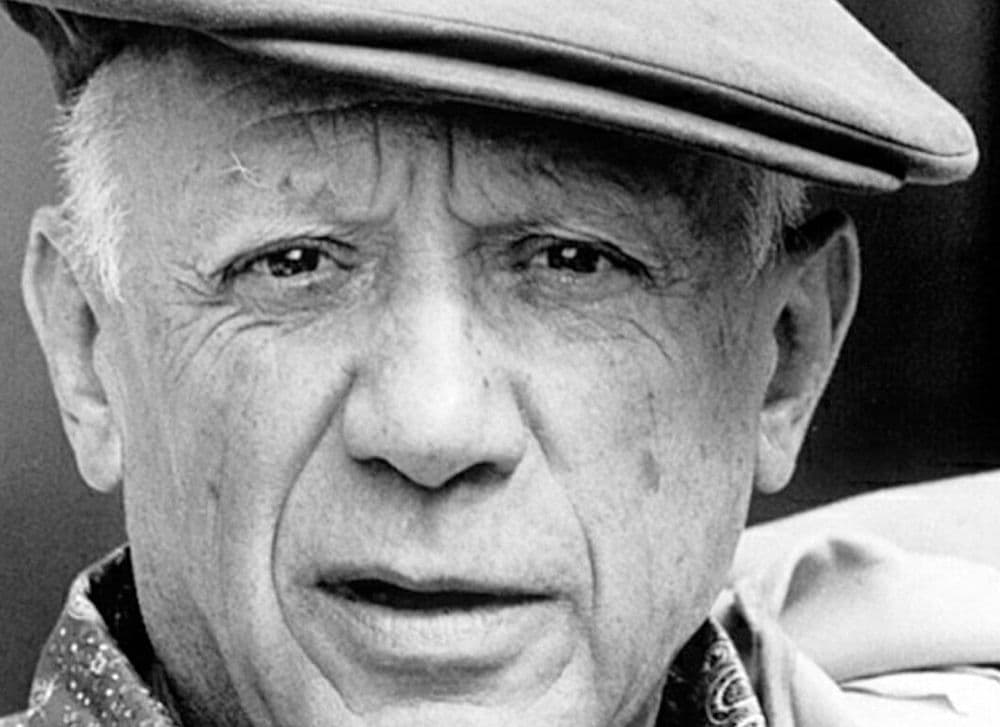
Illustrated: Argentina. Revista Vea y Lea, Public domain, via Wikimedia Commons