A pioneering figure of the British Black Arts Movement of the 1980s, Lubaina Himid has spent more than four decades uncovering marginalised histories, amplifying silenced voices and foregrounding the contributions of Black and Asian people to contemporary cultural expression.
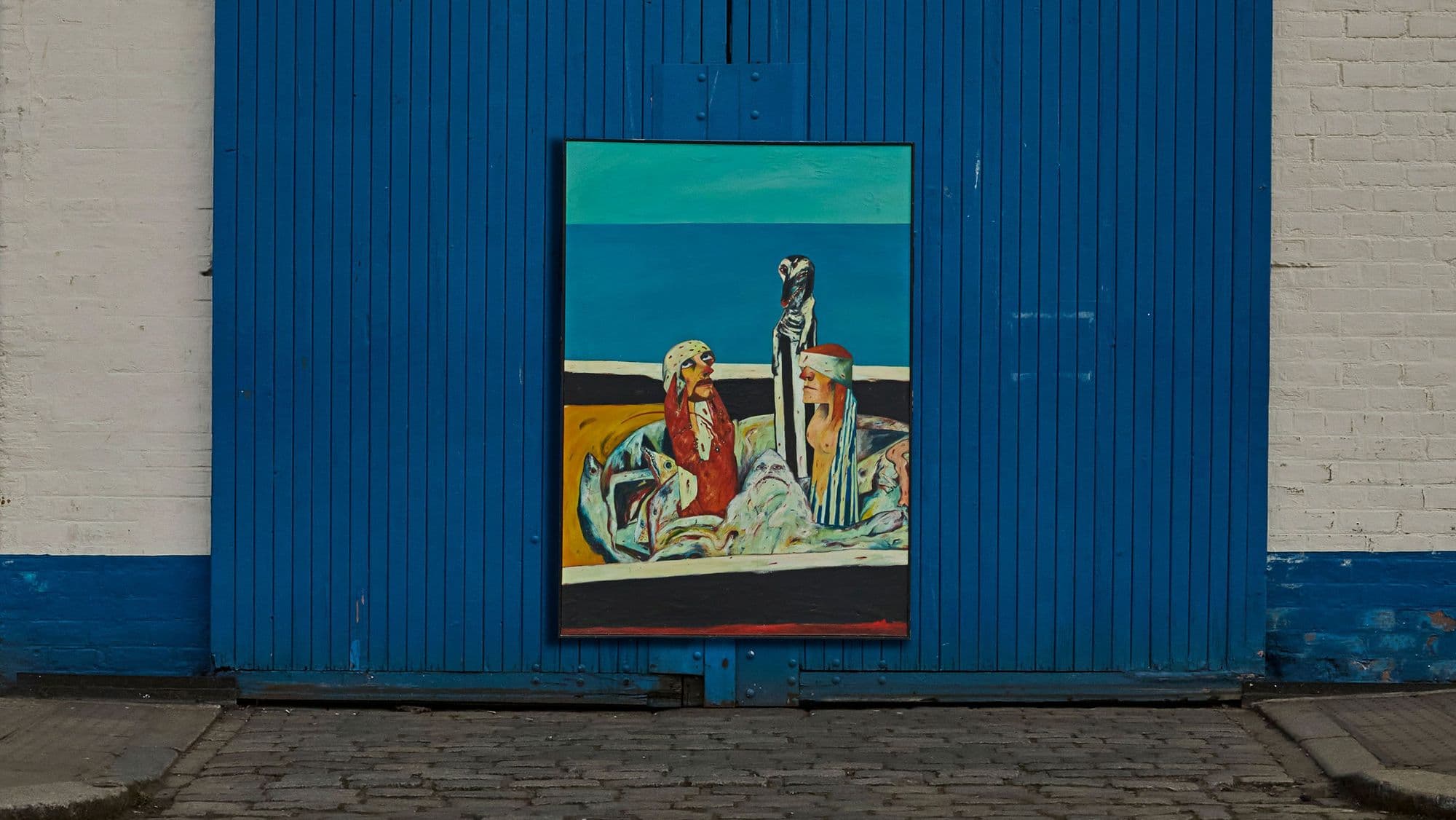
Born in Zanzibar in 1954 and raised in Britain, Himid studied Theatre Design at Wimbledon College of Art from 1973-1976 choosing the discipline for the connections it bore with radical politics, and in particular Black politics. From the outset, Himid’s artistic practice has possessed a richly theatrical visual language combining Black bodies and vivid colour across painting, drawing, printmaking, and installation, onto surfaces of canvas, ceramic and wood. Writer and theorist Fred Moten has described Himid's “celebration in, and of, color” as reinforcing the seriousness of her purpose, becoming “the ultimate solemnity.”
A self-described “painter and a cultural activist”, Himid went on to complete an MA in Cultural History at the Royal College of Art in 1984 which permitted her to deeply engage with the lack of representation of Black and Asian women in the mainstream art world. The following year, Himid curated her landmark 1985 exhibition The Thin Black Line at London's Institute of Contemporary Arts which offered a radical showcase of artwork by eleven Black and Asian female artists including Sonia Boyce, Claudette Johnson and Sutapa Biswas. Himid later revisited this curation format in the exhibition Thin Black Line(s) at Tate Britain from 2011-2012.
In 2017, Himid became the first Black woman to receive the Turner Prize and was appointed Commander of the Order of the British Empire (CBE) in 2018 for services to art. Himid currently lives and works in Preston, England, where she is Professor of Contemporary Art at the University of Central Lancashire and continues to curate and exhibit her artwork, most recently representing Great Britain at the 61st Venice Biennale (2026).
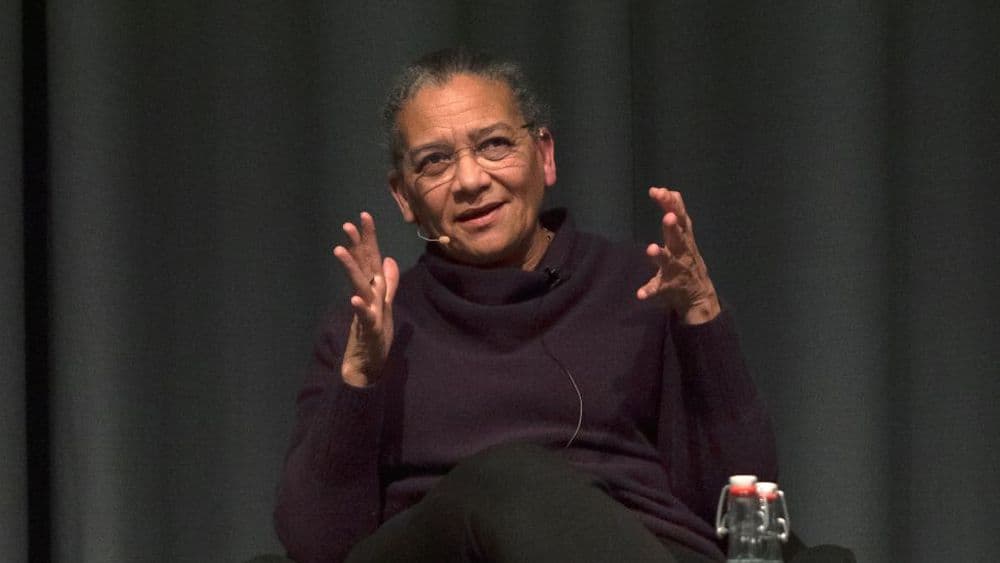
Illustrated: Cascade80, CC BY 4.0, via Wikimedia Commons