Keith Haring was born in Reading, Pennsylvania in 1958 and grew up in nearby Kutztown. From an early age he developed an interest in drawing, inspired by cartoons, comic strips and popular culture, influences that would later shape his instantly recognisable visual language. Haring emerged during the vibrant downtown New York art scene of the late 1970s and early 1980s, where graffiti, street culture and music became central to his artistic development.
Haring initially studied commercial art in Pittsburgh before moving to New York in 1978 to attend the School of Visual Arts. Immersed in the city’s alternative art scene, he became associated with fellow artists including Jean-Michel Basquiat and Kenny Scharf, as well as musicians, performers and street artists working in Lower Manhattan. New York itself became both his studio and exhibition space, particularly through his now-famous chalk drawings in subway stations.
Haring developed a bold, graphic style characterised by simplified figures, radiating lines and rhythmic compositions. His imagery - including barking dogs, dancing figures and the “Radiant Baby” - became visual symbols of energy, movement and collective experience. While visually playful and accessible, his work frequently addressed serious social and political themes including AIDS awareness, sexuality, apartheid, drug addiction and nuclear disarmament.
Working across murals, painting, sculpture and public art projects, Haring sought to make art democratic and widely accessible, rejecting the exclusivity of traditional gallery systems.
Activism in Print
Printmaking formed a major part of Haring’s practice, allowing him to distribute his imagery to a broader audience while reinforcing his interest in repetition and accessibility. Working primarily in screenprint and lithography, Haring produced vibrant editions that retained the immediacy and graphic clarity of his street drawings. His prints often revisit key motifs and activist themes found throughout his work, including social justice, sexuality and popular culture.
Portfolios such as Pop Shop and Apocalypse demonstrate his ability to combine bold visual simplicity with layered political commentary. While Andy Mouse is a play on Andy Warhol’s well-known commentary on commercialisation and making art available for everybody, and the ubiquitous character of Mickey Mouse. Haring and Warhol had a deep friendship and often exchanged creative ideas and even artworks, drawing inspiration from one another’s concepts and distinctive styles. These high energy, vibrant compositions encompass Haring’s visual language and graphic Pop styling.
Keith Haring became one of the defining artists of the 1980s, bridging street art, Pop Art and activism through a visual language that remains instantly recognisable worldwide. His commitment to public art and social engagement reshaped perceptions of contemporary art’s role within everyday life and popular culture.
Today, Haring’s prints remain highly sought after for their vivid colour, iconic imagery and strong connection to 1980s visual culture.
Following his death from AIDS-related complications in 1990, the Keith Haring Foundation was established to support children’s programmes and AIDS organisations, ensuring that his legacy continues both artistically and socially.
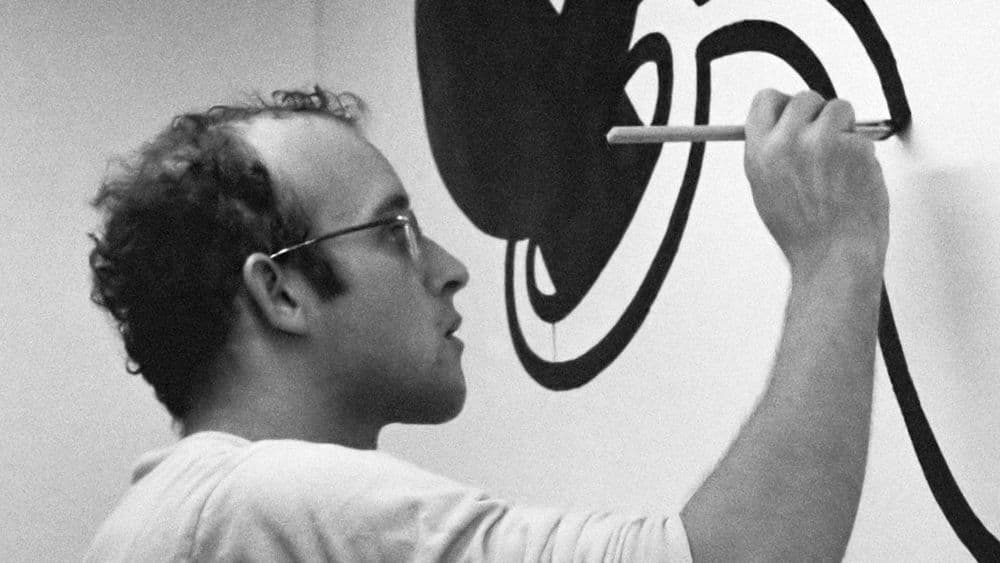
Illustrated: Keith Haring by Rob Bogaerts (Anefo), CC0, via Wikimedia Commons