
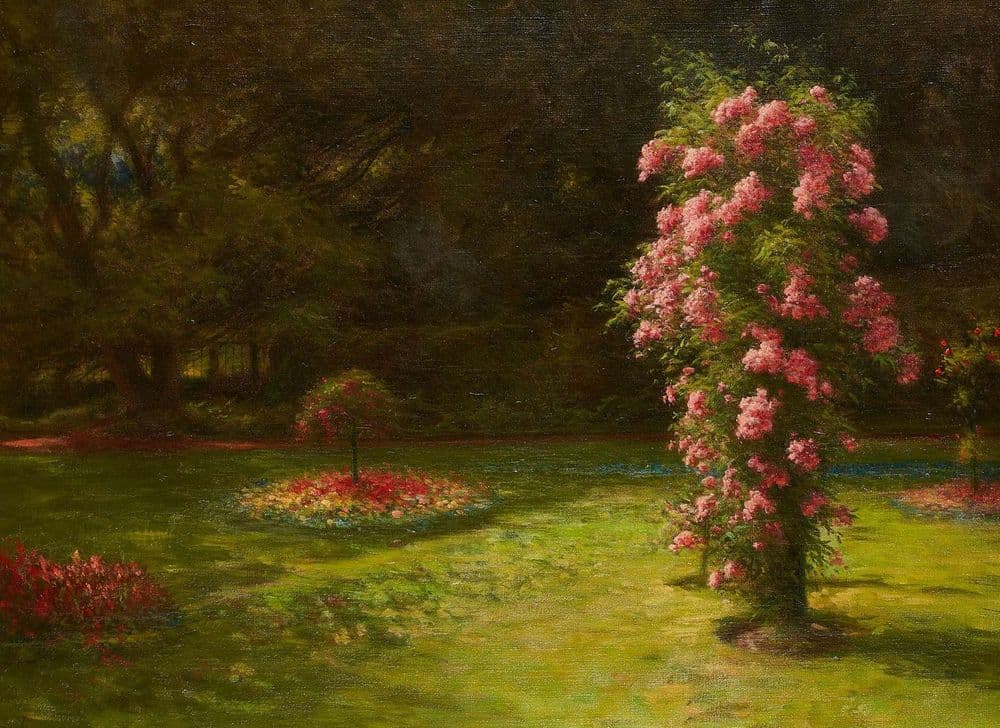
Joseph Farquharson RA (1846–1935) was a Scottish landscape painter best known for his atmospheric depictions of snow-covered countryside, sheep and the changing light of the Scottish Highlands. Working primarily in oil, he became particularly celebrated for winter landscapes in which the warmth of a setting sun contrasts with the cool tones of snow and shadow.
Born in Edinburgh, Farquharson developed a distinctive approach to landscape painting that combined close observation of nature with a strong sense of atmosphere. His paintings remain among the most recognisable examples of late Victorian and Edwardian Scottish landscape art.
Early Life and Artistic Training
Joseph Farquharson was born in Edinburgh on 4 May 1846, the son of Francis Farquharson of Finzean, Aberdeenshire. He studied at the Trustees' Academy in Edinburgh, where he received instruction from Peter Graham, a landscape painter whose work helped shape his early artistic development.
Farquharson subsequently travelled to Paris, studying under the French painter Carolus-Duran. This experience introduced him to developments in European painting and strengthened his interest in the effects of natural light and colour. Although he travelled and painted abroad, the Scottish landscape remained central to his artistic identity.
Finzean and the Scottish Landscape
Farquharson's family estate at Finzean, in Royal Deeside, provided the setting for many of his best-known paintings. The surrounding fields, woodland and hills offered subjects that he returned to throughout his career.
He was particularly interested in the changing effects of light across the landscape, often painting scenes at dawn or dusk. Sheep became a recurring feature of his compositions, frequently appearing in snow-covered fields or sheltered woodland. Rather than treating animals as isolated subjects, Farquharson incorporated them into the wider landscape, using their presence to establish scale, movement and a sense of rural life.
Painting Snow, Light and Atmosphere
Farquharson is especially associated with winter landscapes. His paintings frequently depict low winter sunlight filtering through trees, long shadows stretching across snow and flocks of sheep gathered against the cold.
To study these effects directly, he worked outdoors whenever possible. He is known to have used a specially constructed, heated painting hut that allowed him to observe and paint winter conditions while remaining protected from the weather.
This commitment to working from nature was fundamental to his practice. His paintings demonstrate a particular sensitivity to the relationship between sunlight, snow and atmospheric conditions. The contrast between warm golden light and cooler blue or violet shadows became a defining feature of his work.
Artistic Style and Influences
Farquharson's painting belongs to the tradition of nineteenth-century naturalistic landscape art, although his treatment of light gives many of his works a distinctive atmospheric quality.
His early training under Peter Graham connected him to the Scottish landscape tradition, while his studies in Paris exposed him to broader European approaches to colour and technique.
His mature paintings are characterised by carefully balanced compositions, detailed observation of animals and vegetation, and an interest in fleeting effects of weather and light. Although his work was rooted in recognisable places, he frequently gave his landscapes poetic titles that emphasised their atmosphere and emotional character.
Exhibitions and Recognition
Farquharson exhibited regularly at the Royal Academy in London, where his landscapes attracted considerable attention. He was elected an Associate of the Royal Academy in 1900 and became a full Royal Academician in 1915, recognition of his established reputation within British art.
He also exhibited at the Royal Scottish Academy and other major exhibition venues. His paintings appealed to collectors during his lifetime, particularly those drawn to his distinctive interpretations of the Scottish countryside.
Joseph Farquharson's Legacy
Joseph Farquharson died on 15 April 1935, aged 88. Today, he is remembered principally for his winter landscapes, which combine technical precision with an unusually sensitive treatment of natural light. His paintings offer a record of the countryside around Finzean while reflecting a wider nineteenth-century interest in the relationship between landscape, atmosphere and human experience.
His work remains sought after by collectors of Scottish and British landscape painting, particularly his characteristic snow scenes featuring sheep, woodland and the warm light of a winter sunset.
Joseph Farquharson Paintings at Auction
Joseph Farquharson's paintings continue to appear in Scottish and British art auctions. His winter landscapes are particularly associated with his artistic reputation, although his wider output also includes other rural subjects and landscapes painted during his travels.
When assessing a painting by Farquharson, factors such as subject, scale, condition, provenance and exhibition history can influence its auction value. Lyon & Turnbull's Scottish Art specialists can provide advice on works by Joseph Farquharson, including complimentary auction valuations for owners considering selling.