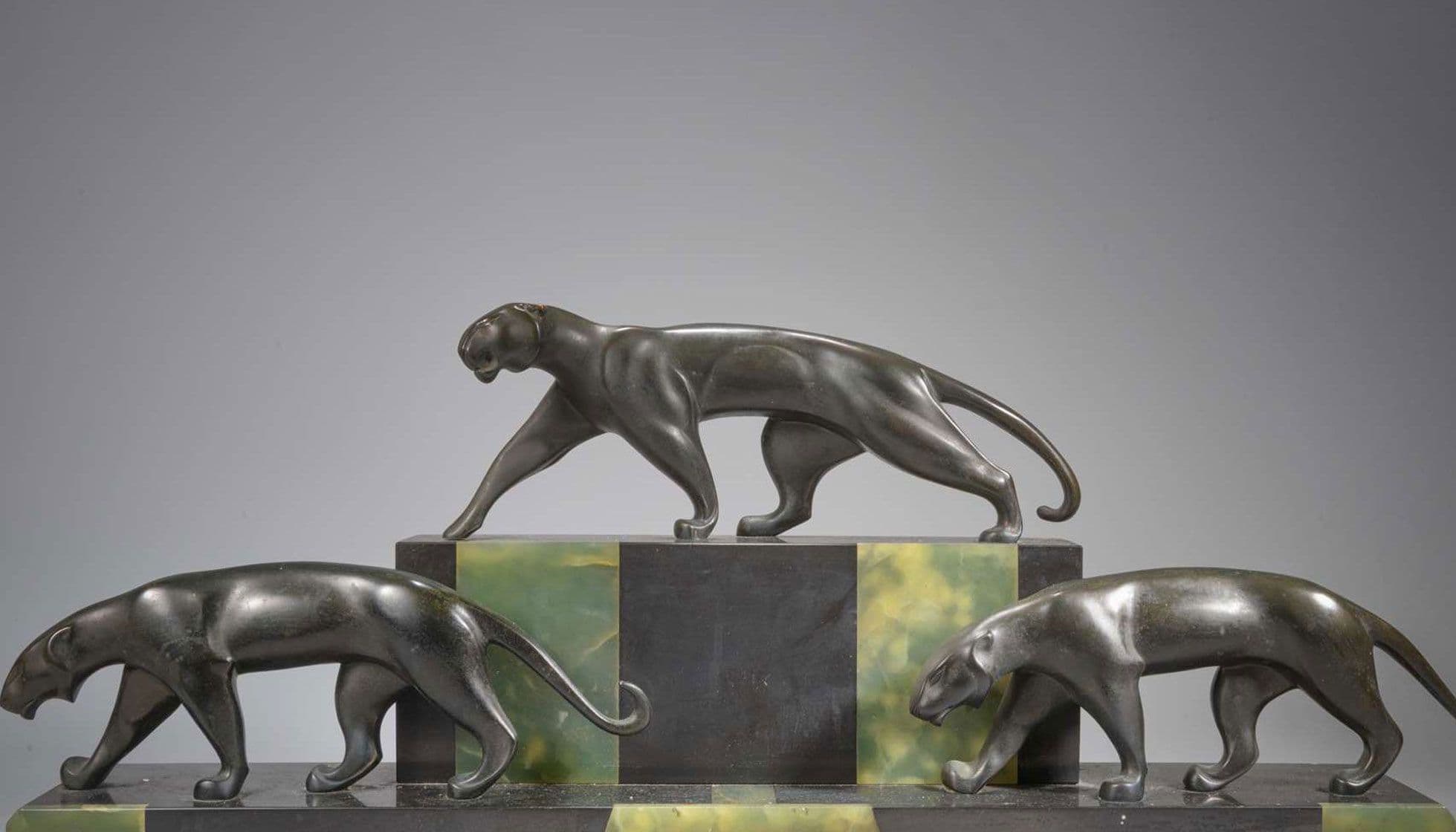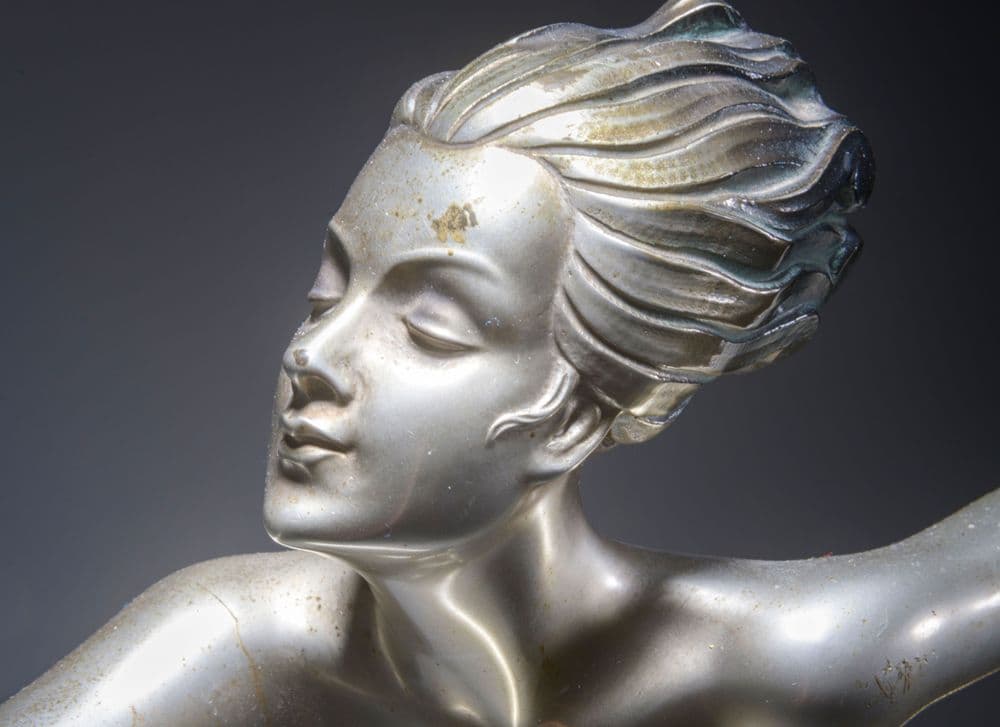
Born in Vienna in 1892, Josef Lorenzl began his training in a metal foundry attached to the city’s military storage arsenal. As an apprentice metalworker he learnt to work with bronze, but rather than remaining in the field of heavy industry, he directed his efforts towards sculptural forms.
His coming of age coincided with the 1920s birth of the Art Deco movement, a style with which Lorenzl’s elongated and graceful female sculptures, sleek with their minimal detailing were perfectly aligned. Further, their boyish haircuts, exotic costumes and dynamic, often sensual, poses, capture the spirit of the age in which women were enjoying greater freedoms.
Lorenzl relished the challenge of working with different materials, and incorporated bronze, ivory and ceramic into his designs. He is regarded as a master of the ‘chryselephantine’ technique, in which bronze and ivory are combined. He enjoyed several collaborations with manufacturers, his most high-profile being the Austrian ceramics firm Goldscheider, for whom he became a principal designer by the 1930s.
WWII and the decline in popularity of the Art Deco style did have a negative effect on Lorenzl’s work, but his reputation as a giant of the Movement endured. He died in 1950 in his native city, one of the key designers of the twentieth century and someone whose work remains highly sought after.