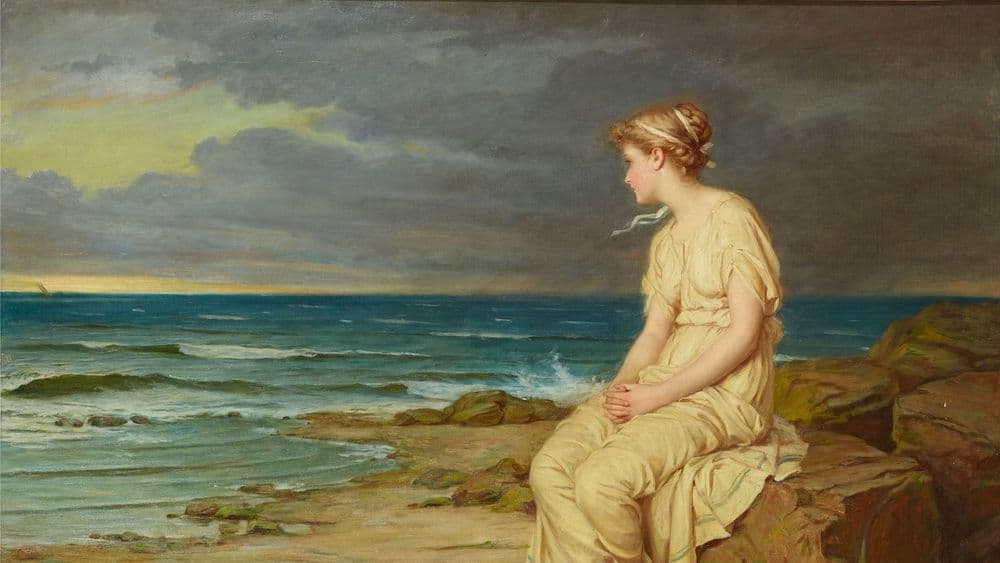
John William Waterhouse was one of the most celebrated painters of the late Victorian and Edwardian periods, renowned for his evocative depictions of mythological, literary and historical subjects.
Associated with the later phase of the Pre-Raphaelite movement, Waterhouse combined its rich colour, attention to detail and romantic sensibility with a more fluid and painterly style.
Born in Rome to English artist parents, Waterhouse studied at the Royal Academy Schools in London and exhibited regularly at the Royal Academy throughout his career. His paintings drew inspiration from classical mythology, Arthurian legend, Shakespeare, Tennyson and Keats, often focusing on enigmatic female protagonists. Works such as The Lady of Shalott, Hylas and the Nymphs and Circe Offering the Cup to Ulysses remain among the most recognisable images of British art.
Waterhouse's mastery of narrative and atmosphere, combined with his distinctive portrayal of beauty and emotion, secured his reputation during his lifetime and has continued to captivate audiences since. Following a resurgence of interest in Victorian art during the late twentieth century, his paintings have become highly sought after by collectors worldwide.
Today, John William Waterhouse is regarded as one of the foremost figures of British Pre-Raphaelite and Symbolist painting. His works are held in major public collections, including Tate Britain, the Royal Academy of Arts and Manchester Art Gallery and continue to achieve notable results at auction.
Illustrated: John William Waterhouse by Hayman Seleg Mendelssohn, Public domain, via Wikimedia Commons