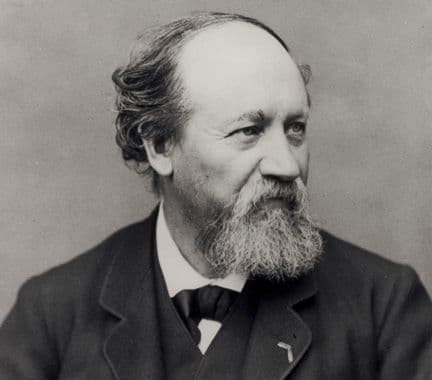
Eugène Boudin (1824–1898) spent his childhood in Honfleur before moving to Le Havre, both in Normandy. The son of a ship’s captain, he grew up immersed in the maritime world. The sea, beaches, boats and harbours became recurring motifs in his work.
A prolific artist, Boudin produced more than 4,000 paintings and 7,000 works on paper during his lifetime. Regarded as one of the pioneers of en plein air painting, he set up his easel on beaches and harbour walls along the northern coast of France, returning frequently to Deauville, Étretat and Trouville, among other coastal locations. Rejecting the conventions and constraints of the studio, he sought instead to capture fleeting effects of light, misty evenings and the ever-changing coastal atmosphere.
Throughout his career, Boudin refined the small-scale marine paintings that would become synonymous with his name. Charles Baudelaire, the renowned French poet and a contemporary admirer of Boudin’s work, observed: ‘While looking at a painting of Boudin, one can guess the season, the time and the wind …’