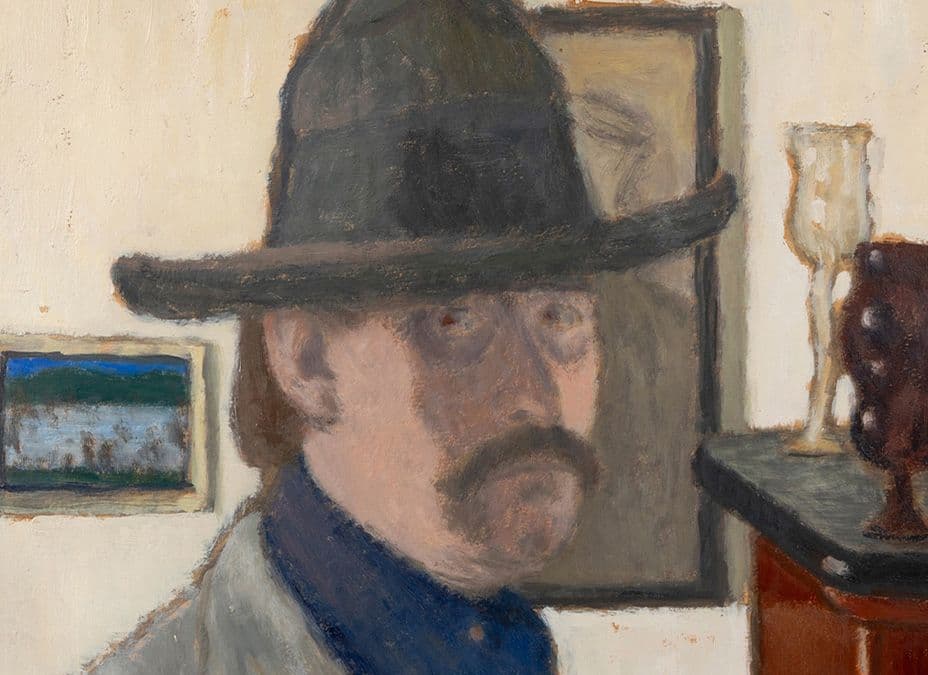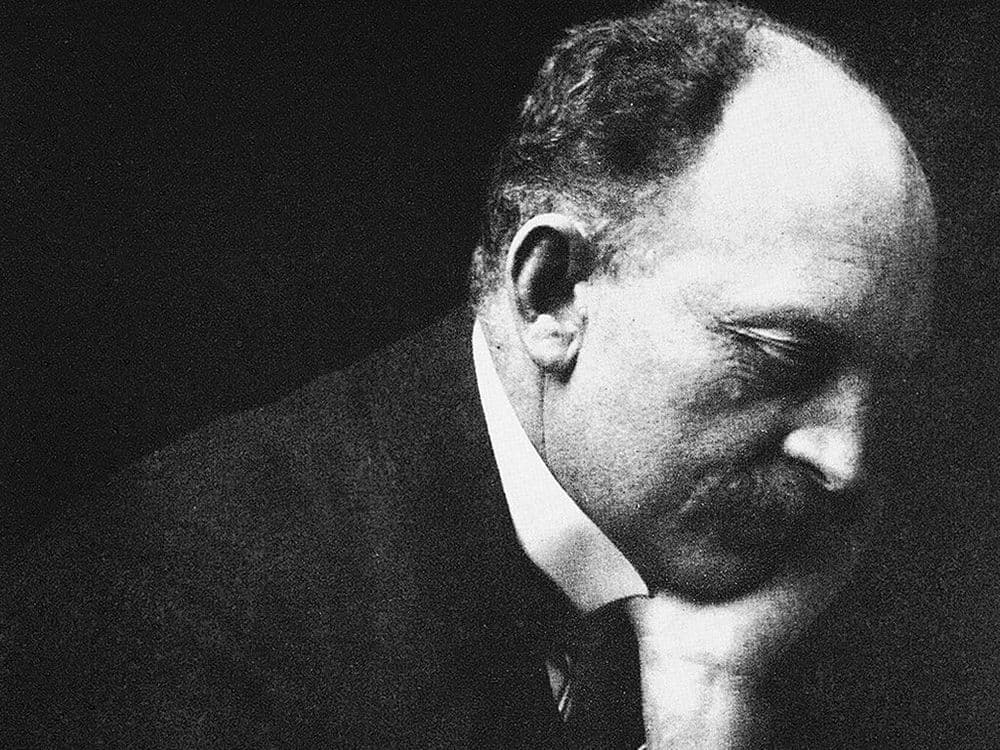
In 1906, at the age of forty, Emil Nolde was invited by his friend Karl Schmidt-Rottluff to join Ernst Ludwig Kirchner’s laboratory of modernism, Die Brücke.
Nolde’s association with the group only lasted a year, but the experience had a profound effect on his art, not least his embrace of ‘modernist primitivism’, modern art’s fascination with the work of ‘outsiders’ as a means of accessing a deeper visual and cultural truth.
Having moved to Berlin in 1902 to establish himself as a modern artist, Nolde experimented with Impressionism, Post-Impressionism and Symbolism. His encounter with Schmidt-Rottluff, Kirchner et al. marked a turning point, and he emerged as a fully fledged Expressionist: a painter of the city’s underbelly, of ‘otherness’ and dislocation. His existential subject matter was rendered through a raw, jagged style, with strong linear outlines, unsophisticated brushwork and a vivid, otherworldly palette.
It is Nolde’s use of colour that sets him apart from his contemporaries, perhaps with the exception of Kandinsky, with whom he exhibited in Der Blaue Reiter group shows in Munich. For Nolde, the motif served merely as a starting point for a sensuous layering of colour. Throughout his career, he used watercolour to explore this, drawn to the liquidity of the medium and its ability to blur boundaries between fields of colour. This approach is most evident in his later ‘Unpainted Pictures’ of the 1940s, when, deemed ‘Degenerate’ by the Nazi regime, he was forced to work in secret, denied access to paints and canvas.
Zoos, fairgrounds, cabarets and theatres were key sites of enquiry for the Expressionists, spaces within the city yet somehow outside its conventions. So too were the ethnographical collections of Berlin’s Völkerkundemuseum, where Nolde spent hours copying the art of non-European cultures.
A number of Nolde’s zoo studies from 1923–24, including Gnu, Ginat Tuka and Chameleons, were exhibited in London in 1968 in an Arts Council exhibition of watercolours from the Nolde Foundation in Seebüll, held at the Hayward Gallery.
Illustrated: Public domain, via Wikimedia Commons