Edvard Munch was born in Løten, Norway in 1863 and raised in Kristiania (now Oslo). His early life was marked by repeated illness and family tragedy, experiences that profoundly shaped his psychological and emotional approach to art. Themes of anxiety, love, death and existential isolation would become central to his visual language throughout his career.
Munch briefly studied engineering before committing to his artistic practice, enrolling at the Royal School of Art and Design in Kristiania. He later studied under the painter Christian Krohg, who encouraged his development of a more expressive and psychologically driven style. Extensive travel across Europe—particularly to Paris and Berlin—exposed Munch to Symbolism, Impressionism and early Expressionist circles, which helped him refine his highly personal visual vocabulary.
Munch developed a deeply expressive and symbolic style characterised by distorted figures, emotional intensity and psychologically charged compositions. Works such as The Scream (1893), Madonna (1894–95) and The Sick Child (1885–86) reflect his lifelong preoccupation with human vulnerability and emotional states. His paintings often emphasise colour as an emotional force rather than a descriptive tool, using swirling lines and simplified forms to convey inner experience rather than external reality.
Printmaking Practise
Printmaking was central to Munch’s artistic output and experimentation. He worked extensively in woodcut, lithography and etching, often reworking the same motifs across different media. His woodcuts are notable for their bold simplification of form and innovative use of the grain of the wood to contribute to composition and texture. Munch frequently deconstructed and reassembled his plates, producing varied impressions that emphasise process, repetition and psychological variation. Many of his most iconic painted subjects, including The Scream and Madonna, exist as significant printed works, reinforcing the importance of print as a parallel and experimental strand of his practice. Works such as Two Human Beings. The Lonely Ones are powerful in both composition, subject, and psychological reading, inviting the viewer into the space to feel the tension emanating between the two figures. Through his experimentation with both old and new printmaking techniques, Munch learned how to adapt each to his own end. While his woodcuts explore colour, shape and depth, his lithographs explore further the nuances of emotion and angst.
Munch is widely regarded as a precursor to Expressionism, profoundly influencing artists in Germany and across Europe in the early twentieth century. His exploration of psychological subject matter and emotional abstraction helped shift modern art towards interior experience and subjective perception.
Today, his works are held in major international collections, including the Munch Museum, Oslo, the Metropolitan Museum of Art, New York, and the British Museum, London and continue to resonate for their raw emotional intensity and modern psychological insight.
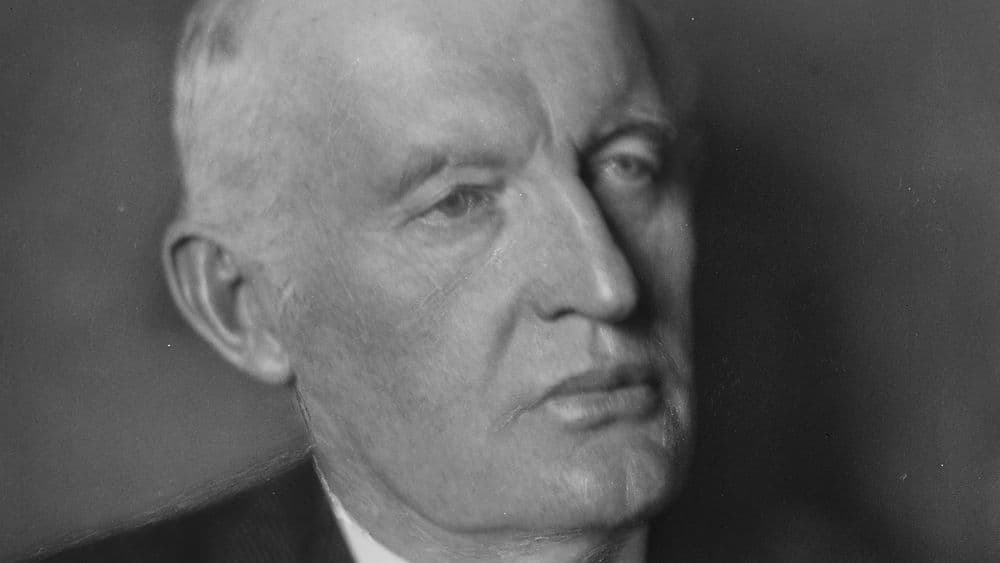
Illustrated: Edvard Munch by Anders Beer Wilse. Public domain, via Wikimedia Commons