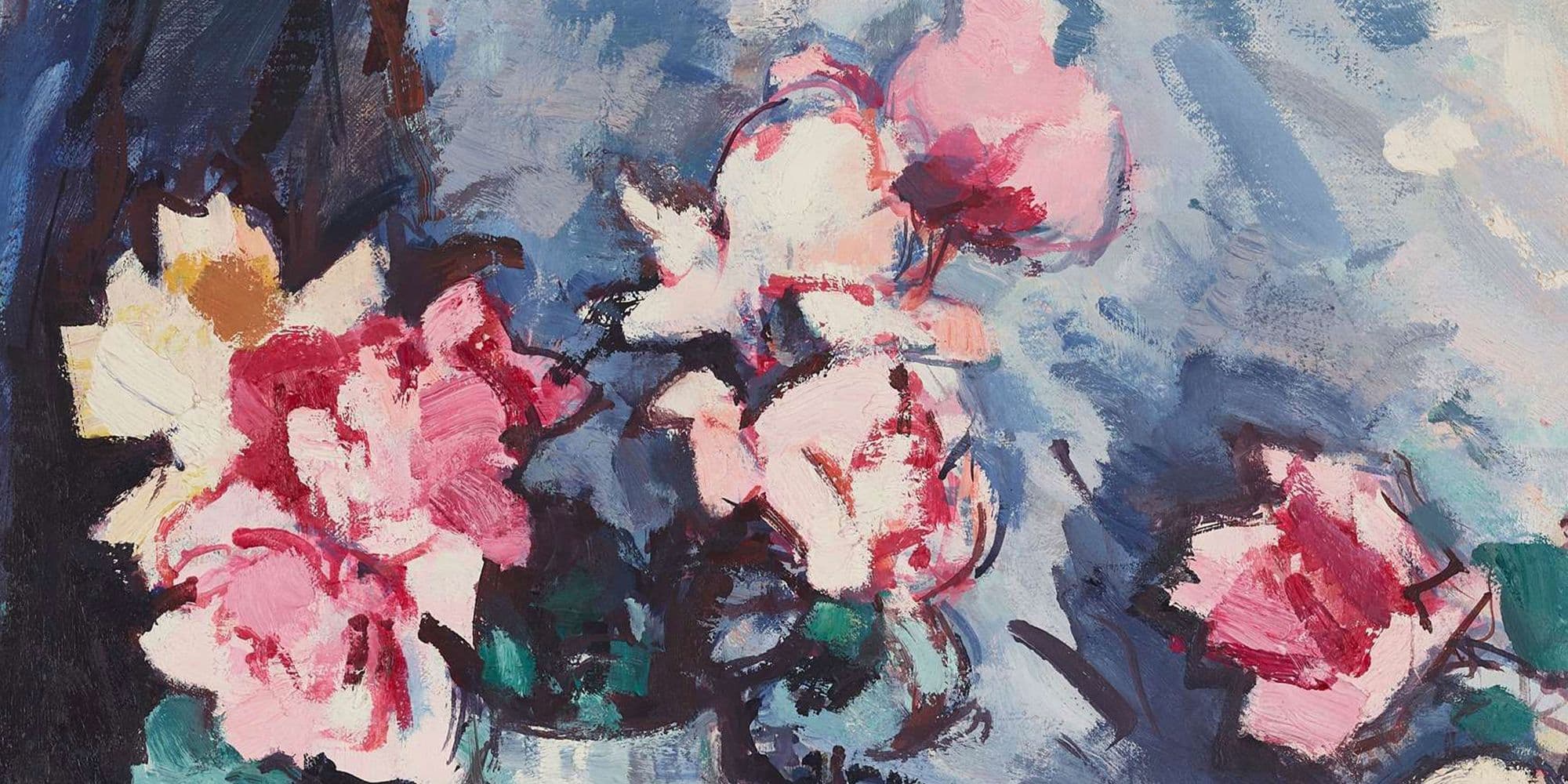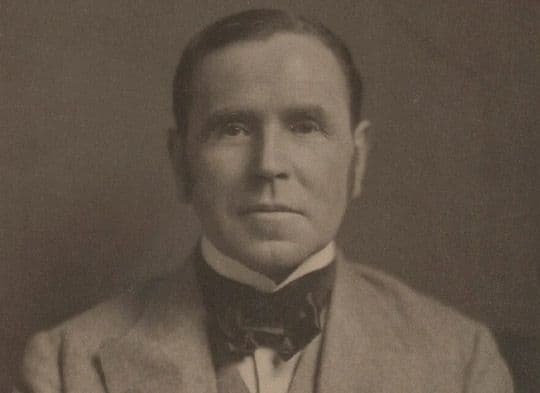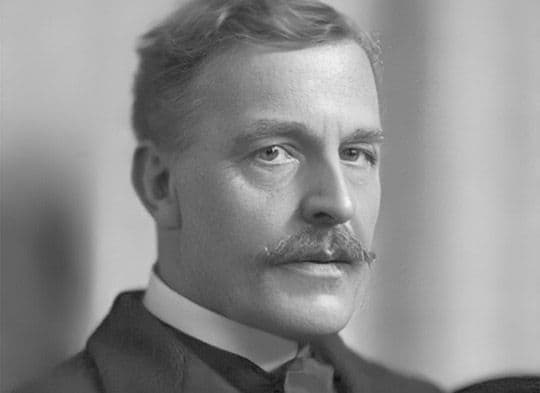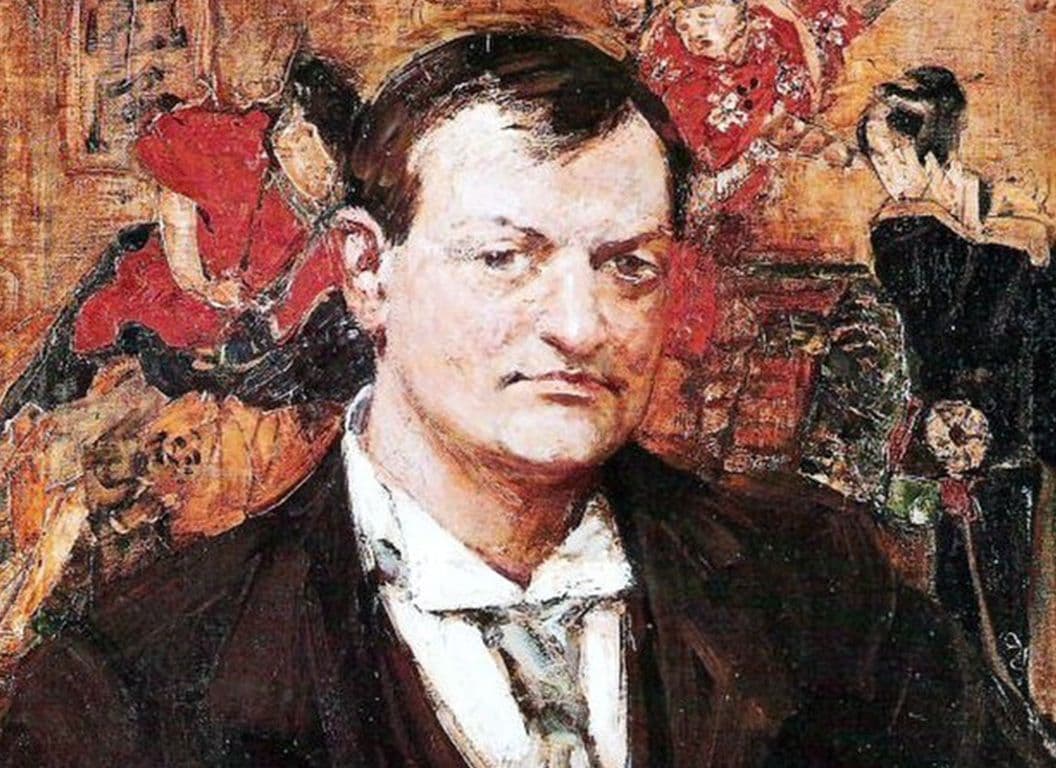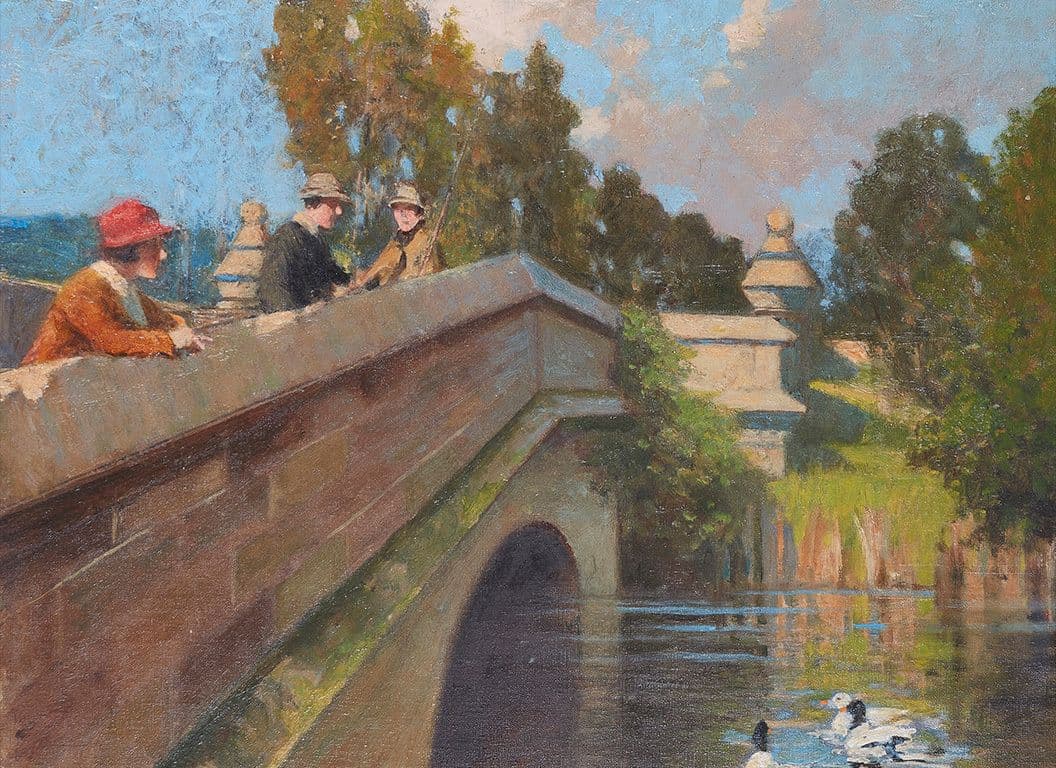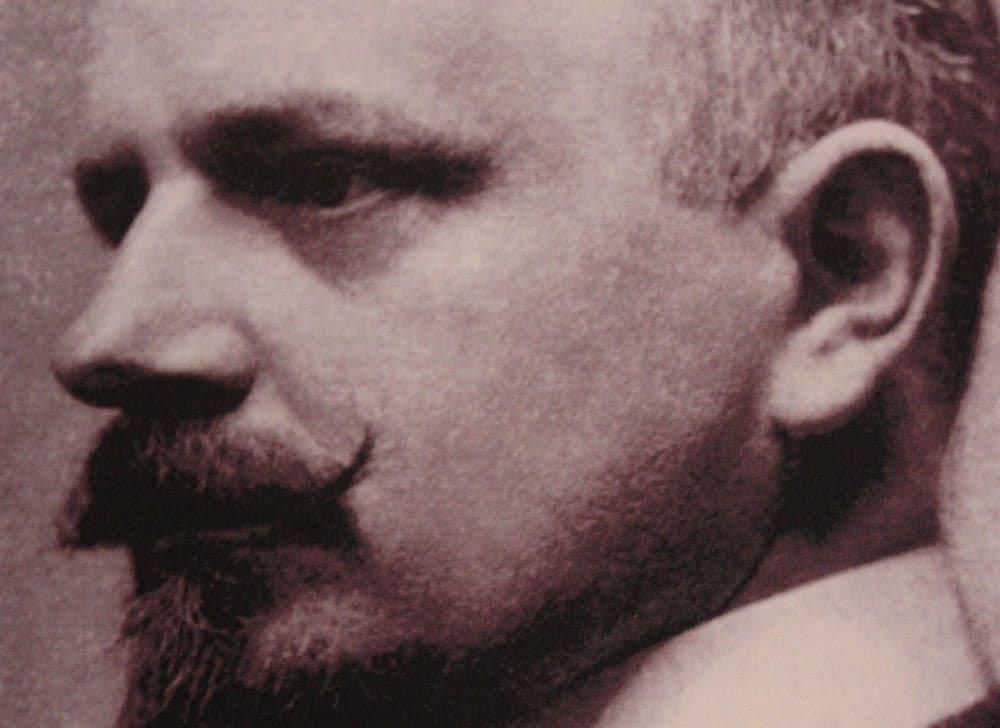
David Gauld was a Scottish painter whose work occupies a distinctive place within the circle of the Glasgow Boys. His output can broadly be divided into two strands: decorative figure studies inflected with Art Nouveau stylisation, and softly handled landscapes and cattle scenes rooted in close observation of the natural world.
Born in Glasgow in 1865, Gauld studied at the Glasgow School of Art before further training in Paris. Like many of his contemporaries, he absorbed continental influences while remaining committed to Scottish subject matter. His early decorative works reflect the influence of Art Nouveau, with elongated figures, refined line and a heightened sense of design. These compositions reveal his interest in pattern and symbolism, aligning him with the wider decorative movement that emerged in Britain at the turn of the century.
Alongside these more stylised works, Gauld produced landscapes and pastoral scenes that demonstrate a quieter, more contemplative sensibility. His cattle paintings in particular became a defining element of his practice. Rather than treating animals as incidental to the landscape, Gauld gave them weight and presence, rendering them with a sensitivity that drew critical attention. As noted by P. J. M. McEwan, Gauld was “more concerned with the moods of nature than with mere transcription of facts" and his cattle scenes were praised for their “tenderness and veracity”.
This duality, decorative invention on one hand, atmospheric naturalism on the other, distinguishes Gauld within the Glasgow Boys. His landscapes are marked by soft tonal transitions and an emphasis on light and mood, while his figure studies demonstrate careful attention to line and composition.