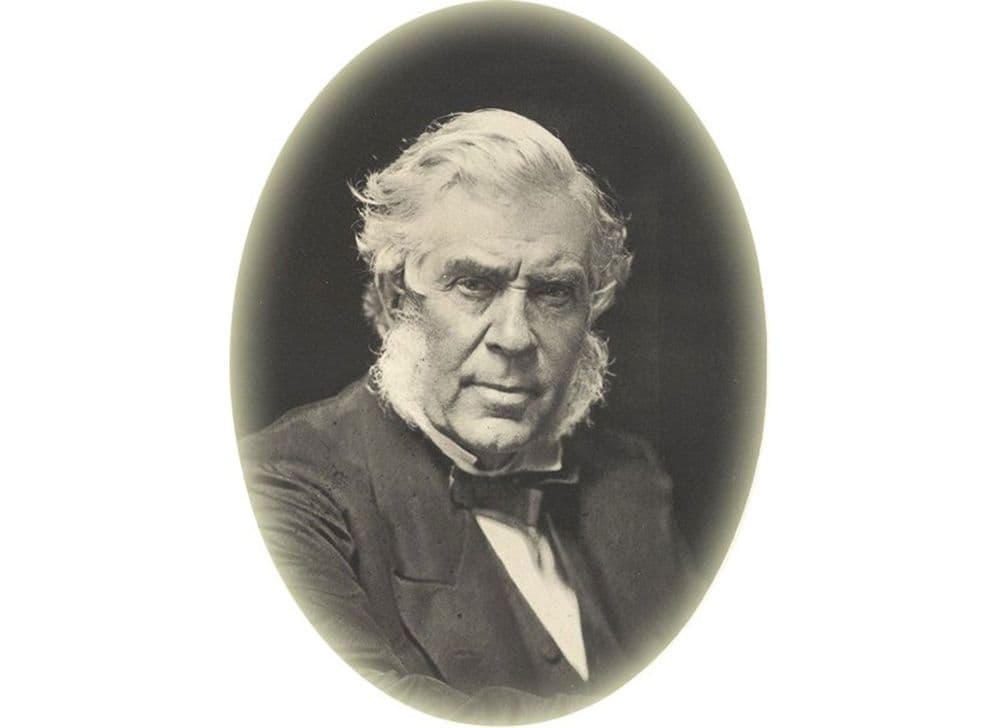
Sir Daniel Macnee (Scottish, 1806–1882)
Sir Daniel Macnee was the leading portrait painter in late nineteenth-century Scotland, admired for both his technical accomplishment and his ease with sitters. His work combines assured draughtsmanship with a refined sensitivity to character, qualities that secured him a prominent place in Scottish artistic life.
Macnee’s talent was apparent from an early age. While still in his teens, he was employed by a medical lecturer as an anatomical illustrator, producing detailed drawings across the West of Scotland. This early discipline in observation and structure informed his later portraiture, lending it a clarity of form and confident handling of the human figure.
As his reputation grew, Macnee became known not only for his artistic skill but also for his engaging personality. Contemporary accounts describe him as an accomplished conversationalist, and the experience of sitting for a Macnee portrait was often noted for its informality and charm. This rapport enabled him to capture a sense of individuality in his subjects, many of whom were leading figures in Scottish society.
In 1876, Macnee succeeded Sir George Harvey as President of the Royal Scottish Academy, reflecting his standing within the artistic establishment. The following year he was knighted, further cementing his position as one of Scotland’s foremost painters.
Examples of Macnee’s portraiture are held in major public collections, including the National Portrait Gallery and the National Galleries of Scotland. Today, he remains recognised as a central figure in Victorian Scottish art, whose portraits offer both technical assurance and insight into the cultural life of his time.