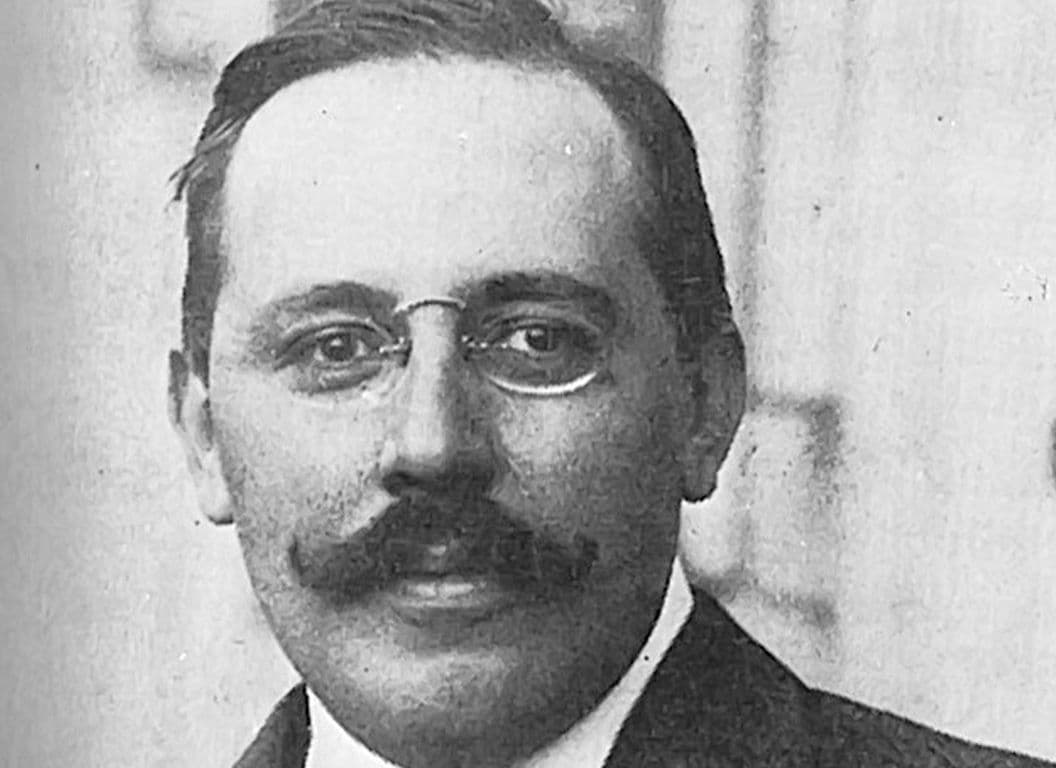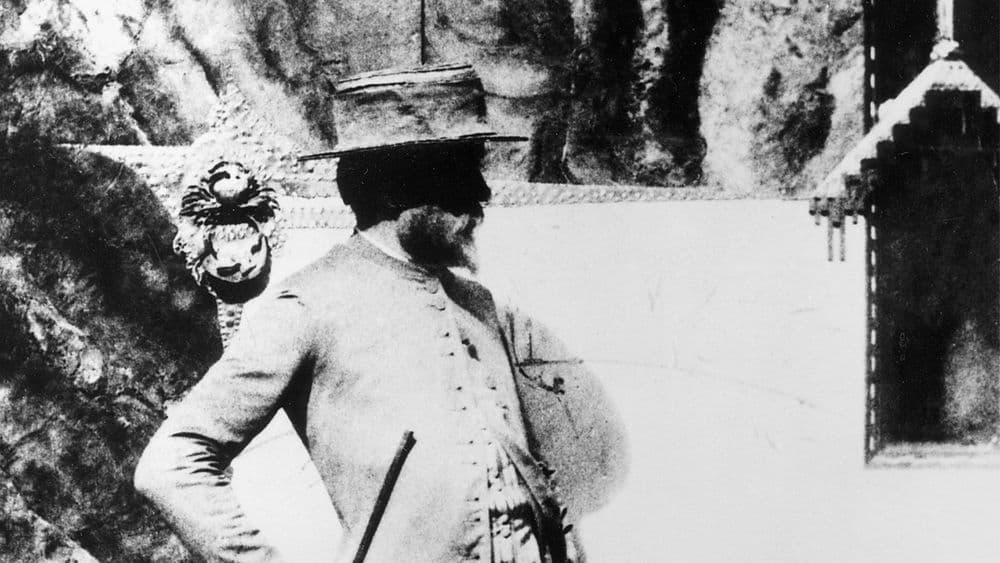
Carlo Bugatti began designing furniture in 1880, following his studies in his home city of Milan and further education in Paris. He gained international attention through his participation in world fairs, first exhibiting in London in 1888 at the Italian Exhibition at Earl’s Court, where he was awarded an honorary prize.
In the Paris World Fair of 1900, he was awarded a silver medal for his furniture. For the Turin Exhibition of 1902 he created the memorable Snail Room, designing the whole interior and not just the furnishings.
His eclectic style was influenced by Gothic, Moorish and Byzantine designs which he assimilated into his own unique creations. Widely acclaimed as one of the leading Art Nouveau designers, he embraced traditional craftsmanship and combined media in works that remain both exotic and opulent. He utilised wood which is often ebonised or stained, with leather, vellum, pewter, copper and brass, mother of pearl and silk tassels.
Besides his interior designs and furniture, Bugatti also painted, created jewellery and, from 1907, designed works in silver that were cast by his friend Adrien A. Hèbrard.
He was the father of the sculptor Rembrandt Bugatti (1885-1916) and Ettore Bugatti (1881-1947) the automobile manufacturer. For more information, please visit the Bugatti Trust.
Image Credit: Bugatti Trust Archive