Camille Tharaud was a French ceramic artist and manufacturer associated with one of Limoges' most respected porcelain-making families. Active during the late nineteenth and early twentieth centuries, he helped continue and expand the family ceramics business, establishing a reputation for finely executed decorative wares that reflected changing artistic tastes from Art Nouveau to Art Deco.
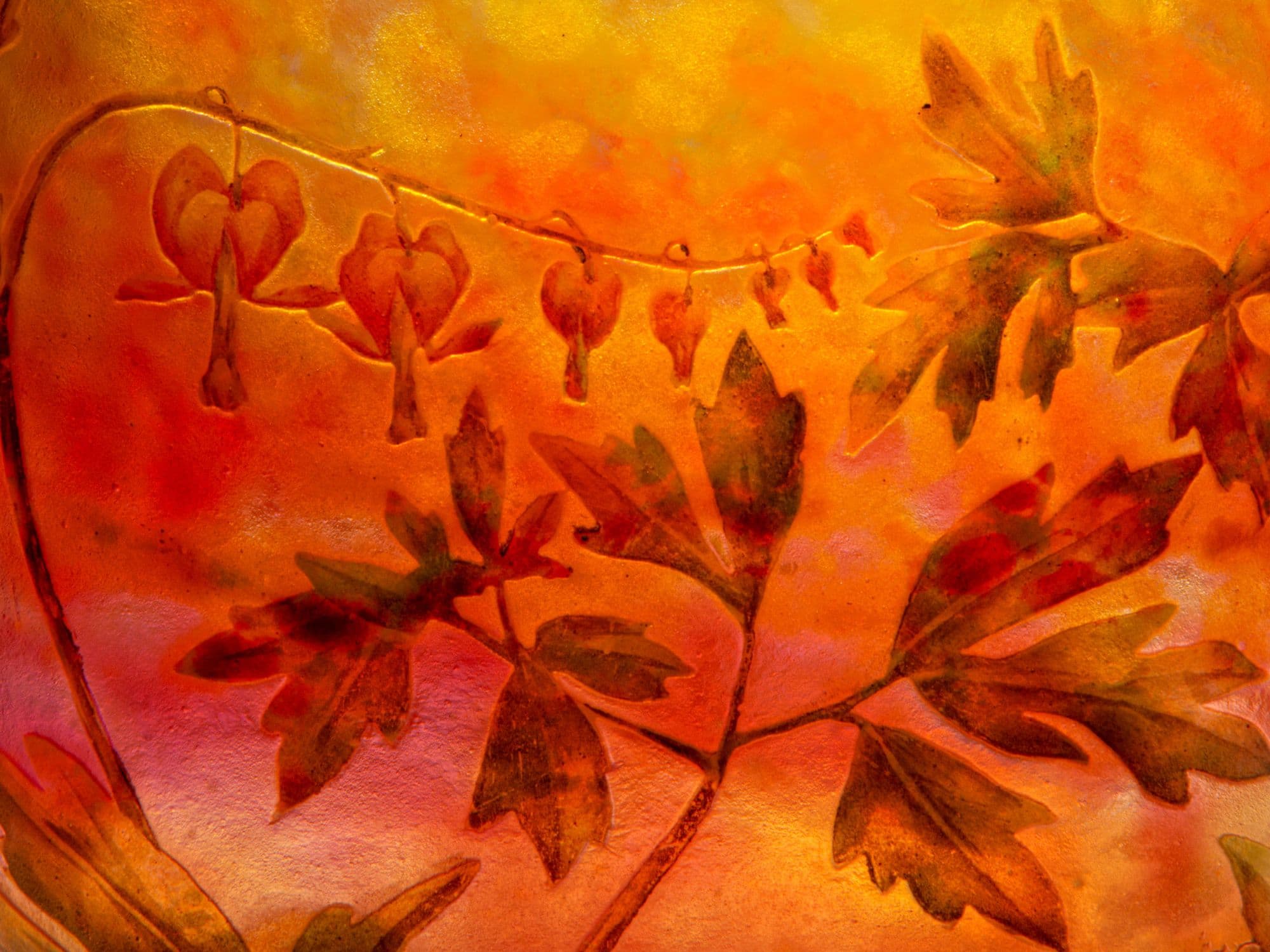
Tharaud exhibited at the landmark Paris Exposition Universelle of 1900, a defining event that showcased the latest developments in art, design, and industry at the dawn of the twentieth century. His early work often employed the demanding pâte-sur-pâte technique, in which layers of liquid porcelain are carefully built up to create delicate relief decoration. These pieces frequently featured landscapes, floral motifs, and botanical subjects, demonstrating both technical mastery and a deep appreciation for nature.
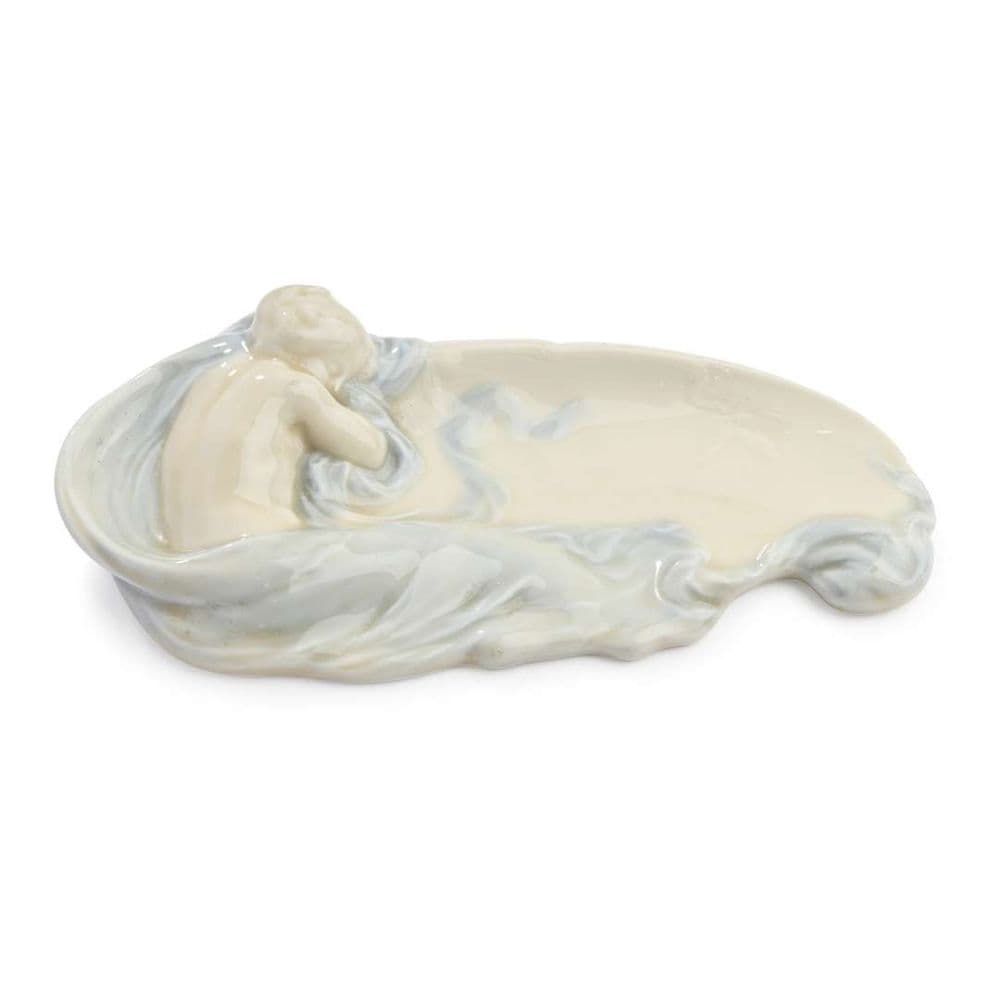
The present dish exemplifies the flowing elegance of the Art Nouveau movement, with its sinuous arabesque lines, organic forms, and female imagery. Such designs reflect the era's fascination with beauty, symbolism, and the natural world, themes that were widely embraced by French decorative artists around the turn of the century.
As artistic tastes evolved during the 1920s and 1930s, Tharaud successfully adapted his production to the emerging Art Deco style. His later porcelain works adopted cleaner lines, stylised forms, and a more modern aesthetic while maintaining the high quality for which Limoges porcelain was renowned. During this period, Tharaud collaborated with notable designers including Marcel Goupy, whose elegant and sophisticated designs helped shape some of the firm's most distinctive creations.