Who is Anwar Jalal Shemza?
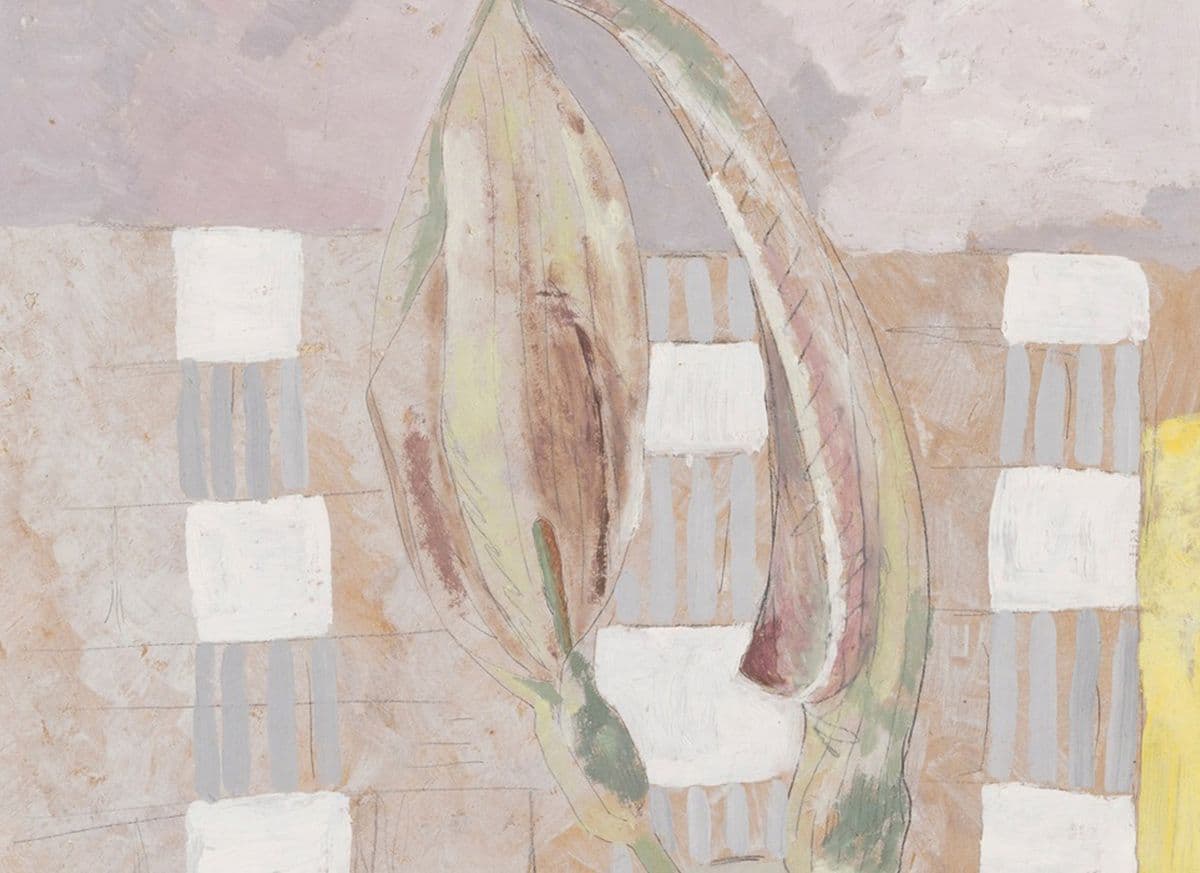
Anwar Jalal Shemza (1928-1985) was a Pakistani-born artist and writer who later worked in the United Kingdom. Although notable for his visual art, he also published several Urdu novels and poetry collections during the 1950s and wrote plays that were broadcast on Radio Pakistan. Early in his career, Shemza drew inspiration from Modernist artists particularly Paul Klee while his later work increasingly reflected traditional Islamic artistic influences.
How was Anwar Jalal Shemza initially received in the UK?
Shemza came to Britain from Lahore in 1956 to join a new wave of émigré artists that also included Francisco de Souza, Frank Bowling, Avinash Chandra & and Aubrey William. All had a burning desire to be part of the Modern movement, overcome deterritorialization and connect with a vibrant international art world.
A leading member of Modernist group ‘The Lahore Art Circle’ in Pakistan Shemza experienced a personal crisis when he began his studies at the Slade School of fine art in 1956. After failing drawing tests and being overlooked for the annual Young Contemporaries exhibition he became anxious and depressed. A further blow was dealt when celebrated art historian Ernst Gombrich, lecturing at Slade, described Islamic Art as being purely functional. As his confidence crumbled, he was forced to reassess and ask himself, ‘Who and I.’ Realising that he was no longer the artist he was before coming to Britian, Shemza attempted to start again. He subsequently destroyed his earlier drawings and paintings to try to unlearn what he knew and rebuild his practice.
How did Anwar Jalal Shemza’s work evolve?
Despite these setbacks Shemza threw himself back into his work with relentless intensity. By 1959 he was exhibiting at the New Vision Centre and the Royal Commonwealth Society, followed by a significant showing at Gallery One in 1960. His paintings caught the eye of influential critics, among them George Butcher and W. G. Archer, Keeper of the Indian Section at the Victoria and Albert Museum. They were drawn to the clarity and logic of his compositions, describing his works as possessing a “bold determination” and a “reasoned confidence,” yet suffused with a strange, compelling beauty that set him apart.
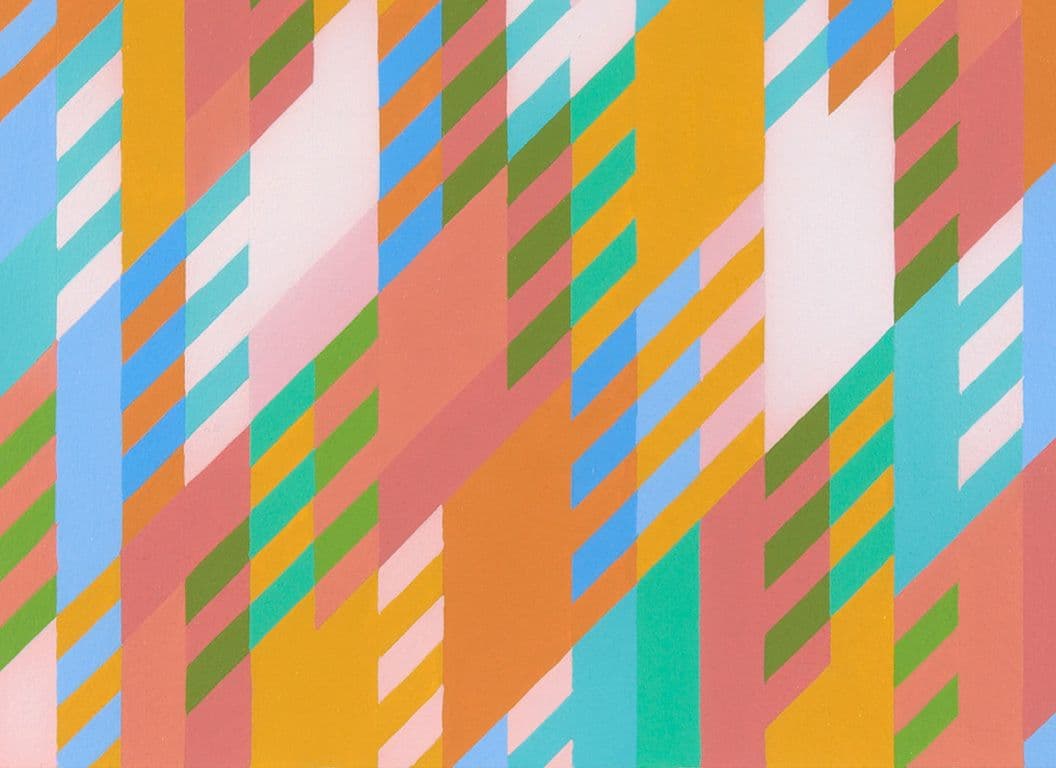
In search of a new visual language that could hold both Islamic heritage and Western Modernism Shemza had started to experiment with the intersection of the circle and the square. These simple forms with infinite permutations became the basis for a lifetime of work.