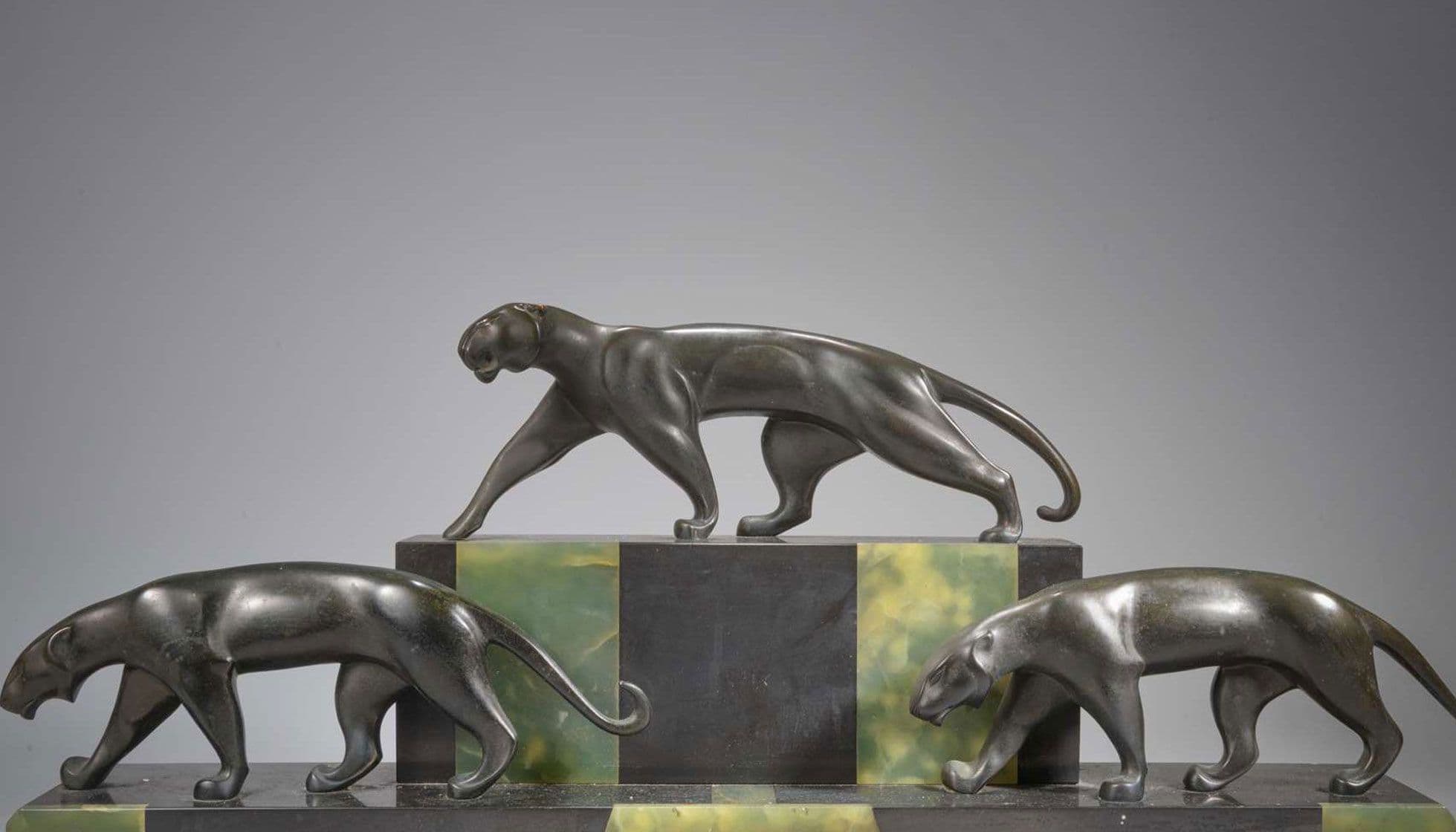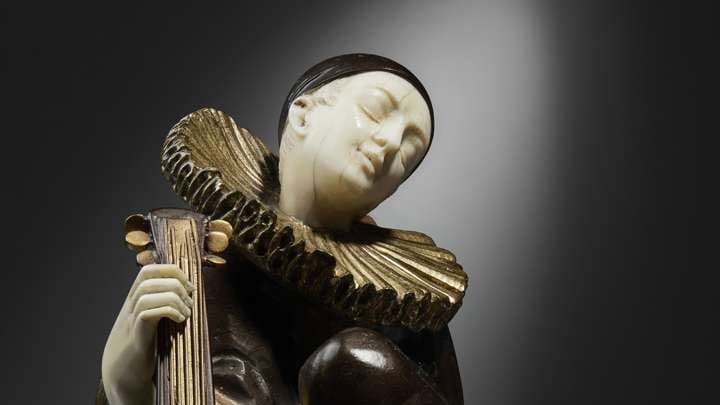
Whilst relatively little is known about the life and career of the French sculptor André Gilbert, his surviving works perfectly embody the glamour, sophistication, and modernity of the Art Deco era. Active during the early decades of the twentieth century, Gilbert specialised in decorative sculpture, producing elegant compositions that reflected the period's fascination with movement, performance, and the idealised human form.
Working primarily in bronze, ivory, and marble, Gilbert created striking figures of dancers, young couples, athletes, and circus performers. His sculptures capture a remarkable balance between grace and energy, combining elongated, stylised forms with dynamic poses that convey rhythm and vitality. These themes were central to the Art Deco aesthetic, which celebrated modern life through streamlined design and refined craftsmanship.
Gilbert's figures often possess a theatrical quality, reflecting the influence of contemporary dance, music halls, and the growing popularity of performance culture in interwar Europe. Whether depicting a poised dancer caught in a moment of movement or an acrobatic performer displaying strength and agility, his sculptures reveal a keen understanding of anatomy and composition.
Like many leading Art Deco sculptors, Gilbert frequently employed contrasting materials to enhance the visual impact of his work. The combination of patinated bronze with ivory or marble created a luxurious effect that appealed to collectors seeking sophisticated decorative objects for fashionable interiors. These mixed-media sculptures remain among the most distinctive expressions of French Art Deco craftsmanship.