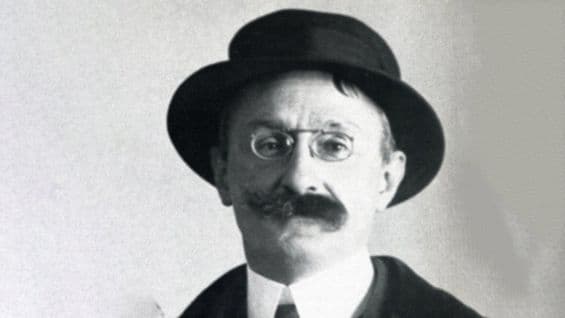
Albert Marquet was a French painter associated with Fauvism, best known for his coastal landscapes, harbour scenes and views of cities across France, Europe and North Africa. A lifelong friend of Henri Matisse, Marquet developed a distinctive approach characterised by subtle colour harmonies and a refined handling of light, volume and space.
Although he emerged alongside the Fauves in the early twentieth century, Marquet was known for a more restrained palette than many of his contemporaries. As his work developed, the brilliant colours of Fauvism increasingly gave way to harmonious combinations of greys, yellows, violets and blues.
Albert Marquet and Fauvism
Marquet was born in Bordeaux in 1875 and moved to Paris in 1890 to attend the École des Arts Décoratifs. He later studied under the Symbolist painter Gustave Moreau at the École des Beaux-Arts, where he met Henri Matisse and developed a close and lasting friendship with the artist.
Marquet exhibited at the Salon des Indépendants and, alongside Matisse, André Derain, Georges Braque and others, participated in the 1905 Salon d’Automne. It was here that critic Louis Vauxcelles famously used the term fauves, or ‘wild beasts’, to describe the artists whose bold use of colour came to define Fauvism.
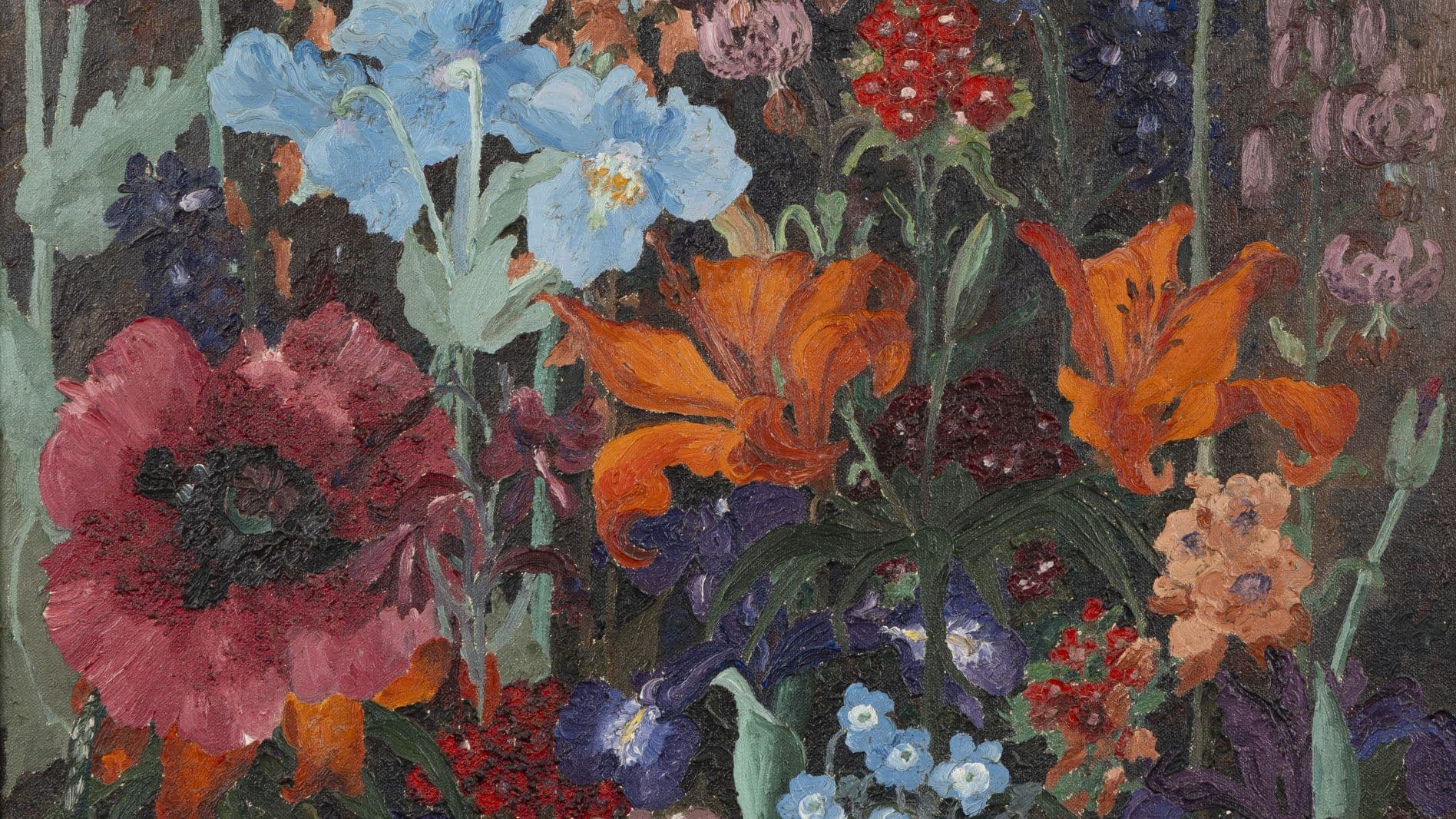
Marquet shared the Fauves’ interest in expressive colour and formal simplification, but his approach was characteristically restrained. This quieter use of colour would become increasingly important as he developed his own artistic language.
Landscapes, Harbours and the Mediterranean
Travel became central to Marquet’s life and work. He painted extensively along the coasts of Europe and North Africa, returning repeatedly to ports, beaches, rivers and cities.
From Normandy and Venice to the Mediterranean and Algiers, water became one of the recurring elements of his paintings. His mature landscapes are characterised by carefully balanced compositions, subtle tonal relationships and an ability to evoke the particular qualities of light and atmosphere of a place.
Albert Marquet in Algiers
Algiers became particularly important to Marquet.
He first visited the city in the winter of 1920, having travelled to Algeria in an attempt to escape the bouts of illness he experienced during winters in Paris. His friend, the art historian Élie Faure, had encouraged him to seek a more hospitable climate.
Shortly after arriving, Marquet wrote to Faure:
“The weather is marvelous in Alger and I think I will work here.”
Marquet fell in love with the city, its strong, clear light, deep shadows and the soft pastel colours of its low buildings. He returned regularly to Algeria and met Marcelle Martinet in Algiers, whom he married in February 1923.
Mustapha Supérieur and the Bay of Algiers
As Marquet explored the heights surrounding Algiers, he found subjects that would occupy him repeatedly.
He first painted Mustapha Supérieur in 1921. At the time, it was a suburb beyond the city, lush with trees and flowers. Its elevated position allowed Marquet to construct compositions with bright, articulated foregrounds opening onto sweeping views of the pink and ochre city and the blue expanse of the Mediterranean beyond.
Flower beds, cypress trees, hillside gardens, the harbour and the Bay of Algiers became recurring elements of his North African paintings.
By 1924, Marquet had settled at Villa Miramar, situated on the picturesque Route Laperlier in the hills above Algiers. From here, he enjoyed panoramic views across the bay and towards Mustapha Supérieur.
The surrounding landscape became a lasting source of inspiration, and Marquet returned to these views repeatedly in his paintings.
Albert Marquet’s Painting Style
Marquet’s paintings are distinguished by their apparent simplicity. Buildings, boats, trees and figures are often reduced to clear shapes, while carefully controlled areas of colour establish depth and atmosphere.
Although his early career was closely connected with Fauvism, his mature work moved towards a more naturalistic and tonally balanced approach. Rather than relying on brilliant colour alone, Marquet increasingly used subtle variations of blue, grey, yellow and violet to describe changing light and weather.
His travels provided an extraordinary variety of subjects, but his interest remained remarkably consistent: the relationship between land, water, architecture, colour and light.
Albert Marquet’s Legacy
Marquet died in La Frette-sur-Seine in 1947, aged 71. Today his work is represented in major international museum collections, including the Museum of Modern Art, New York; Art Institute of Chicago; Tate, London; Musée d’Orsay, Paris; and the State Hermitage Museum, St Petersburg.
His paintings of the Mediterranean and North Africa remain an important part of his work, recording the places to which he returned while demonstrating the distinctive sensitivity to colour, atmosphere and space that characterised his mature style.
Illustrated: musee-ceret.com, Public domain, via Wikimedia Commons