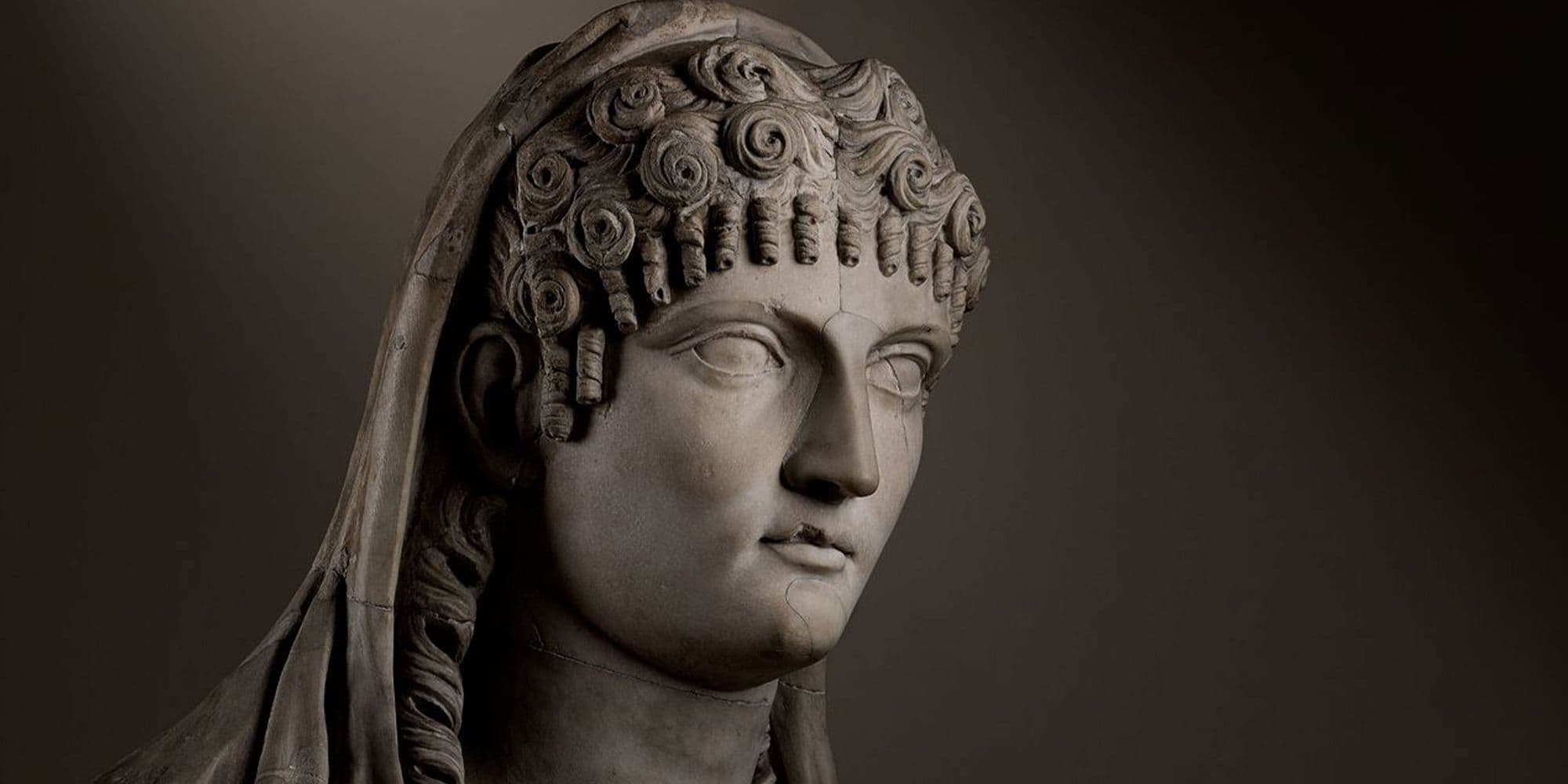
Roman portrait busts possess a remarkable ability to collapse time. Carved nearly two millennia ago, these marble likenesses still project authority, beauty, and human presence with startling immediacy.
Whether depicting emperors, philosophers, gods, or idealised figures from mythology, they continue to fascinate collectors not simply as archaeological survivals, but as objects that embody the ambitions of civilisation itself.
To the ancient Greeks and Romans, beauty was never merely decorative. Physical harmony reflected cosmic order, divine favour and intellectual balance. Sculpture became one of the clearest expressions of these ideals, transforming marble into something seemingly alive. In depictions of Aphrodite, goddess of love and beauty, elegance and danger coexist: her beauty was understood as a force powerful enough to inspire devotion, destabilise kingdoms, and alter the course of mythic history. Classical audiences would have recognised such imagery immediately, understanding these sculptures not simply as portraits, but as manifestations of divine and cultural values.