Artists Against the Bomb
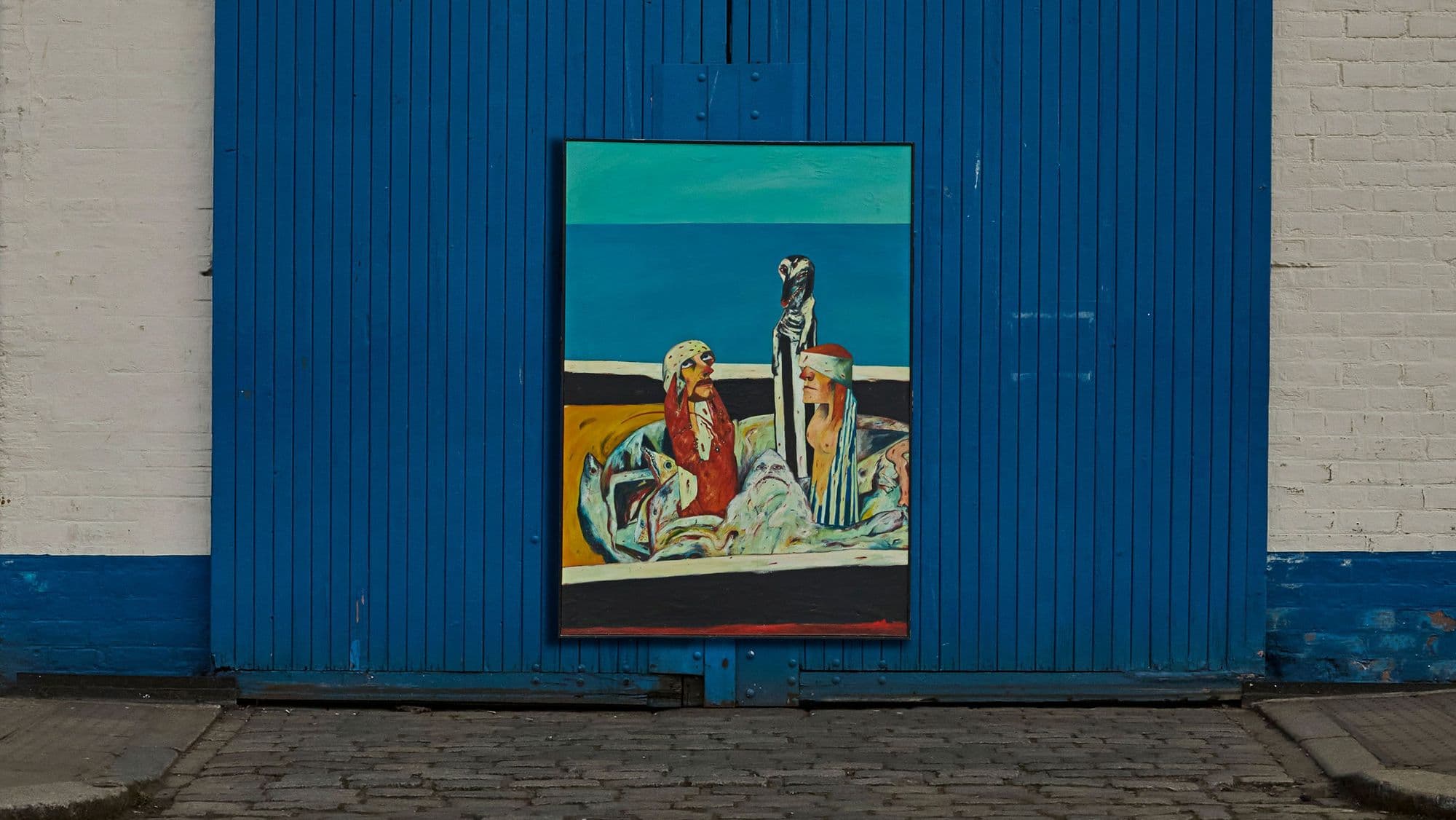
Gray created Glasgow Triumph of Death while studying Design and Mural Painting at Glasgow School of Art. In 1957, he was invited to contribute to Artists Against the Bomb, an exhibition held at Glasgow’s McLellan Galleries before travelling to Edinburgh’s Gateway Theatre.
The exhibition responded to growing nuclear anxiety during the Cold War. For artists in Scotland, that concern had an immediate geographical dimension following plans to establish a major nuclear weapons base at Holy Loch.
Gray drew upon Pieter Bruegel the Elder’s The Triumph of Death and the apocalyptic imagery of Hieronymus Bosch. In place of Bruegel’s skeletons, Gray populated his composition with distorted, mutant-like figures. Recognisable Glasgow landmarks rise behind the turmoil, including the Necropolis, Cathedral, Royal Infirmary, Clyde and St Enoch station. The result is both local and universal: a portrait of Glasgow transformed into a warning about destruction, power and human folly.
Anticipating the World of Lanark
Many of the concerns embodied in Glasgow Triumph of Death would later reappear in Lanark, Gray’s landmark first novel, published in 1981. The Cathedral and Necropolis are not merely topographical details; they help connect the young artist’s Glasgow with the city’s later fictional transformation.
Gray’s visual and literary practices were never entirely separate. His books combined fiction, illustration, lettering and unconventional page design, while his paintings frequently carried narrative, symbolic and political meaning. Glasgow Triumph of Death demonstrates how early that synthesis had begun.
Works Across Gray’s Career
The January 2024 auction also included works demonstrating the breadth of Gray’s practice. A set of six lithographs from the Lanark series showed how he translated the novel’s graphic language into print. The group sold for £4,536 including buyer’s premium.
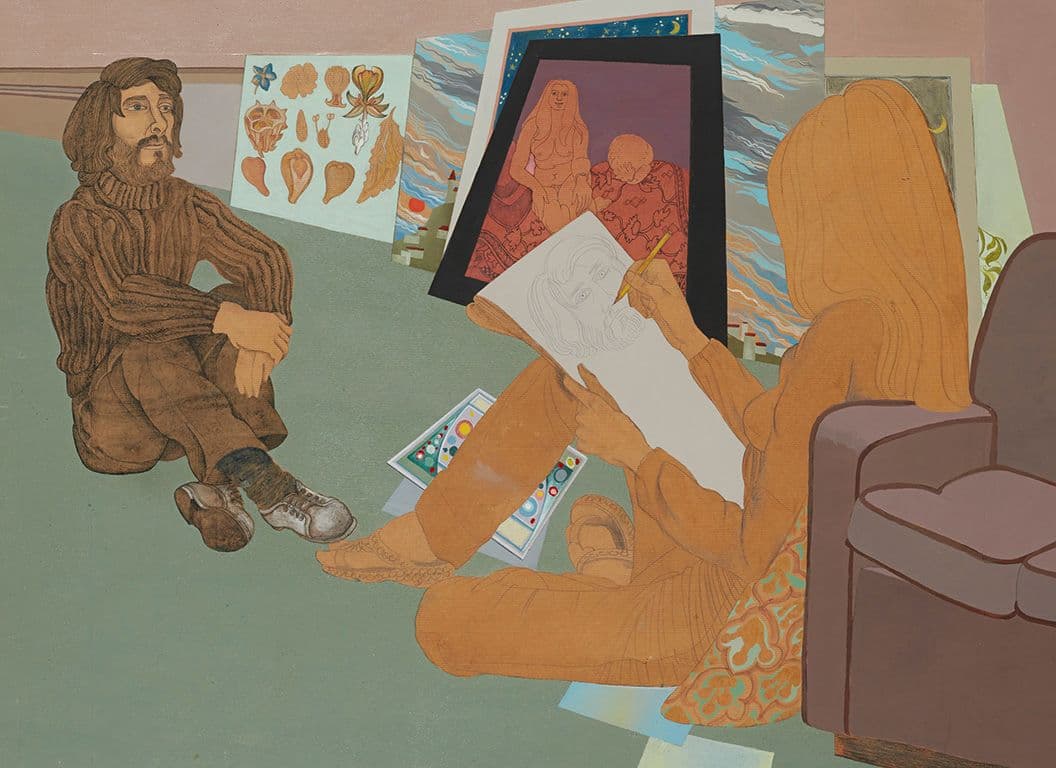
The New Room, from the 1972 Film Sequence with Liz Lochhead series, belonged to an unrealised collaboration involving Gray, poet Liz Lochhead and BBC producer Malcolm Hossick. Gray created images to accompany Lochhead’s poems for a proposed film about a doomed relationship. Although the film was never completed, the surviving pictures document an important intersection of poetry, painting and television.
A 1984 portrait of the poet Aonghas MacNeacail, which sold for £2,772 including buyer’s premium, reflected another recurring feature of Gray’s practice: his sustained interest in depicting friends, writers and fellow members of Scotland’s creative community.
Glasgow as Subject and Collaborator
From 1977 to 1978, Gray served as Glasgow’s official artist recorder, producing portraits and street scenes for the People’s Palace. He continued to draw and paint the people around him while undertaking public mural commissions across the city.
Glasgow gave Gray a setting, a cast of characters and a visual vocabulary. In return, his novels, artworks and murals changed how generations of readers and viewers imagined the city.
Explore Alasdair Gray at Auction
For current and past lots, market information and specialist valuation advice, visit our Alasdair Gray auction results and valuations page.