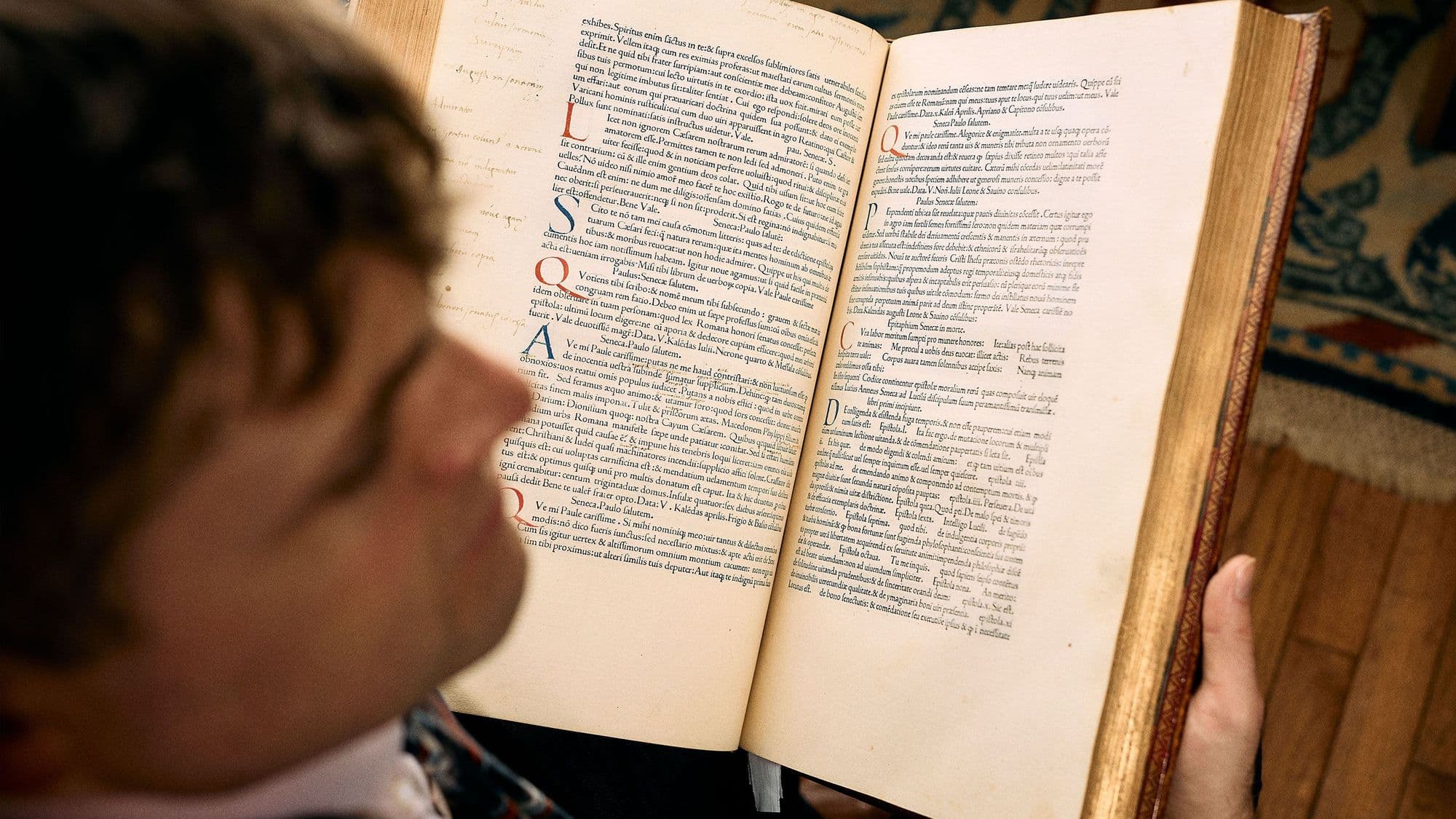
Historical documents capture a moment in time, but that moment’s place in history may only become clear with the passage of centuries. With hindsight we see events differently from how they would have appeared to its participants, who, whether kings, queens, or courtiers, will have struggled to bend an unyielding world to their will, and fallen victim to circumstances outside their knowledge or control.
BOOKS & MANUSCRIPTS
The Head that Wears a Crown: Documents of Royal Misfortune
18 February 2026
Dominic Somerville-Brown
Edward IV
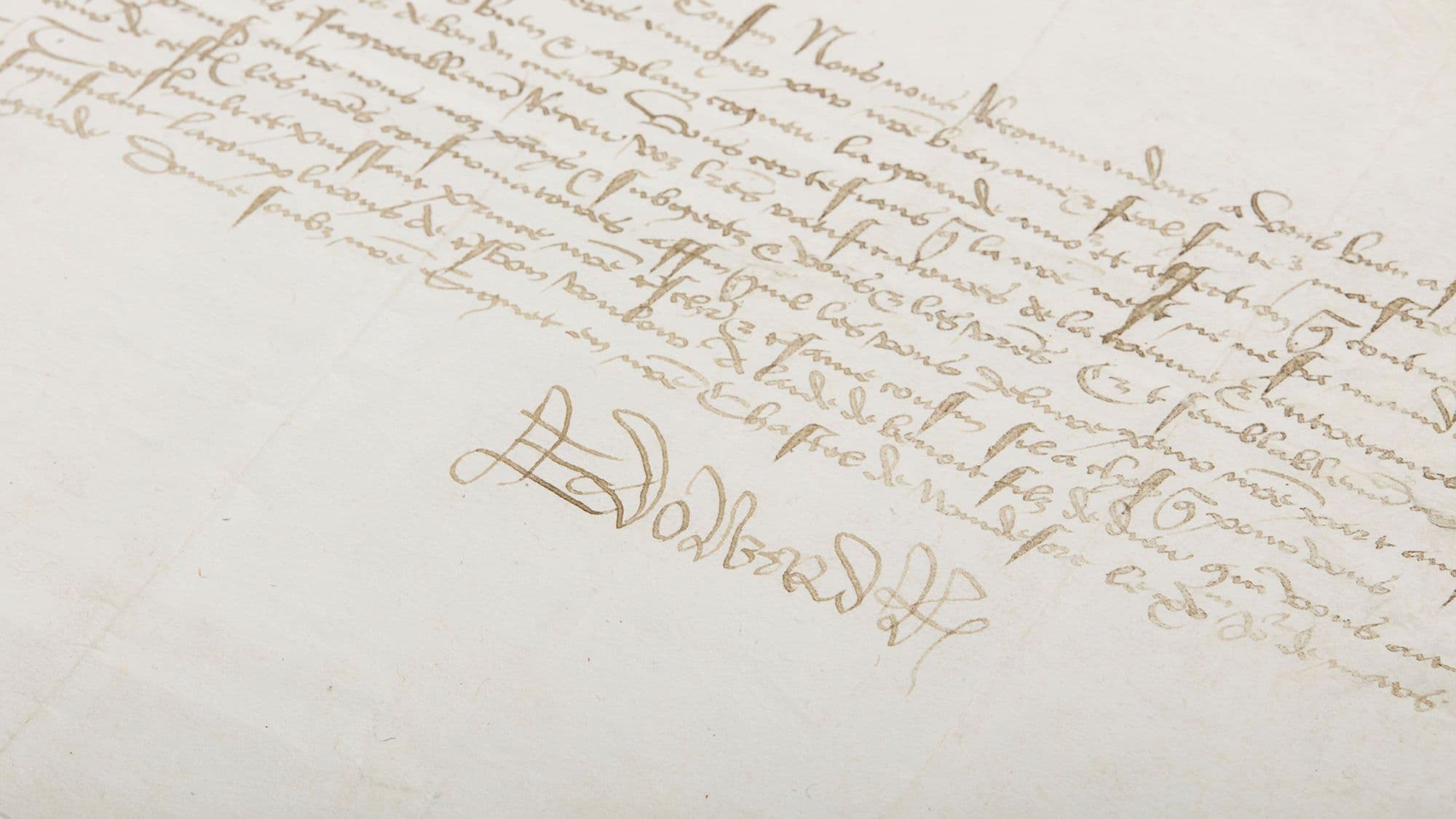
The 15th-century English monarch Edward IV emerged as a victor in the Wars of the Roses, the dynastic contest between the rival houses of York and Lancaster. Edward first secured the crown in 1461 at the battle of Towton, the largest and bloodiest battle ever fought on English soil, with almost 30,000 dead. In 1469 he was deposed by his cousin the Earl of Warwick, but regained power with two stupendous battlefield victories in as many months, first at Barnet in April 1471, then at Tewkesbury three weeks later.
By the mid-1470s, when Edward was concluding an important peace treaty with François II, Duke of Brittany, his authority was at its height, with all serious domestic rivals either dead or in exile. One cause for concern, and the covert target of his diplomatic efforts, appears to have been a certain Lancastrian nobleman who a few years before had been granted asylum by François.
Edward was then a young man in his mid-thirties who might have expected to live another twenty years. His death in 1483, at the age of 40, led to the crown passing to his young son Edward V. The ensuing events, immortalised by Shakespeare and without doubt one of the most fascinating and dramatic episodes in English history, saw the usurpation of the throne and murder of its young incumbent by Edward’s brother Richard, who in the process became Richard III. Richard reigned only briefly before his defeat and the final suppression of the Yorkist claim by the man Edward IV had failed to retrieve from his exile in Brittany: Henry Tudor, now Henry VII, the first Tudor king.
Had Edward lived a few years longer he might have secured the future of the house of York and history would have taken a different course. Documents signed by this medieval warrior king are very rare, and he is the earliest English monarch whose signature is procurable today.
Lady Jane Grey
Lady Jane Grey is one of the most enigmatic and tragic figures in English history: a teenage girl remembered by eyewitnesses for her classical learning, but really the pawn of Tudor magnates in a fight to the finish for the English crown. As the granddaughter of Henry VIII’s sister, she held a viable claim to the throne, which was duly exploited by John Dudley, Duke of Northumberland, the effective ruler of England during the later reign of the boy-king Edward VI.
In 1553, with Edward VI dying, Northumberland married Jane to his son, and oversaw the alteration of Edward’s will to identify Jane as his successor. Jane was proclaimed queen on 10 July, but news quickly reached London that Mary, Henry VIII’s Catholic daughter, was raising an army in East Anglia. Over the next few days Northumberland improvised frantically to secure the new regime, dispatching messengers to obtain the support of the county gentry, while himself riding east to meet Mary in battle. Two days after the signing of a privy council warrant sending messengers to Somerset, Berkshire and Oxfordshire, Northumberland’s tenuous authority collapsed, and the reign of Lady Jane Grey was ended: both figures were soon to be executed by a triumphant Mary I.
James Francis Edward, ‘The Old Pretender’
In the 18th century, another claimant to the now united crown issued a document which to modern eyes seems similarly forlorn. After the defeat of the Jacobite Rising of 1715, James Francis Edward, ‘The Old Pretender’, sailed from his French exile to Scotland, landing at Peterhead on 22 December. He travelled south, arriving at Scone Palace outside Perth on 8 January.
Two days later, the Earl of Mar published a printed proclamation ordering all of James’s subjects to rally to his standard, though James himself had seen on his arrival in Scotland that the military situation was hopeless. Receiving news of the impending arrival of Hanoverian forces, James secretly boarded a boat for France, never to return to the land he claimed as his kingdom.