Satsuma Pottery: How to Recognise Quality & Authenticity
27 September 2026
Caroline Liu
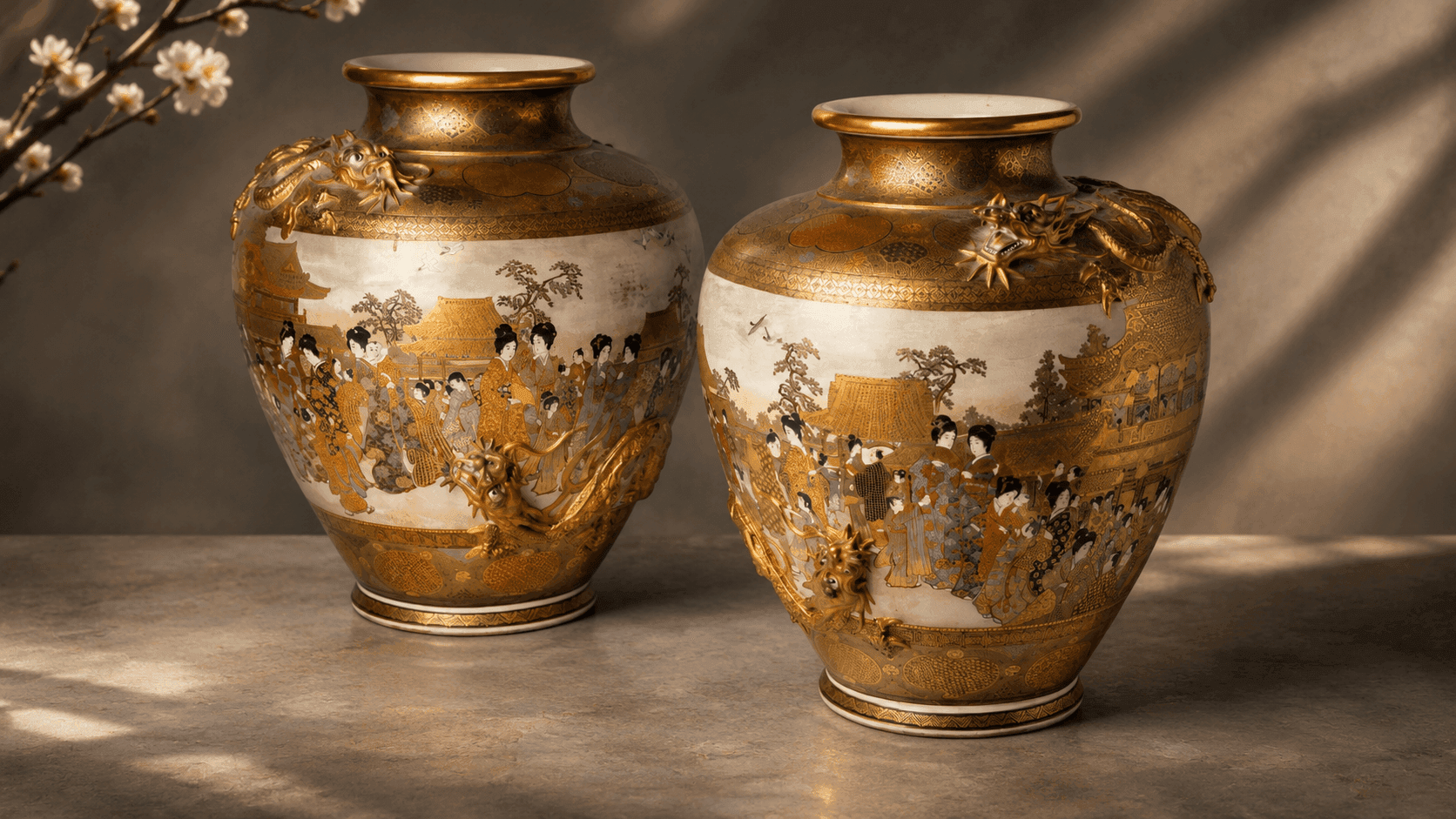
Few Japanese ceramics are as immediately recognisable as Satsuma pottery. With its finely crackled ivory-coloured glaze, intricate painted decoration and delicate gilding, Satsuma became one of Japan's most celebrated ceramic exports during the nineteenth century.
However, the quality of Satsuma pottery varies enormously. From exceptional works by renowned Meiji period ceramicists to more commercially produced decorative wares, understanding the differences is essential when identifying, collecting or valuing these distinctive Japanese ceramics.
How Can You Identify Genuine Satsuma Pottery?
Traditional Satsuma pottery is typically made from earthenware with a cream or ivory-coloured glaze displaying fine crazing. Decorated examples often feature coloured enamels and gilding. Authenticity and quality are assessed through the ceramic body, glaze, decoration, signatures and workmanship, rather than any single identifying characteristic.
Got Something to Sell?
Start with a conversation. Find out how much your Japanese art could sell for at auction with a free valuation.
The History of Japanese Satsuma Pottery
Satsuma pottery takes its name from the former Satsuma Province, now largely part of Kagoshima Prefecture in southern Japan. Its origins can be traced to the late sixteenth and early seventeenth centuries, when Korean potters brought to Japan following Toyotomi Hideyoshi's invasions of Korea established ceramic traditions in the region. Early Satsuma wares were considerably different from the elaborately decorated pieces familiar to Western collectors today. Production included both dark-glazed utilitarian ceramics and refined pale-bodied wares.
During the nineteenth century, Satsuma developed an increasingly international reputation. Its presentation at the Paris International Exposition of 1867 helped introduce the ceramics to European audiences, shortly before the beginning of the Meiji period (1868–1912). Growing overseas demand encouraged production beyond Kagoshima, with workshops in Kyoto, Osaka, Yokohama and elsewhere developing their own interpretations of the Satsuma style.
It is this later tradition of finely decorated export pottery that many collectors associate with Satsuma today.
Key Characteristics of Satsuma Pottery
Feature
What to Look For
Material
Earthenware rather than true porcelain
Glaze
Cream or ivory-coloured glaze on typical decorated examples
Surface
Fine network of glaze crazing
Decoration
Coloured enamels, gilding and detailed painted designs
Subjects
Figures, landscapes, flowers, birds and religious imagery
Period
Many collectible export examples date from the Meiji period
Marks
Painted or impressed signatures, workshop marks and occasionally the Shimazu crest
How to Recognise High-Quality Satsuma Pottery
Examine the Detail of the Painting
The finest Satsuma pottery rewards close examination. Figures may be depicted with individually painted facial expressions, elaborate textiles and carefully articulated gestures, while landscapes can contain extraordinary detail within a remarkably small area. Look at the precision of the brushwork, the definition of outlines and the treatment of individual elements within the composition.
On less accomplished examples, faces may appear repetitive, outlines less controlled and decorative details more formulaic. The amount of decoration is not necessarily an indication of quality. A restrained composition executed with exceptional skill can be just as desirable as an elaborately painted vessel.
Look Closely at the Gilding
Gold decoration is one of the defining features of many Meiji period Satsuma wares. On particularly fine examples, gilding is used to articulate patterns on clothing, highlight architectural details, define borders and introduce subtle decorative contrasts.
The application of gold should be considered alongside the painted decoration. Heavy gilding alone does not make a piece valuable. Original gilding can also be vulnerable to wear, particularly around rims, handles and raised surfaces.
Consider the Composition
Accomplished Satsuma artists understood how to adapt their designs to the shape of a ceramic vessel. On a finely decorated vase, the relationship between the painted scenes, decorative borders and curved surface may be carefully considered. Designs can unfold around the vessel, drawing the eye from one scene to another. The most successful examples demonstrate an understanding of both ceramic form and pictorial composition.
Examine the Glaze and Ceramic Body
The pale, finely crackled glaze associated with decorated Satsuma is an important part of its appearance. Known as crazing, the network of fine lines develops through differences in contraction between the glaze and ceramic body as the object cools.
While this characteristic is associated with many genuine Satsuma wares, crazing can also be reproduced on later ceramics. It should never be relied upon as proof of age or authenticity. The unglazed foot, ceramic body, weight and finish of the vessel can provide additional information about its manufacture.
Understanding Satsuma Pottery Marks and Signatures
The underside of a Satsuma vase, bowl or dish may contain a painted signature, workshop mark or other identifying inscription. These marks can refer to an individual artist, a ceramic workshop, a commercial enterprise or a place of production. One frequently encountered symbol is the Shimazu family crest, consisting of a cross within a circle. The Shimazu clan historically ruled the Satsuma domain, and the crest appears on many ceramics associated with the Satsuma tradition.
However, its presence does not necessarily indicate that a piece was commissioned by the Shimazu family, produced in Kagoshima or made during a particular period. Similarly, the presence of a recognised artist's signature does not automatically establish authenticity. Marks were sometimes copied or reproduced, making it important to examine the quality and characteristics of the object itself.
Important Satsuma Pottery Makers and Workshops
Several artists and workshops became particularly associated with the production of exceptional Satsuma ceramics during the Meiji period.
Yabu Meizan (1853–1934)
Working in Osaka, Yabu Meizan became renowned for exceptionally detailed miniature decoration.
His workshop produced ceramics featuring landscapes, flowers, birds and scenes of Japanese life, often rendered on a remarkably small scale. The precision of the decoration and sophistication of the compositions distinguish many of his finest works.
Kinkozan
The Kinkozan workshop in Kyoto was one of the most prominent producers of Satsuma-style ceramics for the international market.
Under Kinkozan Sobei VII (1868–1927), the workshop developed a considerable reputation for finely decorated export wares. Production encompassed a broad range of forms, decorative styles and levels of quality.
Ryozan
Works signed Ryozan, particularly those associated with the Yasuda Company of Kyoto, are known for their accomplished figural decoration and detailed depictions of Japanese life.
Finely painted scenes, carefully rendered textiles and elaborate decorative borders are among the characteristics collectors may encounter.
Seikozan
Satsuma ceramics bearing the Seikozan name can display intricate painting, elaborate gilding and sophisticated decorative schemes. As with other recognised names, the quality of individual examples should be considered alongside the signature.
Taizan
The Taizan name is associated with a family of Kyoto ceramicists. Taizan Yohei IX (1856–1922) is particularly associated with decorated ceramics produced during the Meiji period. Works can demonstrate a distinctive approach to colour, naturalistic decoration and ceramic form.
How to Tell the Difference Between Fine Satsuma and Later Reproductions
The popularity of Satsuma pottery encouraged widespread production, both during the Meiji period and throughout the twentieth century.
Not all later Satsuma-style ceramics were intended to deceive. Many were produced as affordable decorative objects for domestic and international markets. Others bear marks or decorative features intended to resemble earlier wares.
Characteristics of Fine Satsuma
Features Often Seen on Less Accomplished or Later Wares
Precise, controlled brushwork
Simplified or repetitive painting
Carefully rendered facial features
Generic or indistinct figures
Finely applied gilding
Broad or heavy gold decoration
Considered decorative compositions
Repetitive decorative arrangements
Carefully finished ceramic forms
Less refined finishing
Detailed hand-painted ornament
Printed or mechanically reproduced elements
These differences are useful starting points, but they are not definitive tests of age or authenticity. Genuine Meiji period Satsuma was produced at many different levels of quality.
What Collectors Look for in Satsuma Pottery
When assessing Satsuma pottery, it is often the smaller details that distinguish an exceptional example.
Miniature painting: Some of the most accomplished Satsuma decoration is found on small vessels, where the artist has achieved extraordinary detail within a limited space.
Unusual subjects: While landscapes, religious figures and scenes of Japanese life are frequently encountered, unusual or particularly sophisticated compositions may attract additional interest.
Interior decoration: Bowls, dishes and covered vessels may feature carefully executed decoration on interior surfaces that are easily overlooked.
Original components: Matching covers, original fittings and associated storage boxes can contribute to an object's completeness and desirability.
Condition of the gilding: Well-preserved gold decoration allows the quality of the original workmanship to be fully appreciated.
Pairs and sets: Surviving pairs of finely decorated vases or complete sets can be particularly appealing to collectors.
How Much Is Satsuma Pottery Worth?
The auction value of Satsuma pottery varies considerably. While commercially produced decorative examples may have modest values, exceptional works by recognised Meiji period artists and workshops can command substantial prices.
Factors influencing the value of Satsuma pottery include:
Artist or workshop attribution
Quality and complexity of painted decoration
Rarity of form or subject matter
Date and period of manufacture
Condition of the glaze, enamels and gilding
Original covers and associated components
Provenance and collection history
Current international collector demand
Size is not necessarily an indication of value. A small, exquisitely painted Satsuma vase may be considerably more desirable than a large, elaborately decorated example of lesser quality. Our specialists consider these characteristics alongside comparable auction results when assessing individual works.
Caring for Satsuma Pottery
Satsuma pottery requires careful handling, particularly where the surface features delicate enamels and gilding. Avoid abrasive cleaning products, prolonged soaking and vigorous polishing. The fine crazing in the glaze can allow moisture and contaminants to penetrate the surface, while repeated cleaning may gradually remove gold decoration.
If you have inherited Satsuma pottery or are considering selling a collection, it is advisable to seek specialist advice before attempting to clean or restore it.
Department
Asian Art
Frequently Asked Questions About Satsuma Pottery
Satsuma is a Japanese ceramic tradition originating in the former Satsuma Province in southern Japan. During the nineteenth century, Satsuma-style ceramics were also produced in Kyoto, Osaka and other Japanese manufacturing centres.
Traditional Satsuma pottery is earthenware rather than porcelain. Decorated examples are often distinguished by their cream-coloured ceramic body and finely crackled glaze.
The age of a Satsuma vase can be assessed through its ceramic body, glaze, decorative style, manufacturing techniques and marks. Many elaborately decorated export examples date from the Meiji period, although similar wares continued to be produced during the twentieth century.
Fine glaze crazing is characteristic of many decorated Satsuma wares, but not every ceramic associated with the Satsuma tradition has this appearance. Crazing alone is not sufficient to establish authenticity.
Yes, unmarked Satsuma pottery can be valuable. Although signatures may assist with attribution, the quality of the decoration, rarity, age and condition are also important considerations.
The cross within a circle is associated with the Shimazu family crest. It appears on many Satsuma ceramics but does not, on its own, establish the maker, age, geographical origin or value of a piece.
Exceptionally decorated works by recognised artists and workshops, including Yabu Meizan and Kinkozan, can be particularly desirable. Value depends on the individual object's quality, rarity, condition and market demand rather than the signature alone.
Lyon & Turnbull offers complimentary auction valuations for Japanese ceramics, including Satsuma pottery. Photographs of the entire object, its decoration, underside and any signatures or marks can help our specialists undertake an initial assessment.
Satsuma Pottery Valuations at Lyon & Turnbull
From finely painted miniature vessels to elaborate decorative wares produced for the international market, Satsuma pottery offers a fascinating insight into Japanese craftsmanship and the development of collecting tastes during the Meiji period.
Lyon & Turnbull's Asian Art specialists assess Japanese ceramics across a range of periods, makers and manufacturing traditions. Our dedicated Japanese Art auctions provide a focused platform for Japanese ceramics and decorative arts, bringing individual works and private collections to an international audience.
If you own Satsuma pottery and would like to understand its potential auction value, contact our specialists for a complimentary and confidential auction valuation.