The Detail That Sets the Aquanaut Apart
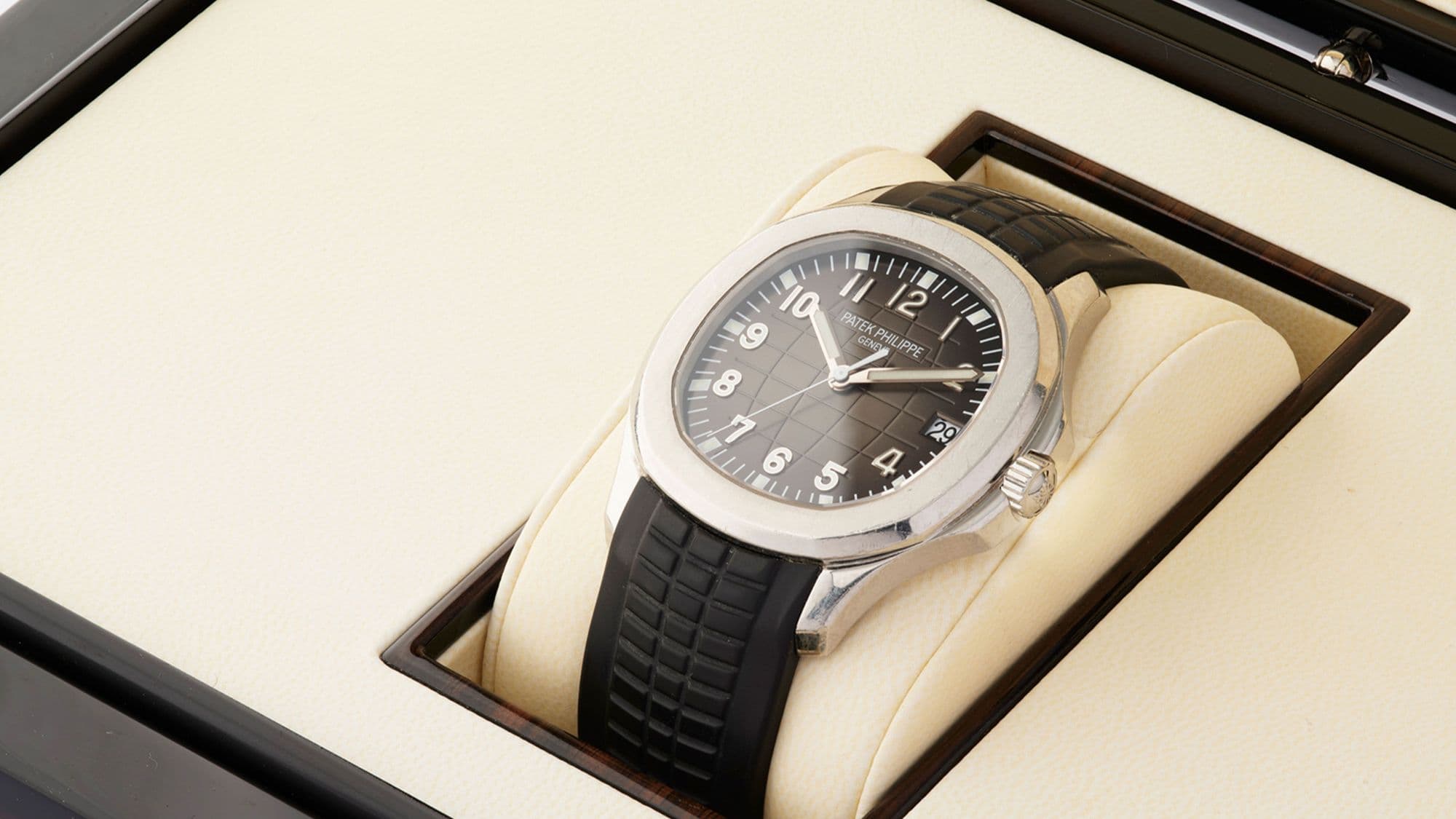
To create a seamless transition between the case and strap, the texture on the rubber strap matched the raised guilloche motif on the dial. The distinctive patterned dial has become one of the Aquanaut’s most iconic features and has been likened to a grenade, a bar of Swiss chocolate, or the longitudinal and latitudinal lines on a globe. The rubber strap was a playful move from Patek and by using pattern to integrate it with the dial, they managed to execute it with a certain level of finesse.
Another key feature of the Aquanaut 5060A was its size. When first released in 1997 it featured a surprisingly small case size at 36.5mm. At a time when bigger cases were in vogue, this was a bold move, but the smaller size lent the watch some versatility as it felt contemporary whilst remaining pared back and wearable. As Theirry Stern, the president of Patek Philippe, said of the Aquanaut ‘We [had] to surprise people but with the same spirit of beauty, elegance, and quality’.
The Aquanaut was a big commercial feat for Patek Philippe and within one year of initial release they had launched six new references. These featured variations such as a quartz calibre, a sapphire case back to reveal the movement and a yellow gold case. Patek Philippe also went on to experiment with colour, releasing Aquanaut models in colours such as orange, khaki green, blue and red. These were daring design choices for a brand which typically opted for a more traditional aesthetic and showed their willingness to engage with a new audience who were after a more casual and fun approach to luxury.