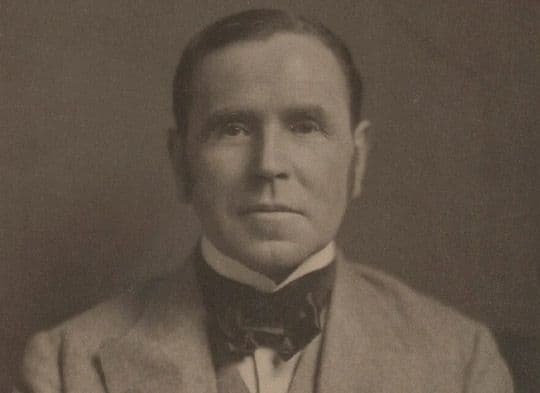
Born in Belfast and orphaned at the age of three, Lavery’s start in life had been inauspicious. Brought up by relatives in Ulster and the west of Scotland, his career began as a photographer’s assistant, while learning to draw in classes for working men at the Haldane Academy, part of Glasgow School of Art.
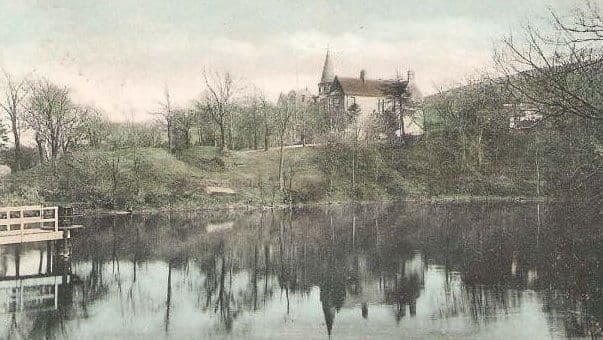
Times were nevertheless hard. Following the collapse of the city bank in 1878 poverty was widespread and Lavery was struggling to make ends meet. Seeking further training and his fortune, he left for Paris in 1881. During his absence the seeds of economic recovery began to bear fruit and Lavery’s successes in France had gone before him. Friendship with the Fultons began within months of his return at the end of 1884, with the mill-owner offering the painter a cottage adjacent to the present pond to act as his studio while he painted the portraits of his daughters, Alice and Eva, (Paisley Museum Collection), and other works in the district.³
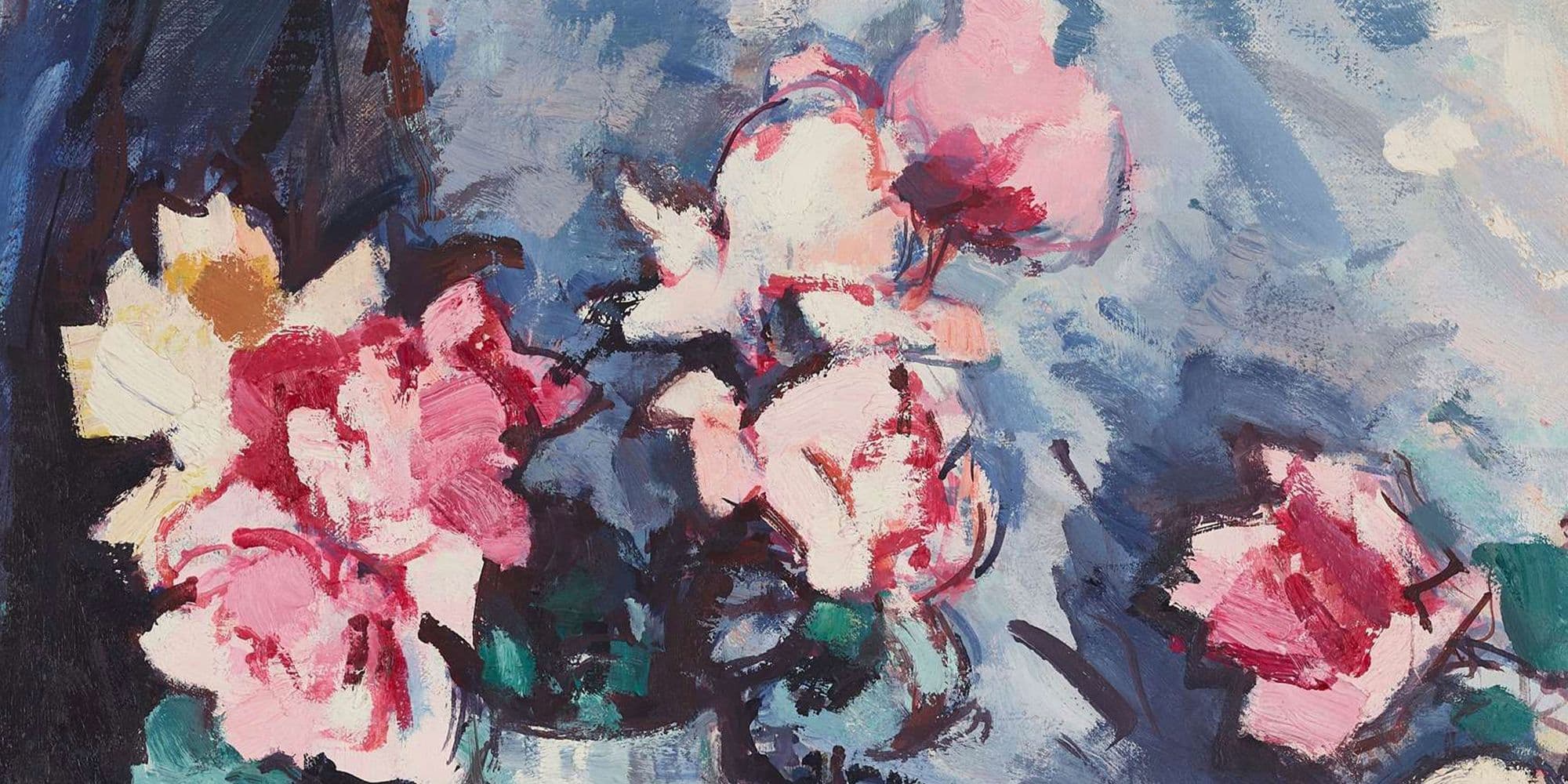
Quite evidently Lavery delighted in the setting and although a checklist has not survived, it is safe to assume that being painted ‘in the neighbourhood’ this canvas, A Summer Afternoon, and other works such as Waterfall, The Glen, Paisley would have been displayed in his first solo exhibition at the end of the year.⁴
Now sadly demolished, the house had been built by the Fulton brothers’ grandfather in 1859. My thanks are due to Victoria Irvine and Michael Durning for their invaluable work on Lavery’s contacts with the Fulton family. Fulton’s factory lay at the bottom of the hill and was served in its dying processes by soft rainwater held uphill in three ponds – really three small dams. The present pond was drained and filled-in during the twentieth century.
The cottage originally stood on the slope, off to the left of the present work. On early maps it was originally marked as ‘Burn Crook’, but later became known as ‘Lavery Cottage’. During these years Lavery also maintained a studio in St Vincent Street, Glasgow, in what might be described as the artist’s quarter, in close proximity to Glasgow Art Club, of which he was a member. While making use of the cottage, Lavery retained his studio at 101 St Vincent Street in the centre of Glasgow.
Suave, self-confident, painted en plein air and spontaneously composed, the present work demonstrates a maturity found elsewhere in more ambitious canvases such as the celebrated Tennis Party, 1885 (Aberdeen Art Gallery). Few works can so accurately be placed in time and space, when a valuable social historical record becomes a moment of aesthetic delight.