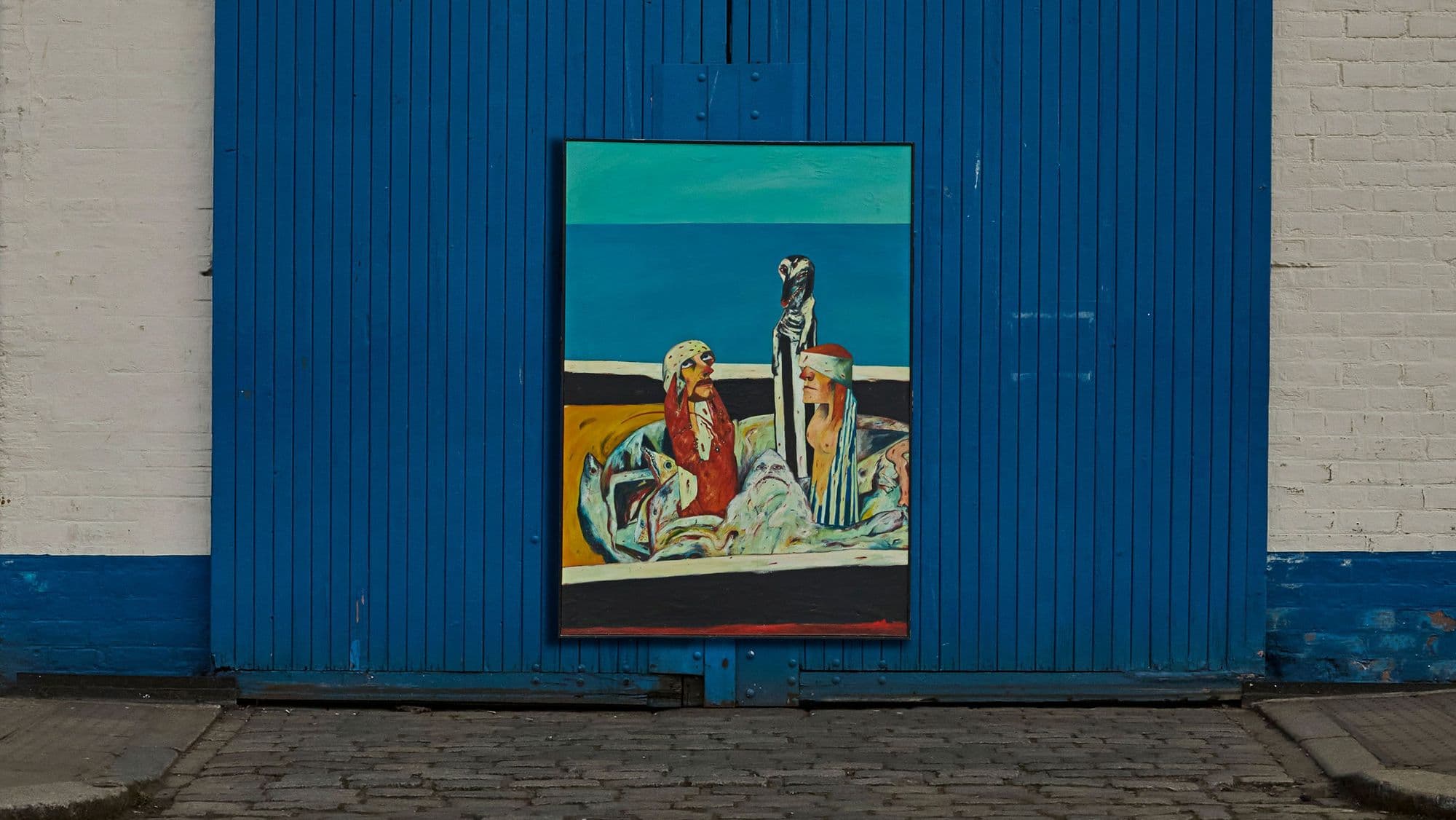
John Byrne’s distinctive portrait of The Beatles brings together his fascination with popular music, character and the imaginative possibilities of portraiture. Born in Paisley in 1940, Byrne studied at The Glasgow School of Art from 1958 to 1963, going on to become one of Scotland’s most versatile artists, working across painting, illustration, theatre and album-cover design. His playful approach to characterisation became a defining feature of his practice.
Contemporary Art
John Byrne and The Beatles
10 September 2026
Charlotte Cockburn
From ‘Patrick’ to The Beatles
The Beatles held a particular place within Byrne’s engagement with pop culture, especially during the period in which he adopted the persona of ‘Patrick’ – the fictional self-taught artist whose work was exhibited at the Portal Gallery in London from 1967.
The gallery attracted a fashionable clientele from the worlds of film, music and photography, including The Beatles, particularly Ringo Starr, who is thought to have owned paintings by Byrne under the ‘Patrick’ persona.
Byrne would subsequently produce album artwork for a number of musicians, including the image below which was apparently originally created in 1968 as a possible cover for the White Album.
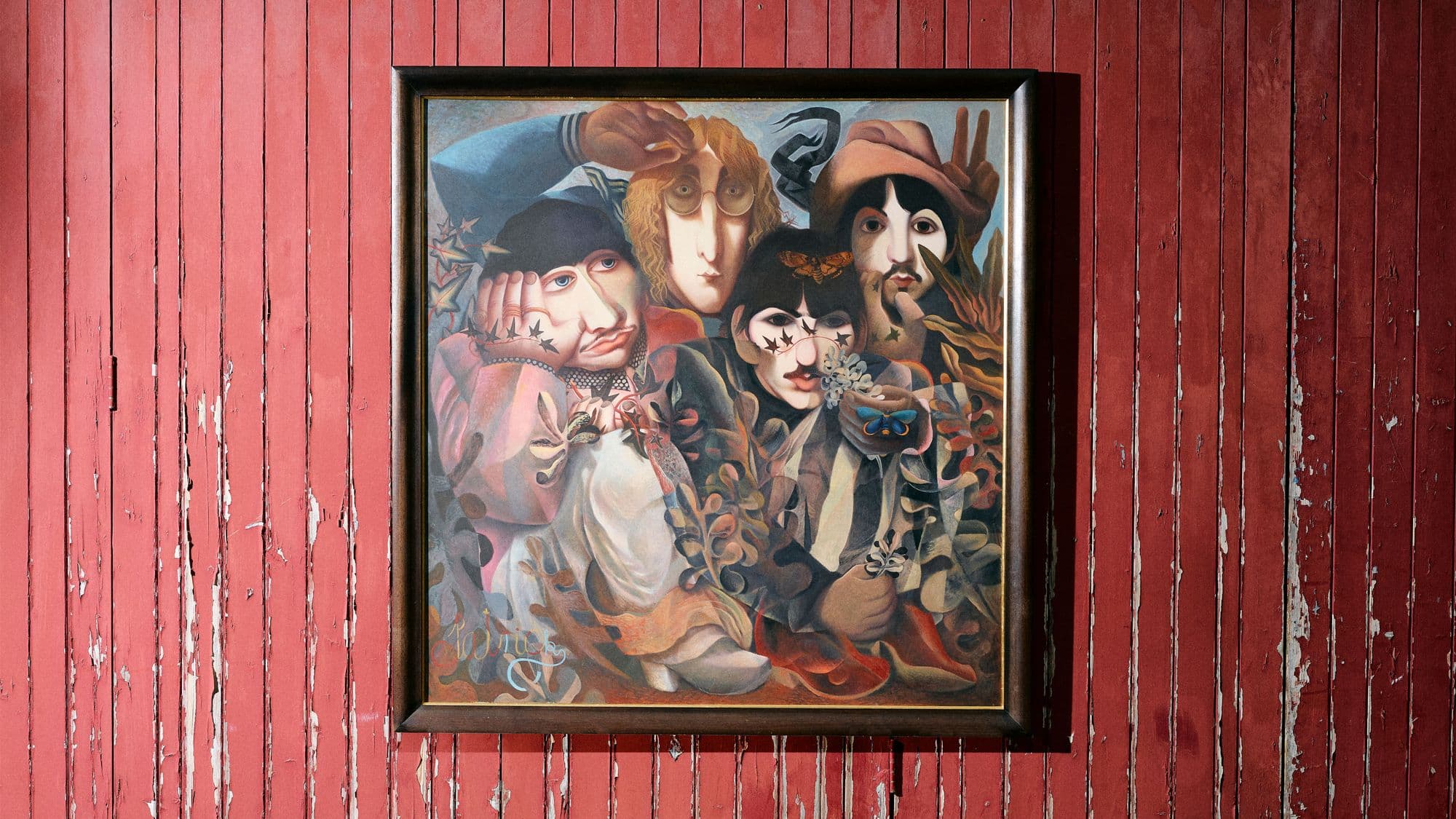
JOHN BYRNE R.S.A. (SCOTTISH 1940-2023)
The Beatles
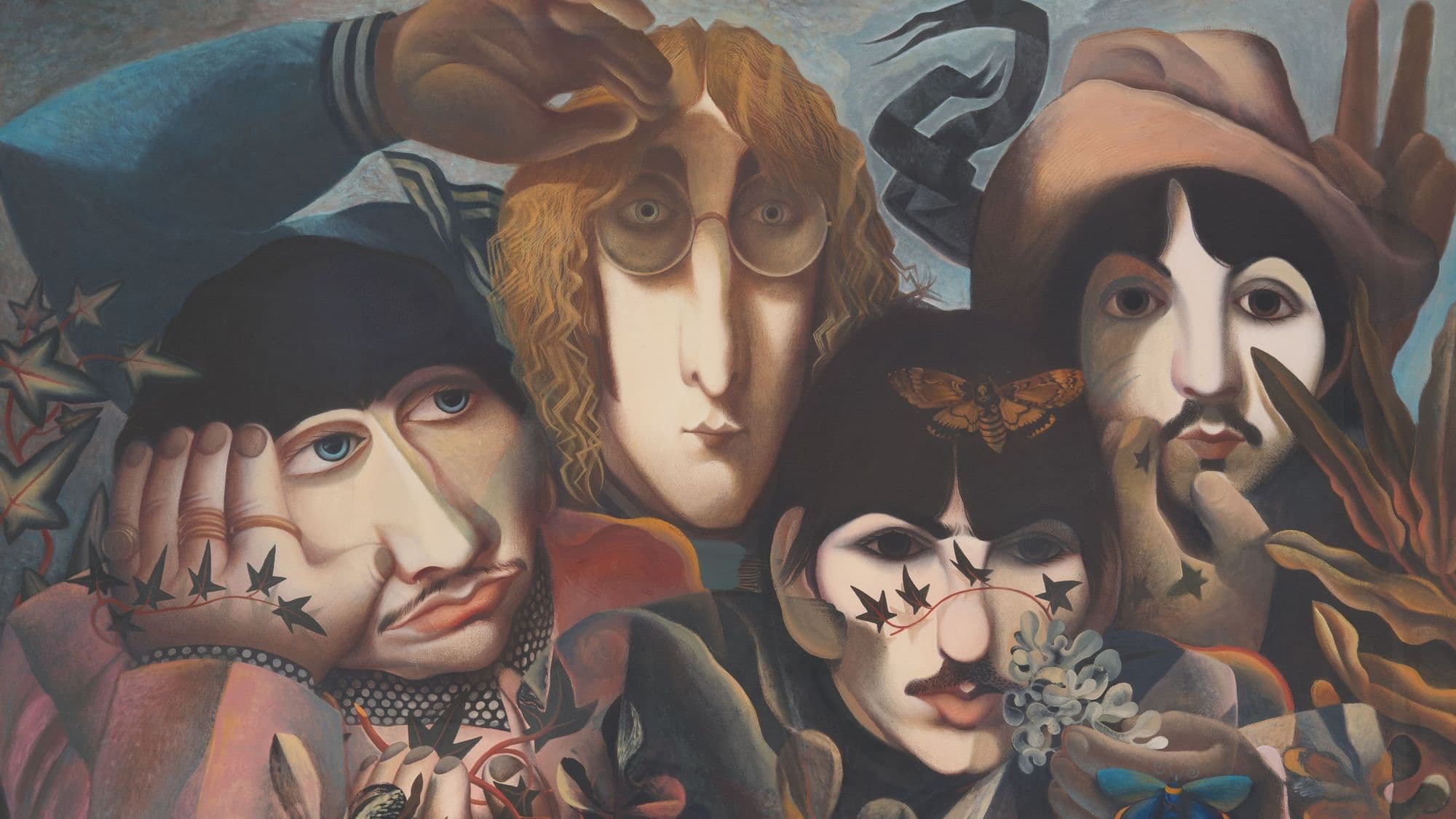
In this composition, offered in our September 2026 Darkness & Light auction, Byrne presents the four Beatles as individual characters. Ringo Starr appears relaxed and informal, with his head resting against his hand, whilst John Lennon is immediately recognisable by his round spectacles and elongated features.
George Harrison is surrounded by flowers and butterflies, creating a more decorative and contemplative presence, whilst Paul McCartney has a more theatrical appearance, distinguished by his broad-brimmed hat and direct gaze.
Rather than simply depicting the four musicians, Byrne emphasises their distinctive features and gives each figure a separate visual personality. The crowded arrangement and elaborate decorative motifs give the work an imaginative, almost theatrical quality, characteristic of Byrne’s playful approach to portraiture.
The result is unmistakably Byrne: a portrait rooted in popular culture but transformed by his own visual imagination, capturing The Beatles not simply as famous faces, but as characters within a world of his own making.