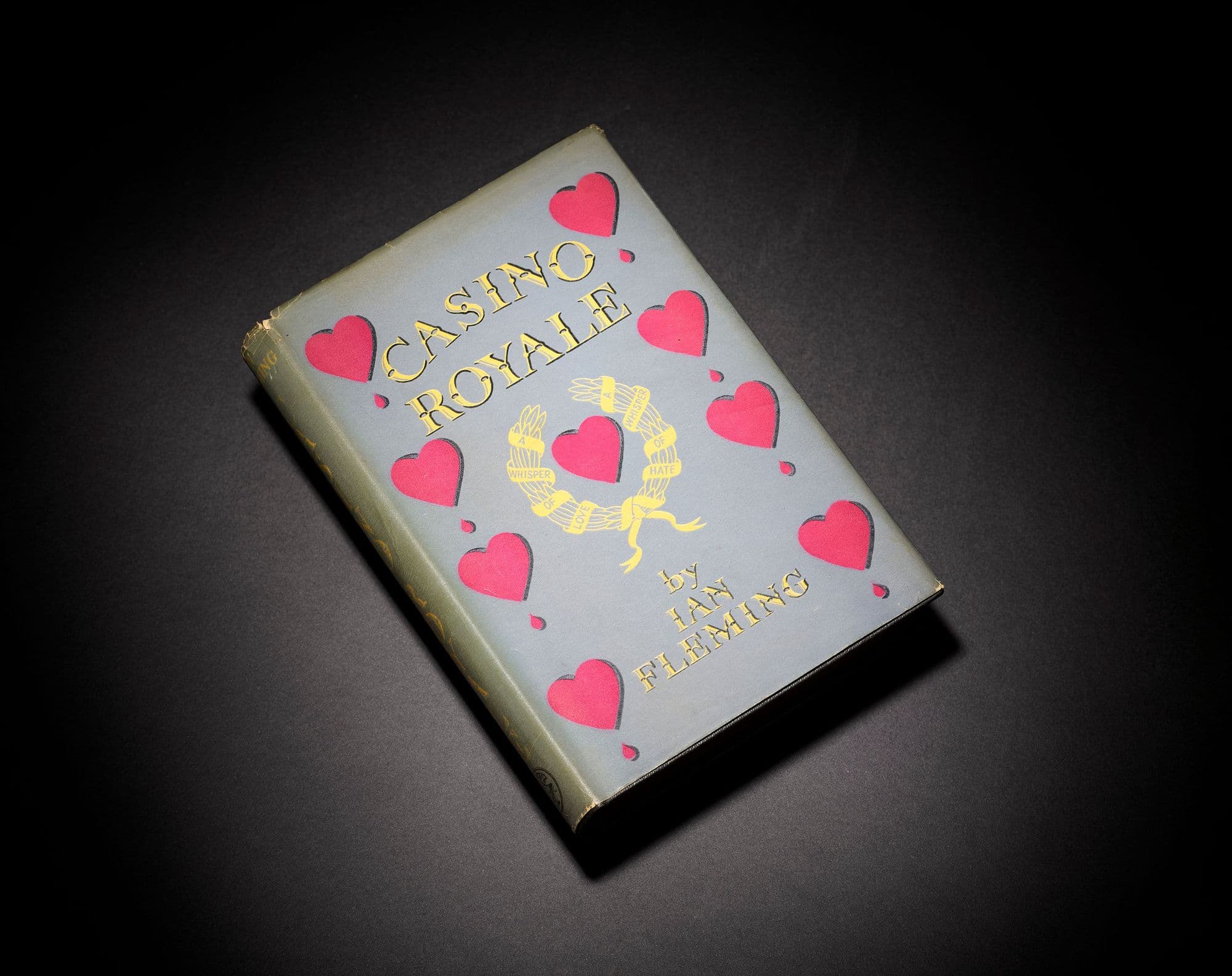
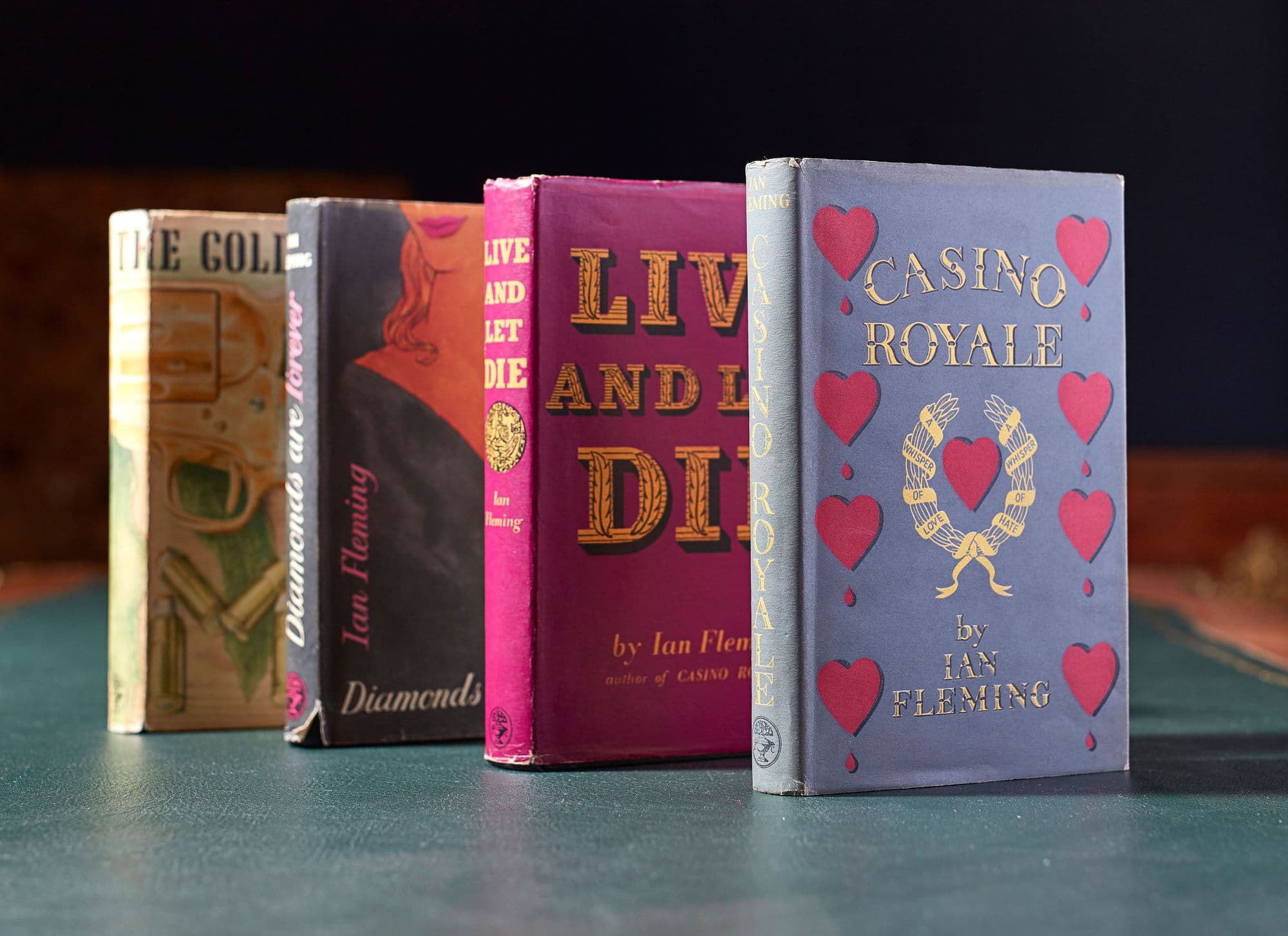
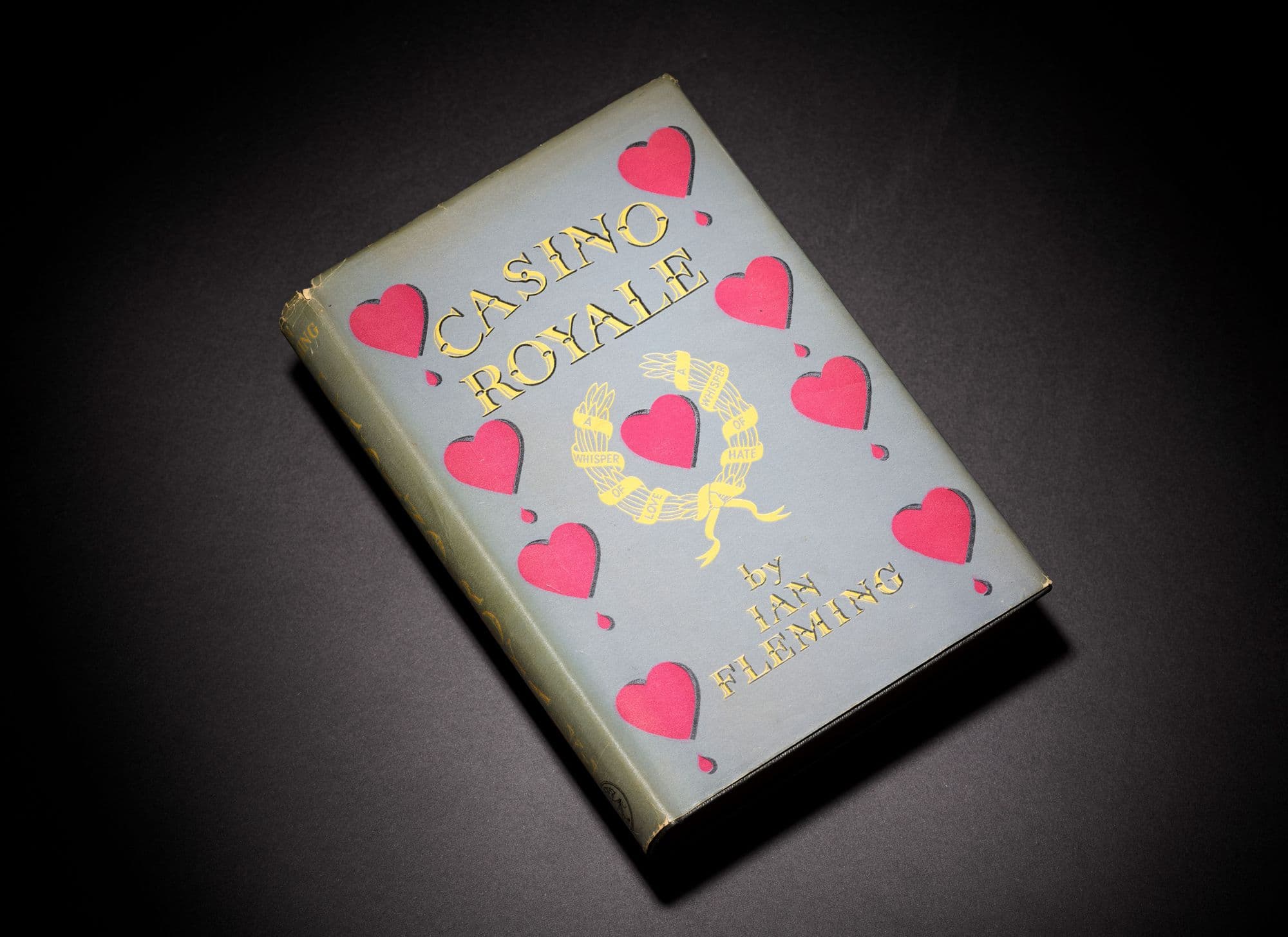
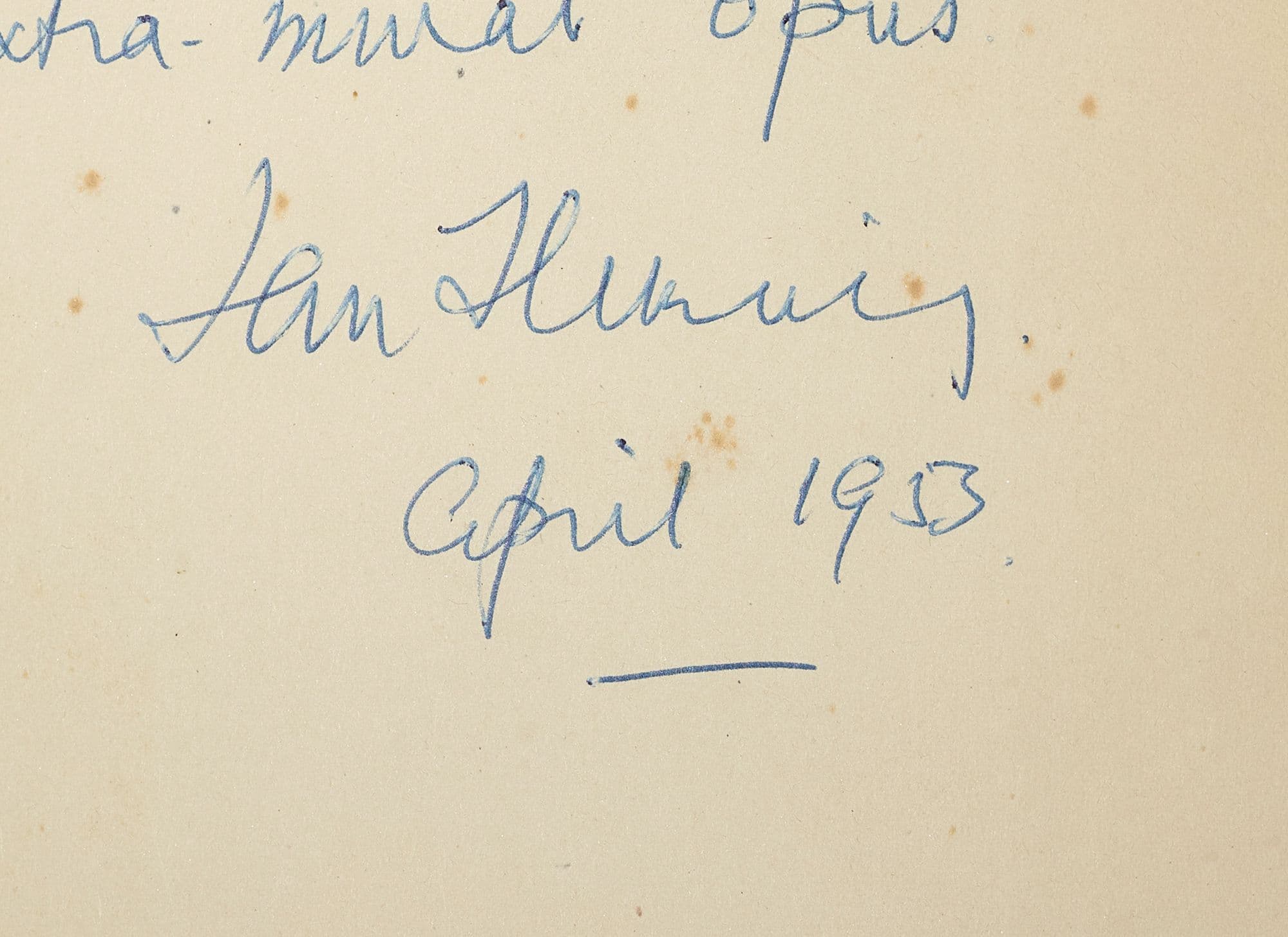
One of the highlights of Lyon & Turnbull’s Rare Books, Maps, Manuscripts & Photographs sale on 19 June 2024 is a superb presentation copy of Ian Fleming’s Casino Royale, warmly inscribed on publication by Fleming to his fellow newspaperman Ion Smeaton Munro in gratitude for helping him complete what he modestly calls his ‘extra-mural opus’.
Books & Manuscripts
Journalist, Author, Soldier, Spy?
27 May 2024
Dominic Somerville-Brown
Ian Fleming’s wartime employment in the naval intelligence division is well known as the backdrop to his creation of the world’s most famous spy. After a youth marked by a series of false starts, including ejection from Sandhurst, failure in the Foreign Office entrance examinations, and a lacklustre stint in stockbroking, Fleming must have been contemplating a bleak future before war intervened and proved the making of him.
Despite having no obvious qualifications, except perhaps a talent for languages, Fleming was invited to become personal assistant to the director of naval intelligence. Swift promotion followed, and Fleming was soon one of a handful of people in the country to be given access to Ultra intelligence, while focusing on black propaganda and an operation, codenamed Goldeneye, targeted at maintaining espionage networks in Spain in the event of a German invasion.
Other traits which Fleming shared with his fictional creation included a taste for fine living and casual liaisons, but the author was strictly a desk officer, which Bond emphatically was not. Fleming was, however, surrounded by men of action, both during the war and after it, any number of whom might have provided the model for Bond’s exploits.
One of these was Lieutenant-Colonel Ion Smeaton Munro, a decorated soldier who parlayed his civilian career as a journalist into important wartime postings as head of the Italian section at the ministry of information, and chief press officer during the Italian campaign, in between which he served on Wavell’s staff in India.
Fleming and Munro were colleagues at Kemsley Newspapers, owners of the Sunday Times, where they both took up roles soon after demobilisation in 1945, Fleming as foreign manager overseeing the organisation’s global network of correspondents, and Munro as his night editor. The pair established a strong working relationship which lasted until Munro’s departure in 1953, a few months after the publication of Casino Royale.
Fleming’s role at Kemsley Newspapers was not especially onerous, the aspirant author having negotiated a contract which allowed him several months’ holiday a year, which he would spend writing at his Jamaican retreat, named Goldeneye in remembrance of his war work.
It was perhaps in Fleming’s nature to let other people do the hard work in life for him. In the case of his postwar foray into journalism, the burden seems to have fallen on the unsung Munro. Offered for sale for the first time, this copy of Casino Royale establishes Munro as a key figure in the nascent phase of Fleming’s writing career, and the genesis of the novel that introduced Bond to the world.
The edition will be offered in our Rare Books, Manuscripts, Maps & Photographs sale on 19 June 2024.