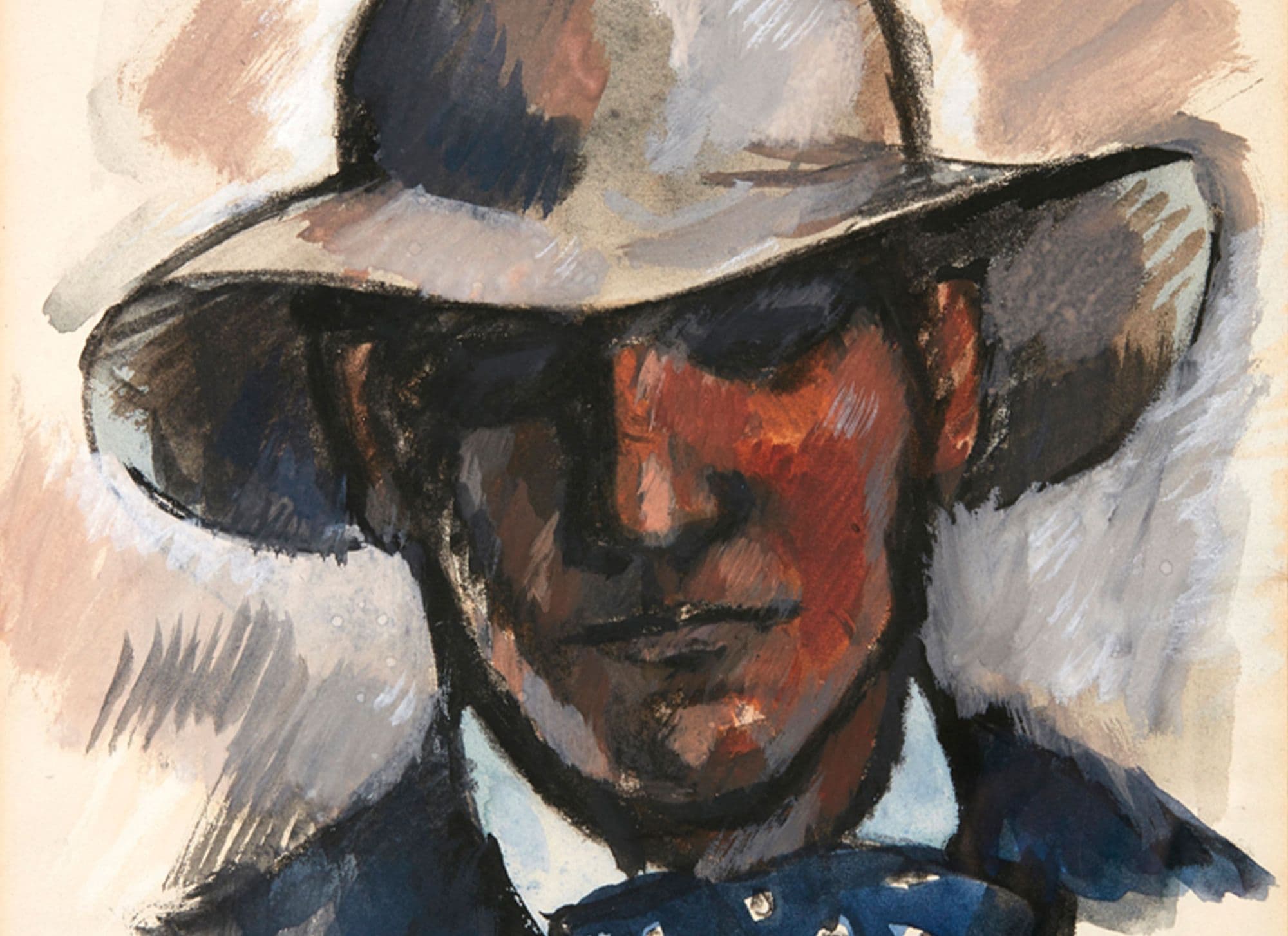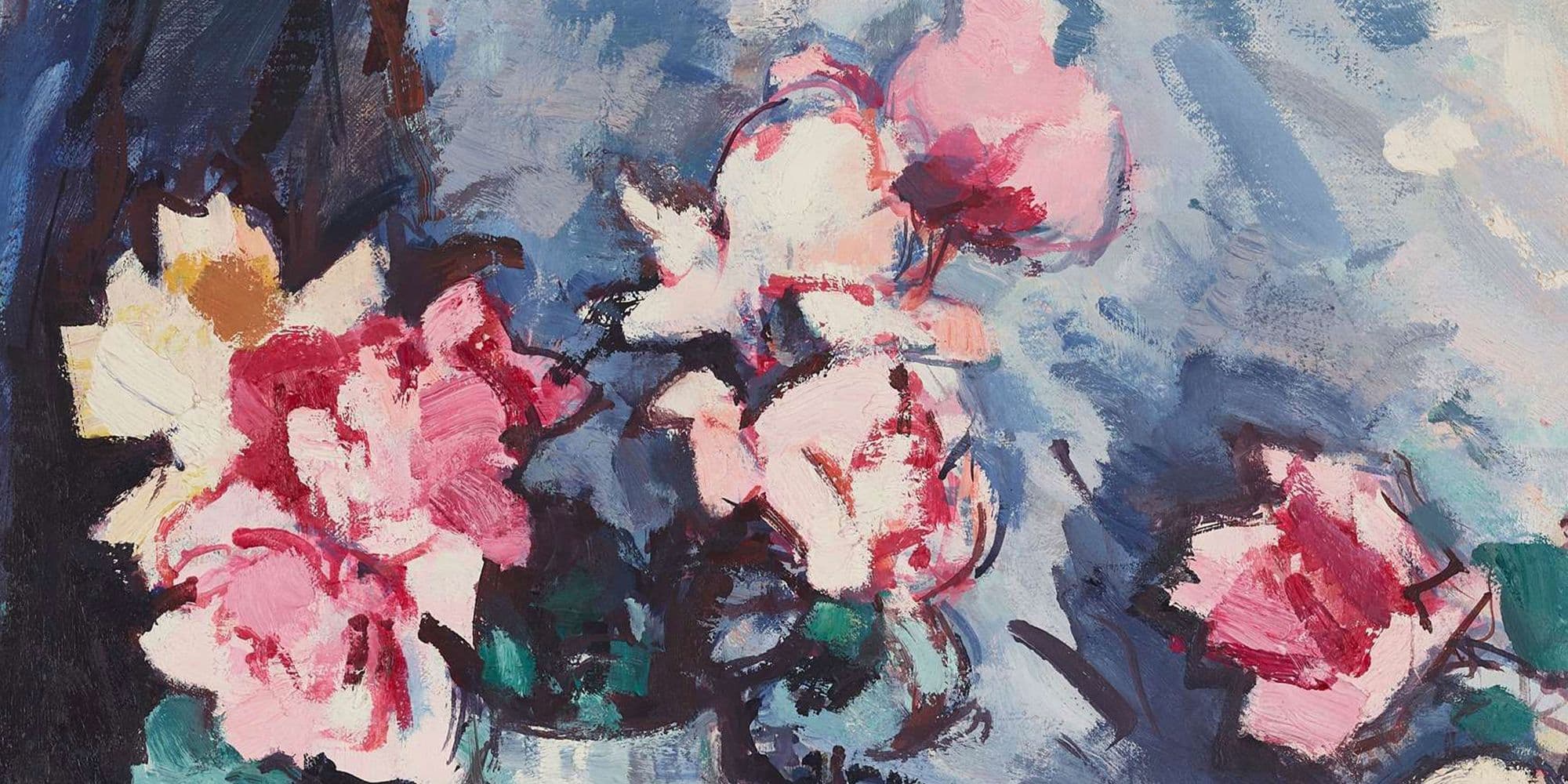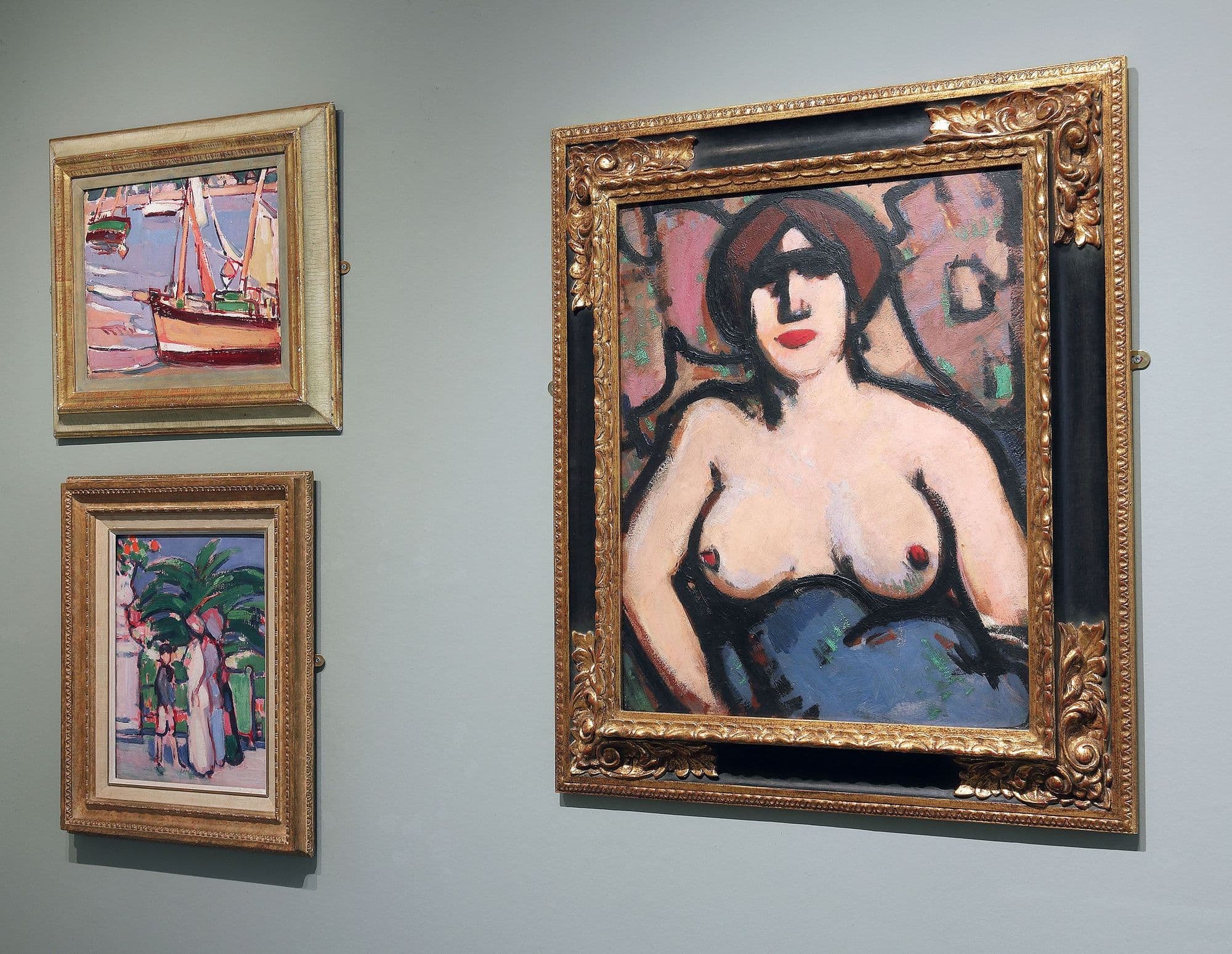
Study No. 6 comes from an extraordinary series of female nudes which Fergusson painted in Paris during the period c.1910-13. They have been described as ‘the most original paintings in British art of the period...which reached their triumphant conclusion in Les Eus’ [Hunterian Art Gallery, University of Glasgow], considered by many to be Fergusson’s masterpiece (Alice Strang et al, J. D. Fergusson, National Galleries of Scotland, Edinburgh 2013, p.18).
After sporadic training in Paris during the 1890s, Fergusson had established a studio in Edinburgh by 1902. By this point he had become friends with S. J. Peploe, with whom he painted en plein air during summers spent in France. In 1906, Fergusson had his first solo exhibition, at the Baillie Gallery in London. In the meantime, he became increasingly interested in developments in contemporary art in the French capital, partnered by growing frustration with the conservatism of the Scottish art world.
An inheritance received on the death of his father and the start of a relationship with the American painter Anne Estelle Rice led to Fergusson’s decision to move to Paris in 1907. His work changed quickly and dramatically as he not only experienced at first hand the latest paintings by cutting-edge artists including the Fauves, such as Henri Matisse and André Derain, but he also digested and responded to their advances. Gone was the Edwardian sophistication of his Edinburgh work, to be replaced by vivid colours and a daring flattening and outlining of form. Such was the originality of his new paintings that in 1912 Fergusson was elected a member of the progressive Salon d’Automne in recognition of his contribution to the modern movement.