Functionalism with a Human Focus
During the 1920s and 1930s, Danish design began to engage with the broader European currents of modernism and functionalism, though it struggled to establish a clear voice beyond Scandinavia at this stage. This was a challenging period for Danish cabinetmakers and designers, as influential movements such as the Bauhaus promoted industrial production, standardisation, and a machine-led aesthetic that contrasted sharply with Denmark’s craft-based traditions; Danish furniture of this period prioritised comfort, proportion and human scale, rather than ideological statements about modernity.
As a result, Danish furniture remained relatively marginal on the international stage, overshadowed by more radical modernist experiments elsewhere in Europe.
Collaboration between architects, designers, and cabinetmakers developed steadily during this period, laying the foundations for the post-war flourishing of Danish furniture. Although its impact was largely regional at the time, the careful integration of modern ideas with traditional joinery and natural materials such as oak, teak, and beech established a design philosophy that would gain international recognition only after the Second World War, when Danish furniture finally found a receptive global audience.
The Golden Age of Danish Modern Design (1940s - 1960s)
The international reputation of Danish design was firmly established in the decades following the Second World War, a period often described as its Golden Age.
This flourishing was shaped in part by a widespread cultural reassessment of across Europe, the war had demonstrated the destructive potential of machines - from aircraft to bombs - prompting a renewed desire for design that prioritised human scale, craft, and domestic comfort over mechanised efficiency. define Danish Modern furniture at auction.
Danish designers responded by offering an alternative vision of modernity: one that was progressive, yet deeply humane, grounded in craftsmanship, material honesty and everyday usability.
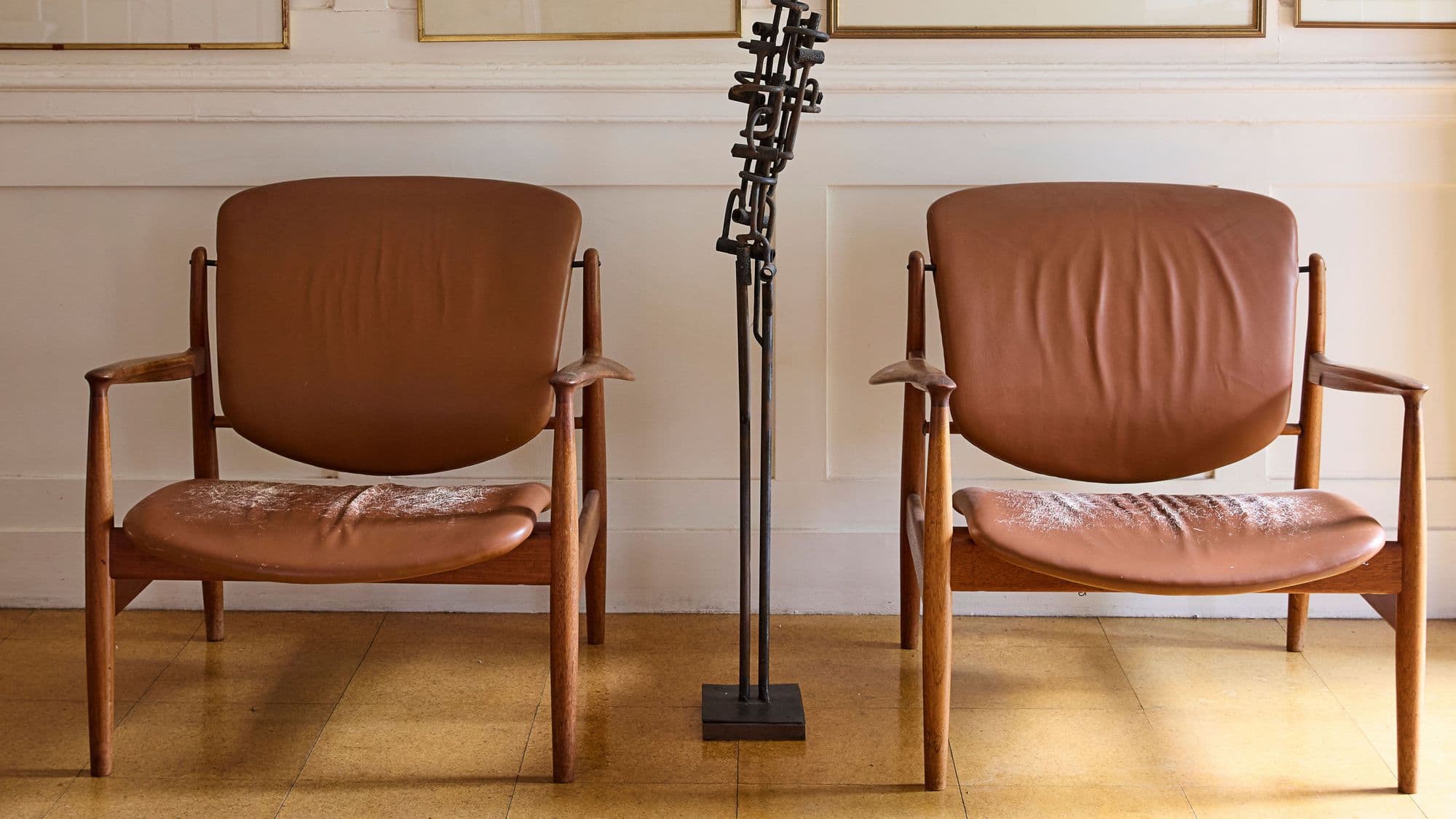
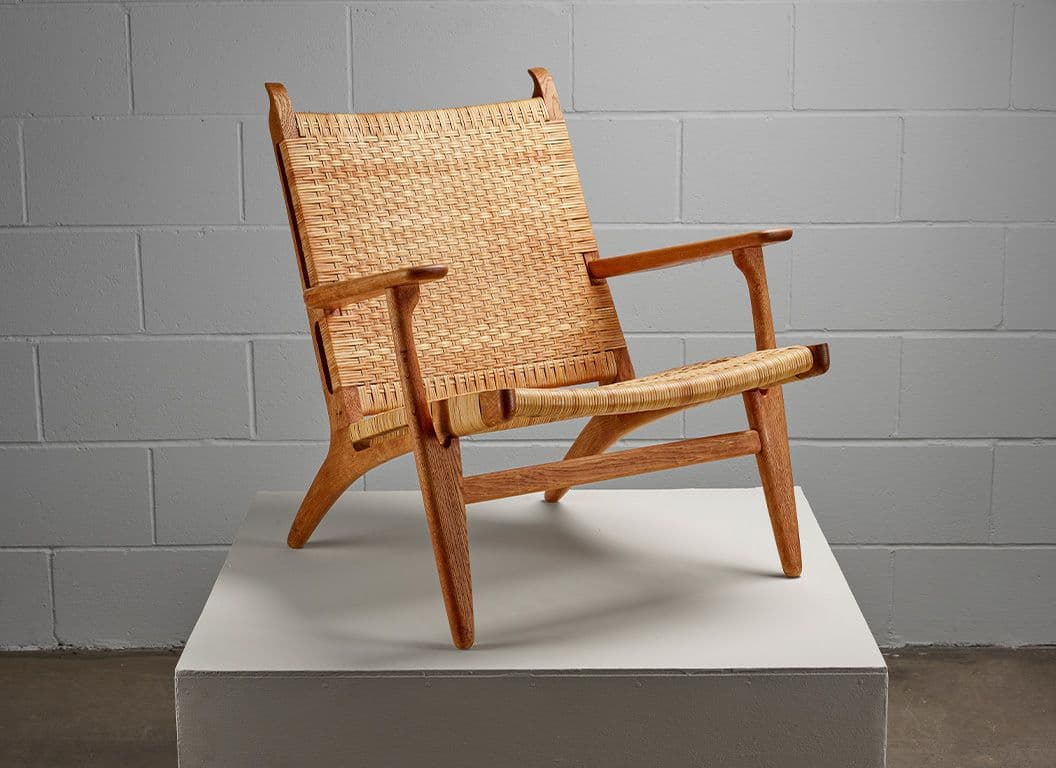
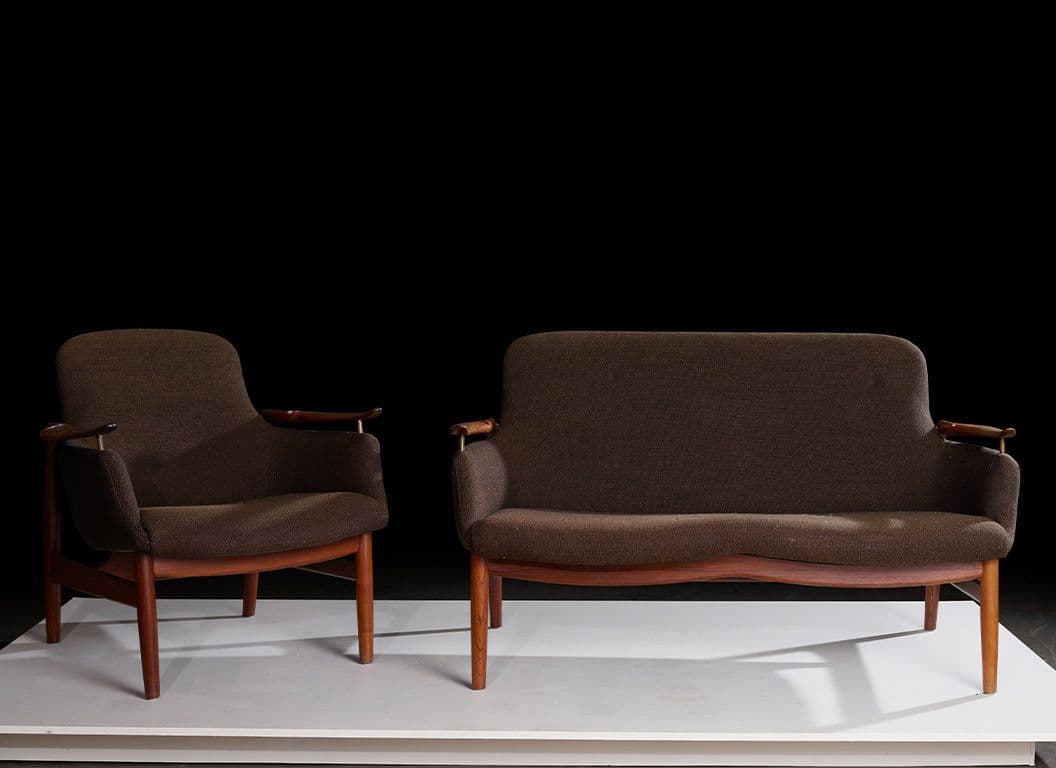
During this period, designers such as Kaare Klint, Hans J. Wegner, Børge Mogensen, Finn Juhl, Arne Jacobsen, and Poul Kjærholm developed furniture that combined clarity of form, exceptional craftsmanship, and physical comfort, aligning modern design with everyday life rather than industrial ideology.
Kaare Klint, often described as the father of Danish modern furniture, introduced a rigorous, almost scientific approach to proportion, rooted in close study of the human body and historical furniture types. His influence is evident in the work of many younger designers, who adapted rational design principles while maintaining warmth and usability. Alongside this tradition-based approach, designers such as Wegner and Juhl pursued more expressive and sculptural forms, demonstrating that modern furniture could be both functional and emotionally engaging.
At the same time, Danish furniture benefited from technical advances in production, particularly the use of laminated and steam-bent wood, which enabled lighter and more refined forms. Crucially, these methods were not celebrated as symbols of industrial dominance, but were instead employed in service of craftsmanship, allowing high-quality furniture to be produced more efficiently without sacrificing material integrity or human sensitivity. It was this balance, modern in outlook yet resistant to the excesses of industrialisation, that allowed Danish design to resonate so strongly in the post-war world.
International Recognition and Export Success
The international success of Danish design was deliberately cultivated rather than accidental, with a pivotal moment occurring in 1949. That year, the Danish Design Exhibition, centred around the Copenhagen Cabinetmakers’ Guild Exhibition at what is now Designmuseum Danmark, played a crucial role in launching Danish modern furniture onto the international stage. The exhibition brought together the work of leading designers and master cabinetmakers, presenting a distinctly Danish approach to modern furniture that balanced innovation with craftsmanship.
The exhibition attracted significant attention from American journalists and design critics, whose enthusiastic reporting introduced Danish Modern to a wide international audience, particularly in the United States. Their coverage highlighted the furniture’s human scale, refined materials, and understated elegance, helping to distinguish Danish design from the more rigid, machine-driven modernism prevalent elsewhere in Europe.
Building on this momentum, the Danish state actively supported a programme of touring exhibitions throughout the 1950s, promoting Danish furniture and interiors across Europe and North America as a cohesive cultural achievement. These exhibitions were closely aligned with national export strategies and framed Danish design as modern yet approachable, functional, but also warm and emotionally resonant.
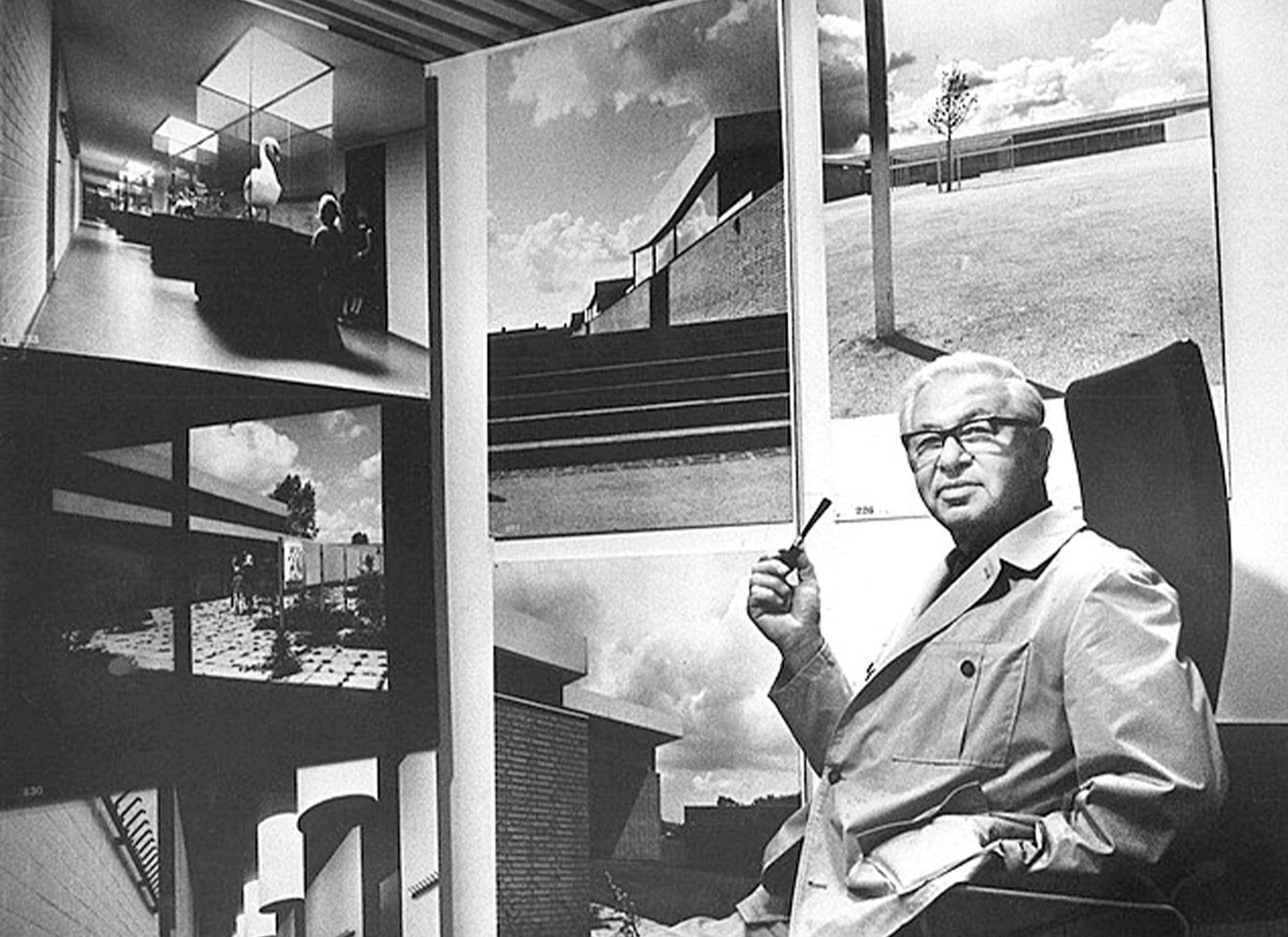
At home, the state reinforced these principles through the widespread adoption of modern design in public buildings, allowing the movement’s ideas to become embedded in everyday life. Schools, hospitals, libraries, and transport hubs were furnished according to the same values of clarity, durability, and human comfort. Prominent examples include Copenhagen Airport (Kastrup) and the SAS Royal Hotel in Copenhagen, designed by Arne Jacobsen as a total work of art in which architecture, interiors, furniture, and fittings were conceived as a unified whole. Through such projects, Danish modern design moved beyond private interiors and seeped into the broader national consciousness.
This period also saw a continued blurring of boundaries between fine furniture and everyday objects. Chairs, lighting, tableware, and textiles were designed with equal care, reinforcing a holistic approach to design and ensuring the lasting influence of Danish modernism both within Denmark and internationally.