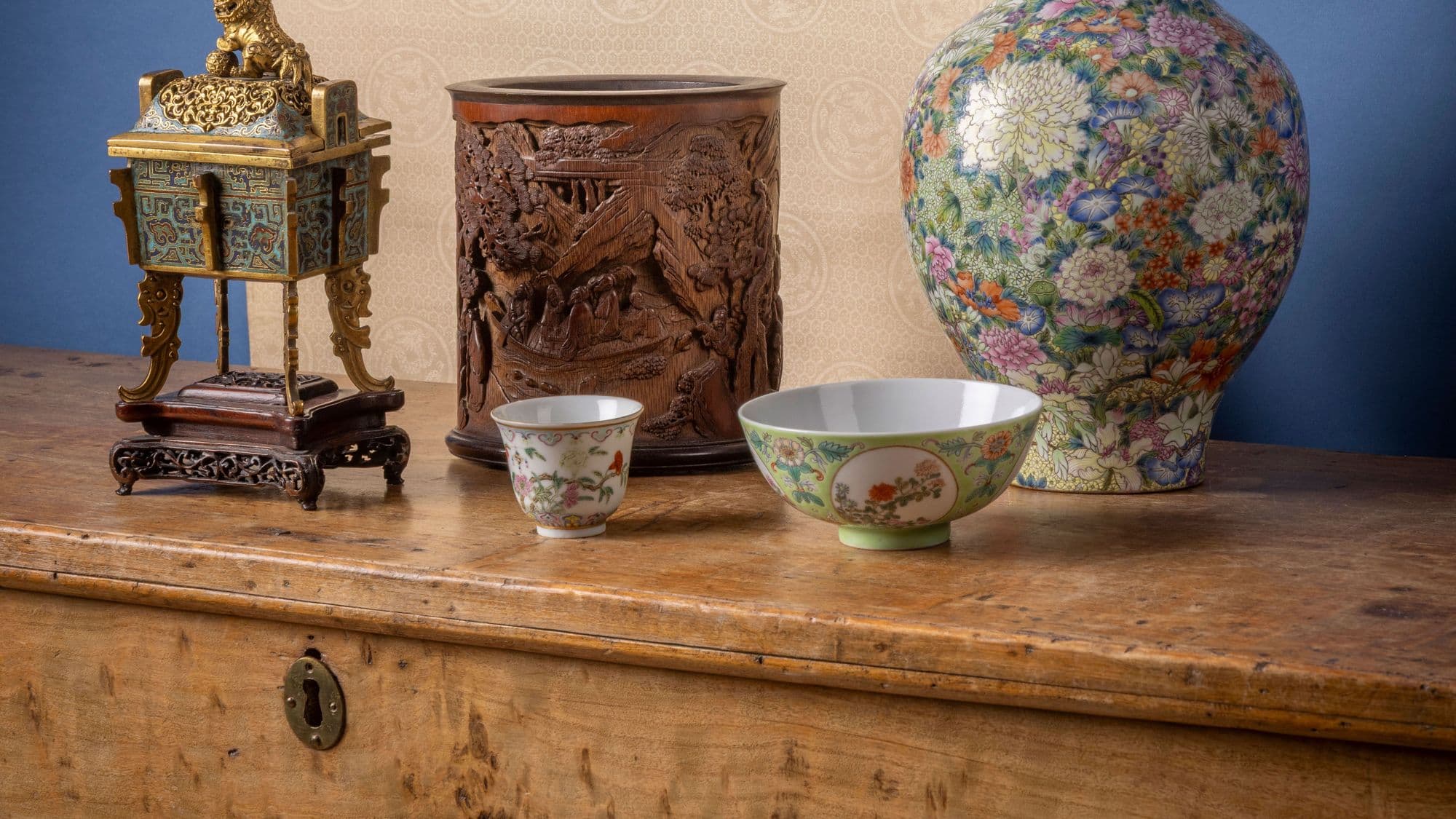
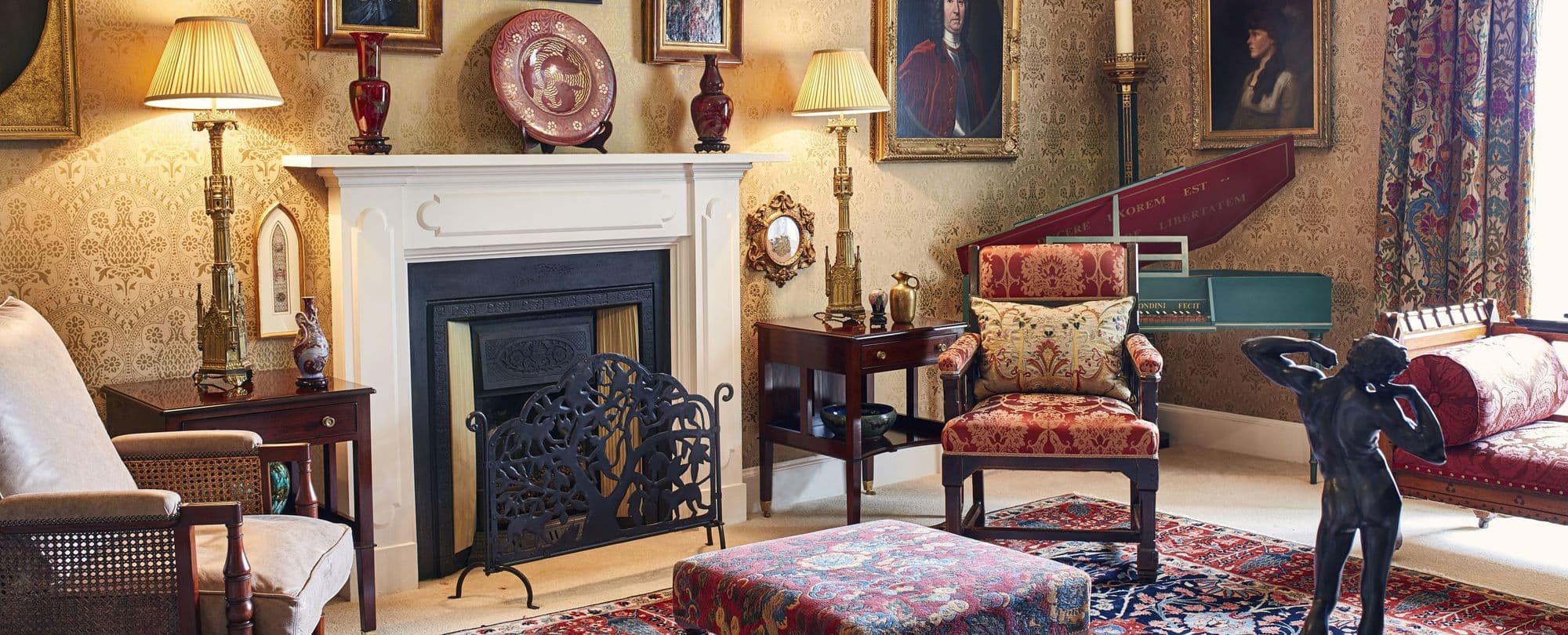
Asian art and antiques are prized for their intricacy and craftsmanship, and are deeply rooted to their native history, philosophy, and culture. Due to cultural differences, Asian art and antiques have always seemed to be covered by a veil of mystery. Lyon and Turnbull’s Asian Art Department is dedicated to lifting this mystery - introducing outstanding British, especially Scottish, private collections of Asian works of art to the buoyant international Asian art market.
The exotic and aesthetic qualities of Asian art have captivated British collectors since the time of the British Empire. The bloom of mobility, accessibility, and curiosity resulted in the first collections of Asian art in Britain following in the footsteps of the Empire. Pieces brought back to the West were mostly passed down. After several generations, heirlooms and some rare gems became covered in dust and their significance, concealed over time.

On one occasion, images of a pair of blue and white ‘inscribed’ tea trays were sent to the Department for appraisal by our Glasgow general valuer, Katie Hannah. Recognising the significance, the Department confirmed their rarity, dating the trays to 1797 when they were made in the Chinese Qing Dynasty Jiaqing Emperor's Imperial workshop, their interiors inscribed with an Imperial poem pertaining to the preparation of tea. The pieces were inherited by a Scottish household from their family who worked and travelled extensively in Asia during the 1920s-1940s. Without knowing their cultural and financial value, the family placed them in a cabinet ‘furnishing a room’ for years, untouched, until they were discovered by our Asian Art Specialists and featured as the ‘cover piece’ in our London Fine Asian Works of Art auction catalogue. The tea trays subsequently sold as lot 298 for £65,200 (inclusive of premium) on 3 November 2023.

Asian antiques with provenance associated with country estates always attract great market interest. On 16 May 2023, the London Fine Asian Works of Art sale offered lot 74, a rare Qing dynasty polychrome yellow-ground ‘nine-bats’ bowl, with Yongzheng Emperor imperial mark and dated to 1722-35. Though it was found in a significantly repaired condition, due to its rarity and prestigious provenance (previously from a Scottish family estate bought in 1847, Newton Don near Kelso) the bowl received great international attention and competitive bids, subsequently selling for £30,200 (inclusive of premium).

In addition to hidden gems in private households and estates, there are also passionate collectors of Asian art and antiques throughout Britain. In our London Fine Asian Works of Art November sale, Lyon and Turnbull was proud to present Dr Kenneth P. Lawley’s (1937-2023) Asian Art Collection. Dr Lawley was a chemical physicist in The School of Chemistry at the University of Edinburgh. His journey as a collector started in the mid-1960s with Chinese monochrome wares and Korean early pottery, which later diversify to include Japanese, Himalayan, and Southeast Asian works of art. The section was a successful ‘White Glove’ sale.
Asian arts and antiques still carry the attraction of a ‘hidden surprise’ which could have the potential to be of immense historical and monetary value. There are still many Asian art and antiques living in the West, for expert auction valuations and advice, please contact our specialists who are ready to assist in revealing any hidden treasures.