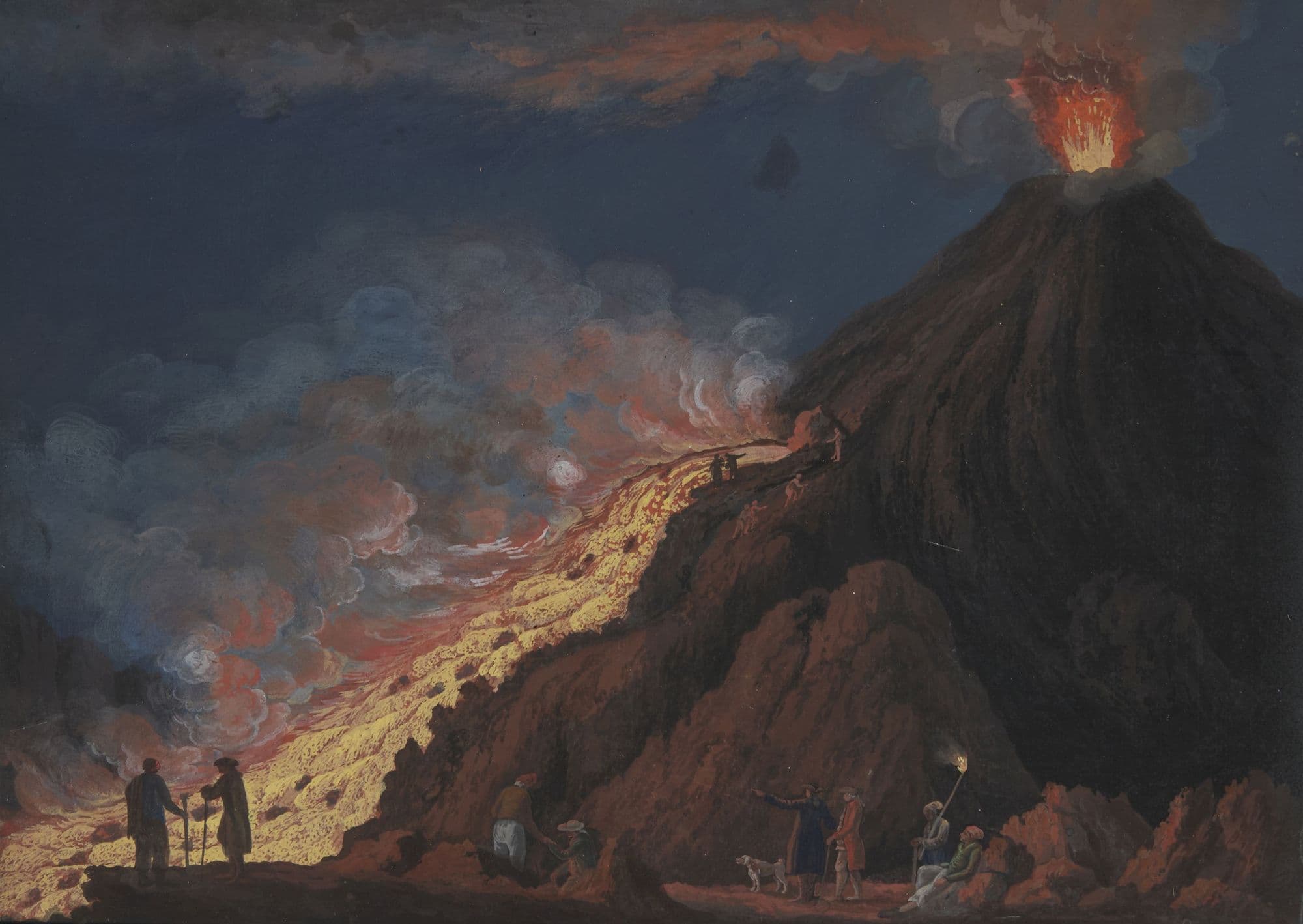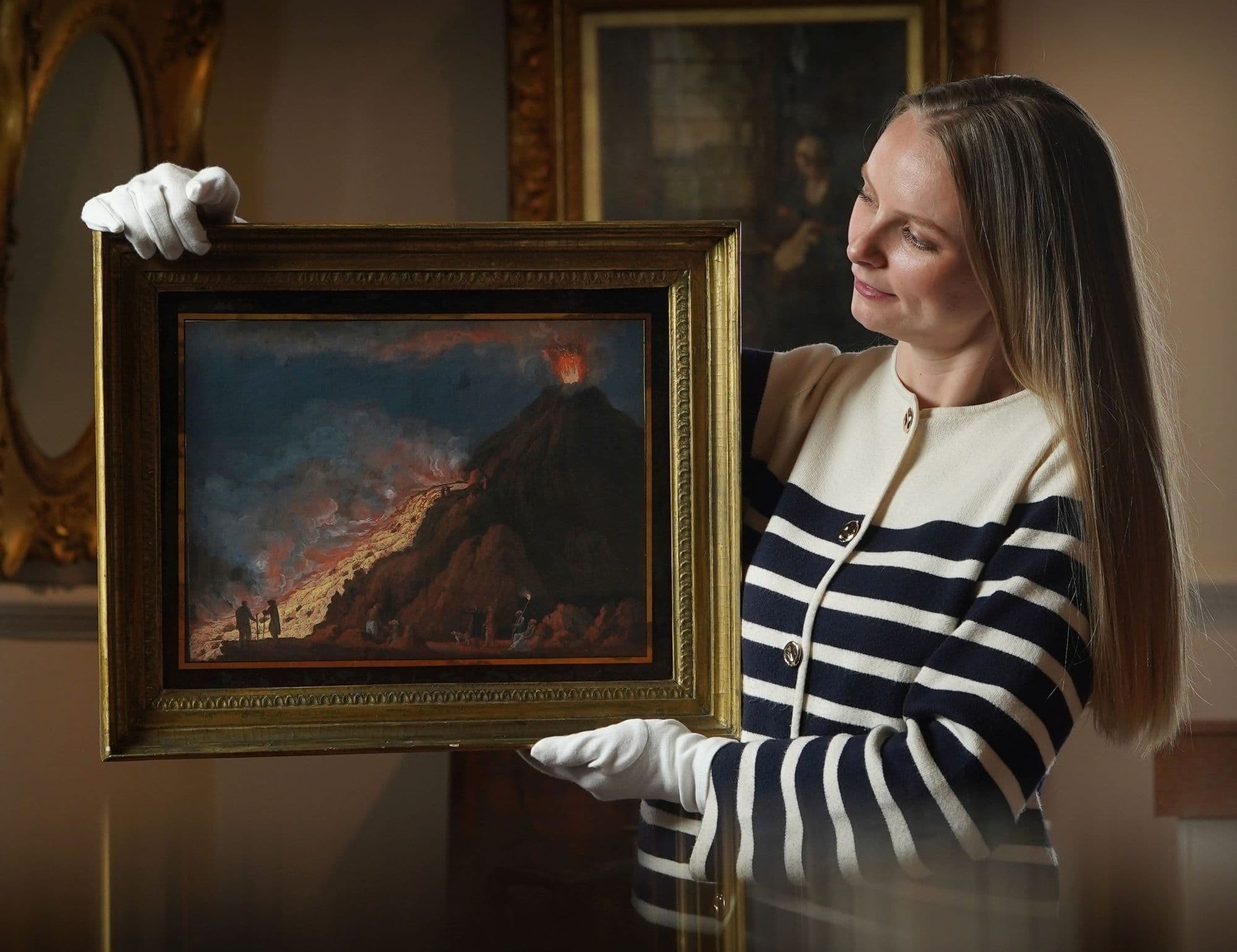
A rare eighteenth century German painting capturing the dramatic eruption of Mount Vesuvius in Italy in 1774, is to be sold by fine art auctioneers, Lyon & Turnbull on Wednesday 13th May.
Painted by the much sought-after landscape artist of the period, Jakob Philipp Hackert (1737-1807), An Eruption of Vesuvius in 1774 is valued at between £20,000 - £30,000. It features in Lyon & Turnbull’s two-day Five Centuries sale
The work depicts one of the most widely recorded events of the century and is a record of the event itself.
According to one of Hackert’s biographers, the influential German writer Johann Wolfgang von Goethe, the artist personally witnessed the eruption and courageously produced a series of live sketches and studies which he consulted when painting views of the spectacular scene after returning to Rome, where he settled in 1768.
Mount Vesuvius is considered one of the most dangerous volcanoes in the world, given its proximity to people living in the area, with eruptions tending to be violent and explosive.
The 1774 eruption coincided with the height of the Grant Tour, a cultural journey undertaken by wealthy European and British travellers who visited classical sites across the continent.
During this period, travellers frequently collected souvenirs to commemorate their experiences. Among the most prized were paintings, which they displayed in their homes upon their return as visual proof not only of their travels but also of their refined artistic taste and cultural education.
There were certain subjects which proved especially desirable to Grand Tour patrons. Among the most popular were views of Mount Vesuvius in eruption, which combined the drama of the eruption with the prestige of visiting one of Europe’s most famous landmarks.
Artists working in Italy responded to this demand by producing multiple versions of similar compositions depicting the volcano’s activity. Jakob Philipp Hackert was one such artist, creating several variations of Vesuvius erupting, including the present example.
The painter’s interest in Vesuvius was strengthened by his friendship with the British ambassador to the court of Naples, Sir William Hamilton (1730–1803). He was one of the most important early students of volcanic activity. Hamilton’s fascination with Vesuvius is well documented as he is said to have climbed to the volcano’s crater no fewer than 58 times in order to observe and record its eruptions.
Romey Clark, Associate Fine Art Specialist with Lyon of Turnbull said:
“Hackert’s depiction is notable for its dramatic immediacy. Flames and molten lava burst violently from the crater while thick clouds of smoke billow upward into the night sky. By positioning the viewer close to the action, Hackert moves away from the traditional panoramic views of Vesuvius. Instead, he offers a more concentrated and immersive vision of the eruption itself.
This compositional decision allows him to incorporate figures in the foreground, most likely Grand Tour travellers accompanied by local guides who observe the spectacle from the slopes of the volcano."
Image credit: STEWART ATTWOOD