

Lot 99
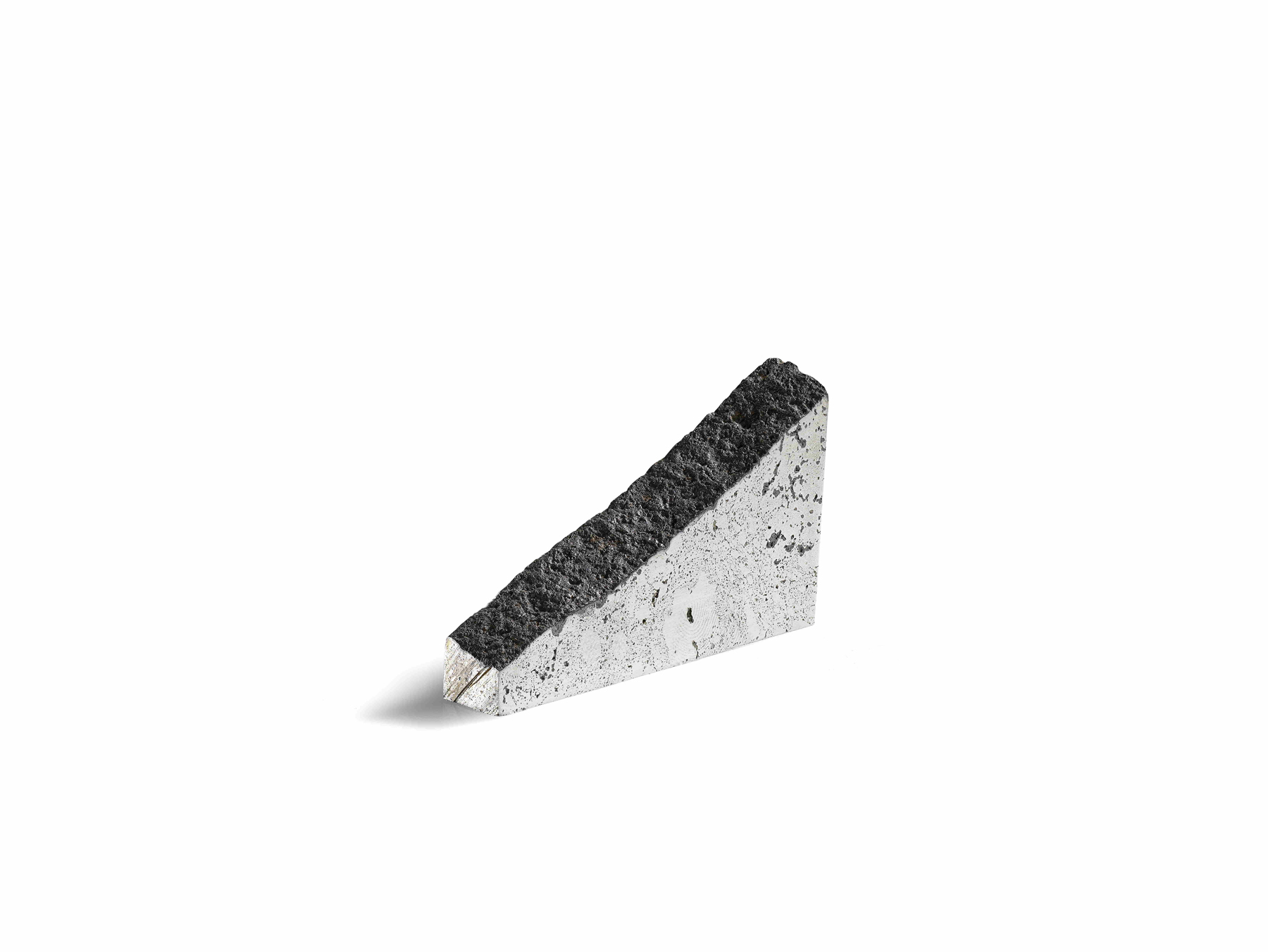
Tuscon (aka 'The Tuscon Ring')
The Robert Elliott Meteorite Collection
Auction: 18 August 2009 at 15:00 BST
Description
Polished part slice
Dimensions
55.3g, 5.1 x 3.2cm
Footnote
Tucson (aka The Tucson Ring) (Pima County, Arizona, USA) UNGR (iron) - found 1850
Due to it's ring-like shape, the Tucson Ring meteorite is unique and probably the best known and most instantly recognisable of all the large irons. No one knows exactly where it was discovered, but in 1776 it was put to good use as a blacksmith's anvil for the Spanish military who were charged with defending the Tucson frontier from Apaches. The Ring was up-ended and half buried in the ground - the natural flat edge then provided a perfect beating surface for the blacksmith to repair weapons and fashion horseshoes. It later served the Mexican military until 1853, whereupon the Ring was abandoned in-situ and forgotten. In 1857, Lieutenant Bernard John Dowling Irwin of the U.S. Army arrived in Arizona to join the infantry at Fort Buchanan. Irwin was a naturalist & collector for the Smithsonian Institution, and in 1860 Irwin re-discovered the Ring exactly where it had been left, lying half buried in the street. Irwin recognised it as a meteorite and arranged to have it shipped to the Smithsonian Institution by Tucson freighter Augustin Ainsa. The Ring left Tucson in 1861 bound for San Francisco.
Provenance: National Museum of Natural History, Smithsonian Institution