

Lot 12
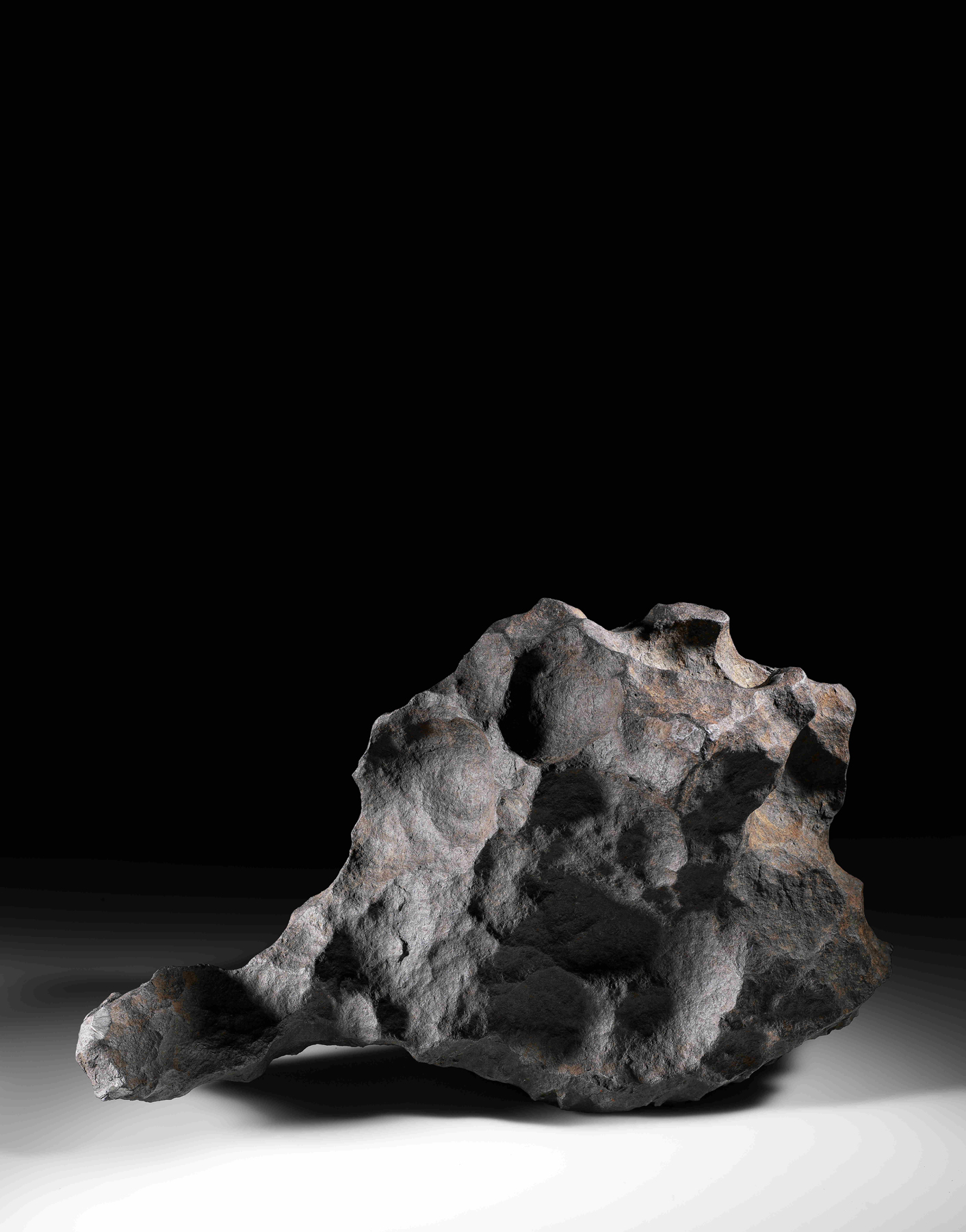
Gibeon
The Robert Elliott Meteorite Collection
Auction: 18 August 2009 at 15:00 BST
Description
Individual
Dimensions
50.8kg, 46 x 25 x 28cm
Footnote
Gibeon (Namibian Desert, Africa) IVA (iron) - found 1836
The Gibeon meteorite was first reported by a Captain J. E. Alexander in 1836. He heard of large masses of native iron on the east side of the Great Fish River and was able to obtain samples for analysis. Europeans later established cattle ranches in the area and many more large iron meteorites were recognised and recovered.
When cut, polished and etched with acid, Gibeon reveals a beautiful and unique pattern called Widmanstatten figures - a crystal structure formed by nickel-rich and nickel-poor metallic bands as a result of an extremely low rate of cooling over thousands/millions of years. This Widmanstatten structure is absolute proof of a meteoric origin for many iron meteorites, as it is not something that can be copied or forged in a lifetime. Complete Gibeon meteorites exhibit large surface regmaglypts (thumbprint-like impressions) and twisted features, all evidence of being sculpted by a violent atmospheric passage.