

Lot 359
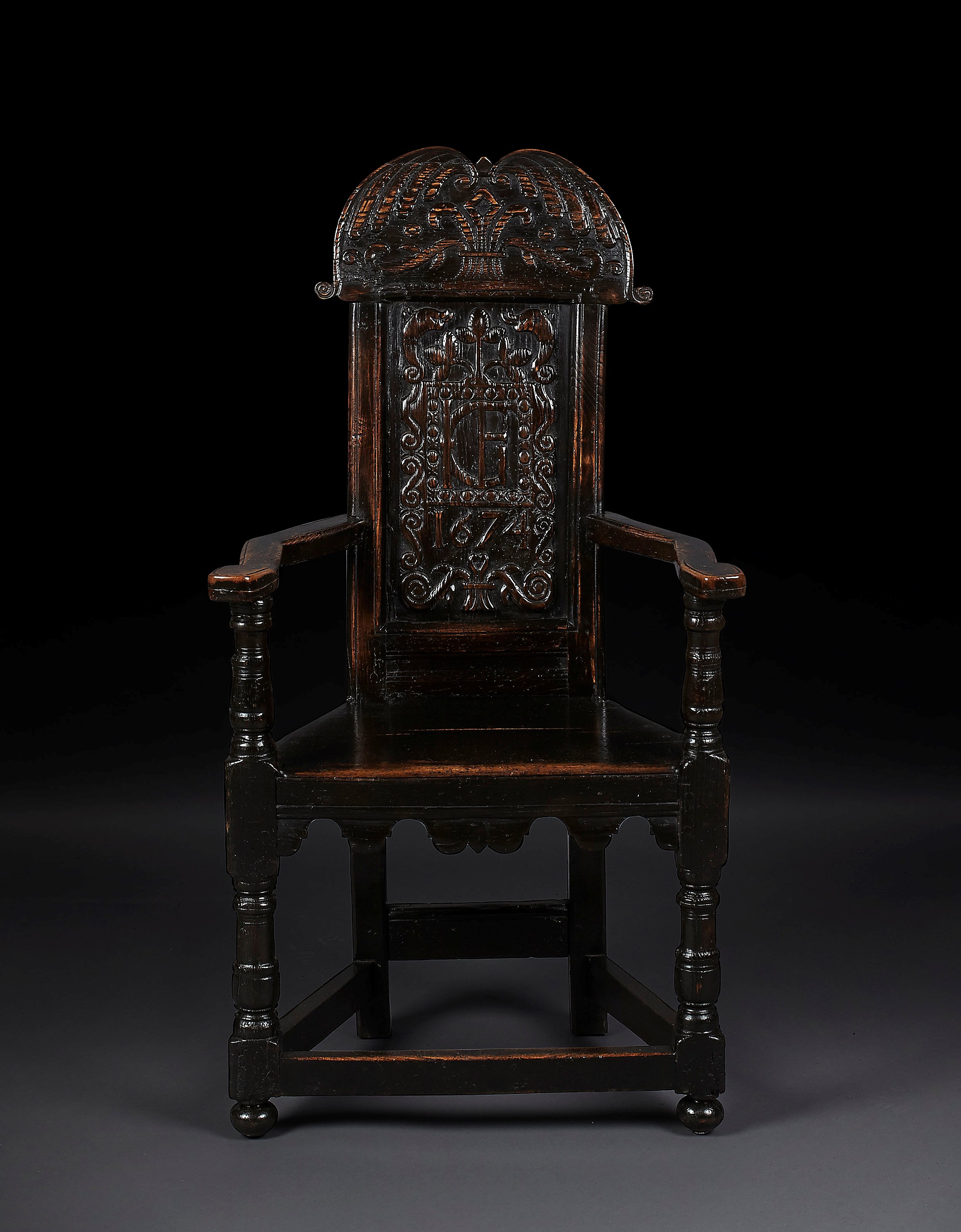
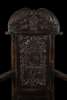
SCOTTISH CHARLES II OAK CAQUETEUSE
DATED 1674
Auction: 24 June 2014 at 13:00 BST
Description
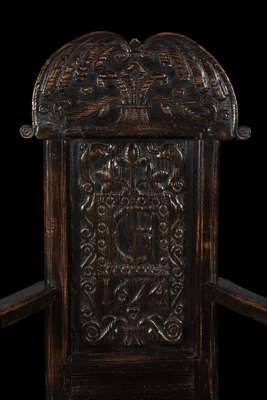
the arched cresting toprail above a panelled back, carved with initals 'I F G' over the date '1674' leading to outscrolled arms and a spreading plank seat, raised baluster turned and block legs joined by stretchers, turned feet
Dimensions
62cm wide, 116cm high, 41cm deep
Footnote
Note: This distinctive type of chair is a fine example of the Franco-Scottish cacqueteuse chairs popular in the 17th century. The seaports on the eastern coast of Scotland supported a thriving trade and import business more notably from France to Aberdeen, which was a major centre of furniture craftsmanship. The French influence can be seen in this example in the general form of the chair and in the architectural nature of the back. This example is also comparable to a group of chairs executed in the Scots vernacular style and assembled at Trinity Hall, Aberdeen, whose significant features include a tall narrow back, a seat of almost triangular shape and the arms sweeping round to grasp the sitter. A similar armchair was sold at Christie's Sale 6546, lot 333, 'A collection of early oak furniture and metalware' on 21st May 2001, and another is illustrated in Victor Chinnery 'Oak Furniture, The British Tradition', Woodbridge, 1979, p460, fig 4.94. Based on research carried out by Leslie Rankline Taylor, the initials on the back of this chair may relate to the Gunn family of Lybster, Caithness. The Gunn family, from Norwegian descent, is an old clan who can trace their presence in the country to the early 13th century; they claim descent from the legendary Sweyn Asleifsson, the so-called 'Ultimate Viking'.