

Lot 811
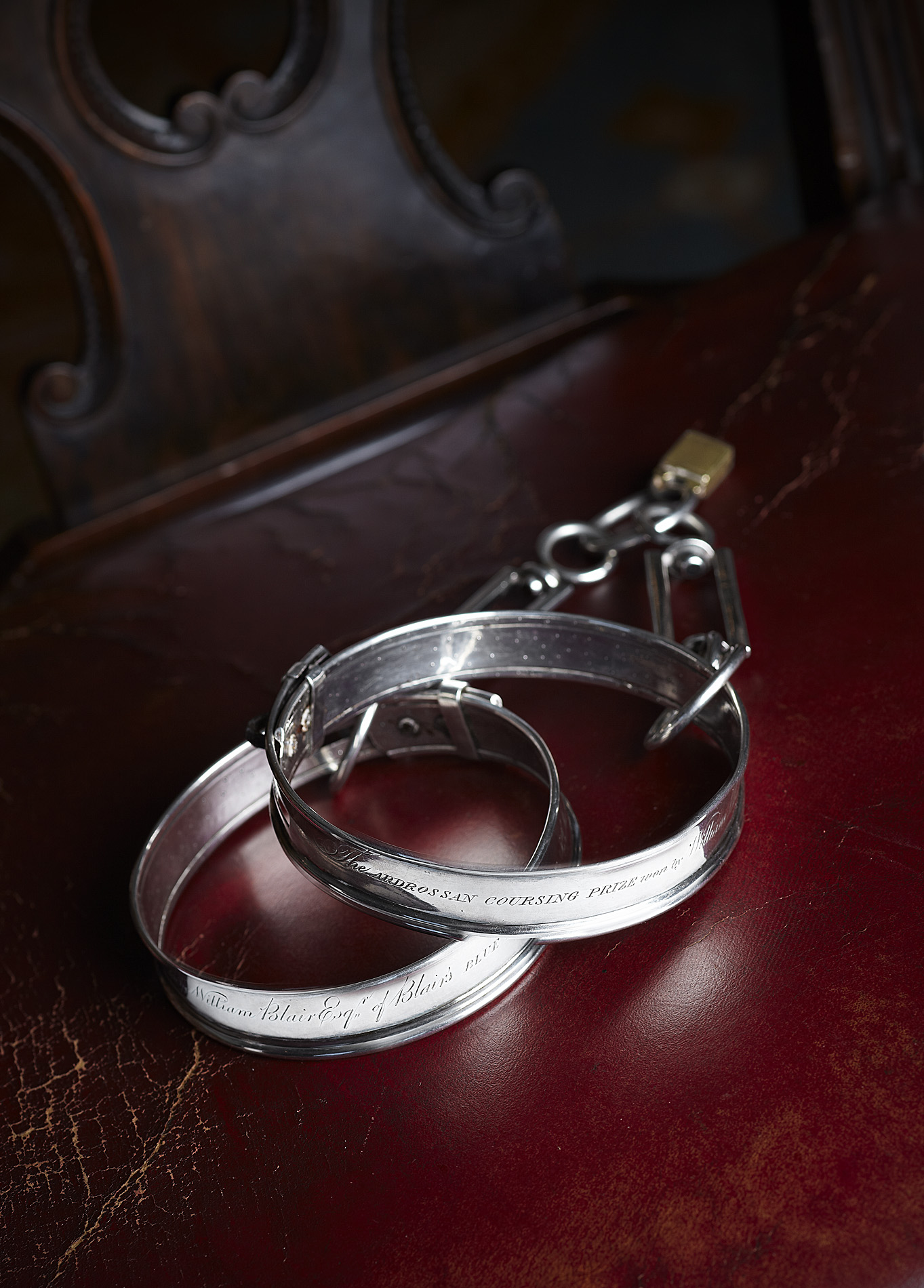
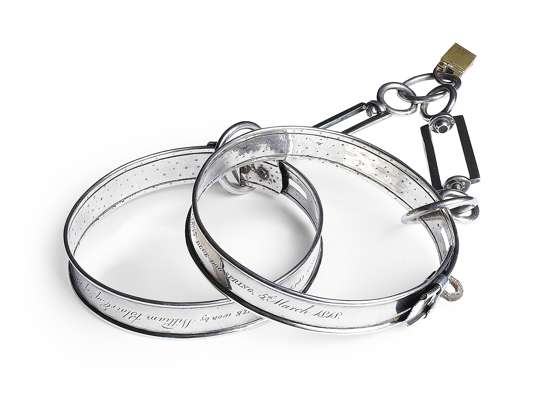
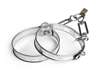
RARE PAIR OF GEORGE III SILVER PRIZE GREYHOUND COLLARS
ROBERT GRAY & SONS (OF GLASGOW), EDINBURGH 1817
Auction: Day Two: 15 March 2012 From 10am
Description
the collars of simple circular form with moulded rim and engraved inscription, with twin locating loops and steel catch, both joined by alternating long and circular link chains (2)
11cm diameter, 2cm high, overall length 26.5cm, combined weight 8oz
Note:each inscribed 'The Ardrossan coursing prize won by William Blair of Blair Esq, Blue dog Spring, 5th March 1818'
Footnote
The presentation of silver prize dog collars in Scotland does appear somewhat of a tradition, however the survival of these prizes appears much rarer than one would expect. This becomes far clearer when the number of clubs across Scotland is taken into account and the number of prize meets per year. To date it appears as few as six or seven pairs (including this pair) are recorded, two pairs of which are held by the National Museum of Scotland. The earliest pair recorded are 1813, presented by the Midlothian Coursing club (in a private collection) with these present examples being the second earliest.
This pair are among the plainer in style, due to the earlier date and the fact they were retained by the winner; rather than some of the later examples which were represented and re-engraved each year. The fact the pair still survives with the original chains is also unusual.
The sport of hunting and coursing with hounds has deep historical roots and was introduced in Britain from the earliest times. The formalised rules and standards for the sport were officially introduced during the reign of Queen Elizabeth I (1558-1603) and were drawn up by the Duke of Norfolk. The sport grew quickly and steadily in popularity throughout the country and the first established coursing club was set up at Swaffan in 1776, followed by the Ashdown Park meeting in 1780. The Ashdown Park meeting was for many years considered the premier event in the coursing calendar.
In Scotland the sport appears to have taken longer to become the standardised sport with established rules as in England and the larger coursing clubs in turn took slightly longer to become established. The first clubs in Scotland were the Midlothian Coursing Club and the Tweeddale Shooting and Coursing Club (named after its patron the Marquis of Tweeddale), in 1790.
Members of the original coursing clubs were often amongst the great and good of the areas and the sport was considered one of gentlemen and the upper classes. This is reflected in the high quality prizes, such as theses collars, presented by the clubs and the members known through these presentations. The list of members, evidenced by these prize winning dogs and presentations, show many titled families, important business men (perhaps most aptly demonstrated with the membership of goldsmith Robert Gray of Glasgow, the maker of these collars, in the Renfrewshire Foxhounds Club), and indeed members of Parliament.
The popularity of greyhounds and, in turn, coursing continued for many years until the rise of thoroughbred horses and horse racing throughout Europe. The following of this new sport by many Royal Households and Courts started the slide in popularity among the upper classes and the slow decline in interest throughout the nation of greyhound coursing