

Lot 68
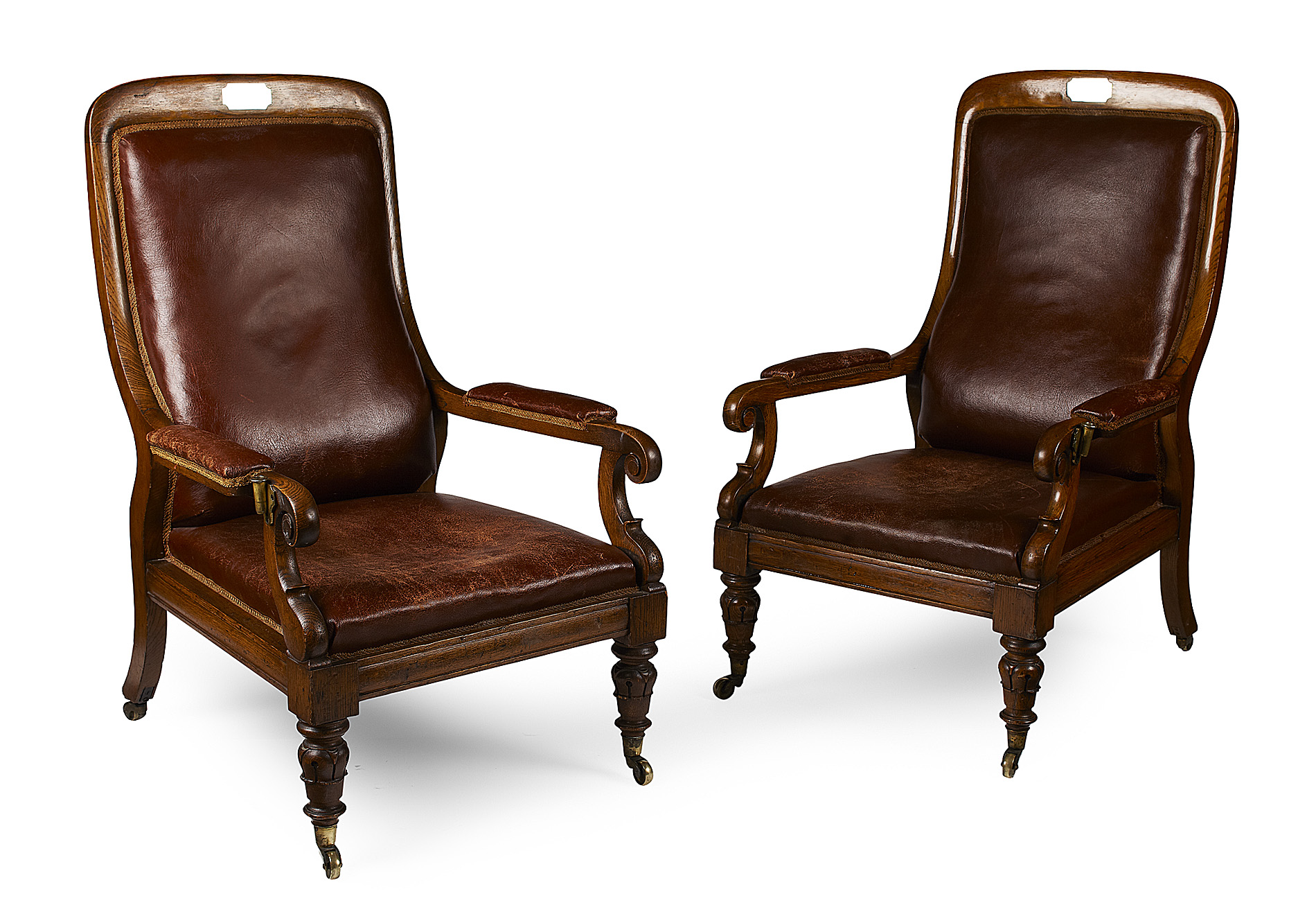
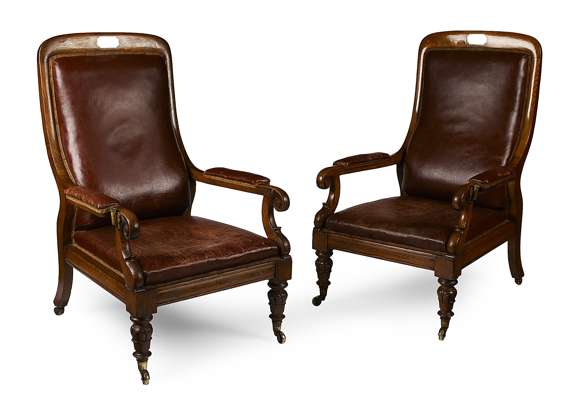
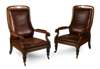
MARITIME INTEREST: PAIR OF EARLY VICTORIAN OAK FRAMED AND LEATHER UPHOLSTERED LIBRARY ARMCHAIRS
CIRCA 1842
Auction: Day One: 14 March 2012 From 10am
Description
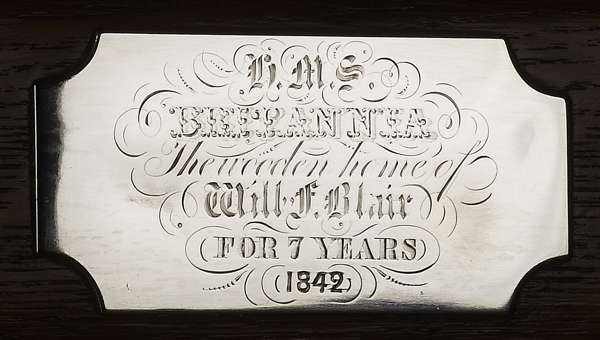
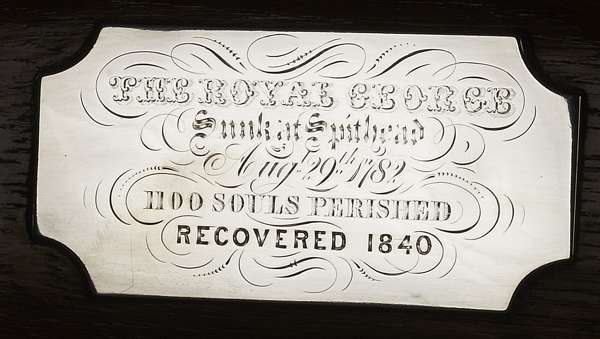
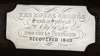
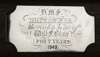
each with high padded back and seat in red leather flanked by part padded arms ending in scrolled hand holds, raised on lappet carved legs with brass caps and castors, one chair fitted with a brass and oak adjustable bookrest and bearing a white metal plaque inscribed 'HMS Brittania/the wooden home of/Will. F. Blair/for 7 years/1842', the other chair lacking bookrest, bearing similar plaque engraved 'The Royal George/Sunk at Spithead Aug 19th 1782/1100 souls perished/Recovered 1840' (2)
69cm wide, 112cm high, 72cm deep
Footnote
Note: HMS Britannia was a 120-gun first-rate ship-of-the-line of the Royal Navy, laid down in 1813 and launched on 20 October 1820. Commissioned in 1823, she saw service in the Mediterranean from 1830 to 1841. She was decommissioned in 1843, before returning to service for the Crimean War, from 1851-4. She returned to England at the beginning of 1855 and that year became a hospital ship at Portsmouth, then a cadet training ship in 1859. She was moved to Portland in 1862, then Dartmouth in 1863. She was finally sold for scrapping in 1869. These timbers were presumably removed when she was first decomissioned in 1842-3.
HMS Royal George was a 100-gun first-rate ship-of-the-line of the Royal Navy, built at Woolwich Dockyard and launched on 18 February 1756. The largest warship in the world at the time of launching, she saw service during the Seven Years' War, as Admiral Sir Edward Hawke's flagship at the Battle of Quiberon Bay and later taking part in the Battle of Cape St Vincent. She sank whilst undergoing routine maintenance work, anchored off Portsmouth on 29 August 1782 with the loss of more than 1,000 lives - one of the most serious maritime losses to occur in British waters. In 1840 the broken wreckage was destroyed by the Royal Engineers in a huge controlled explosion that shattered windows as far away as Portsmouth and Gosport. Several of the salvaged bronze cannon were melted down to form the base of Nelson's column in Trafalgar Square. Timber from the ship was also used to make the billiard table for the North Wing of Burghley House, Lincolnshire.