

Lot 339
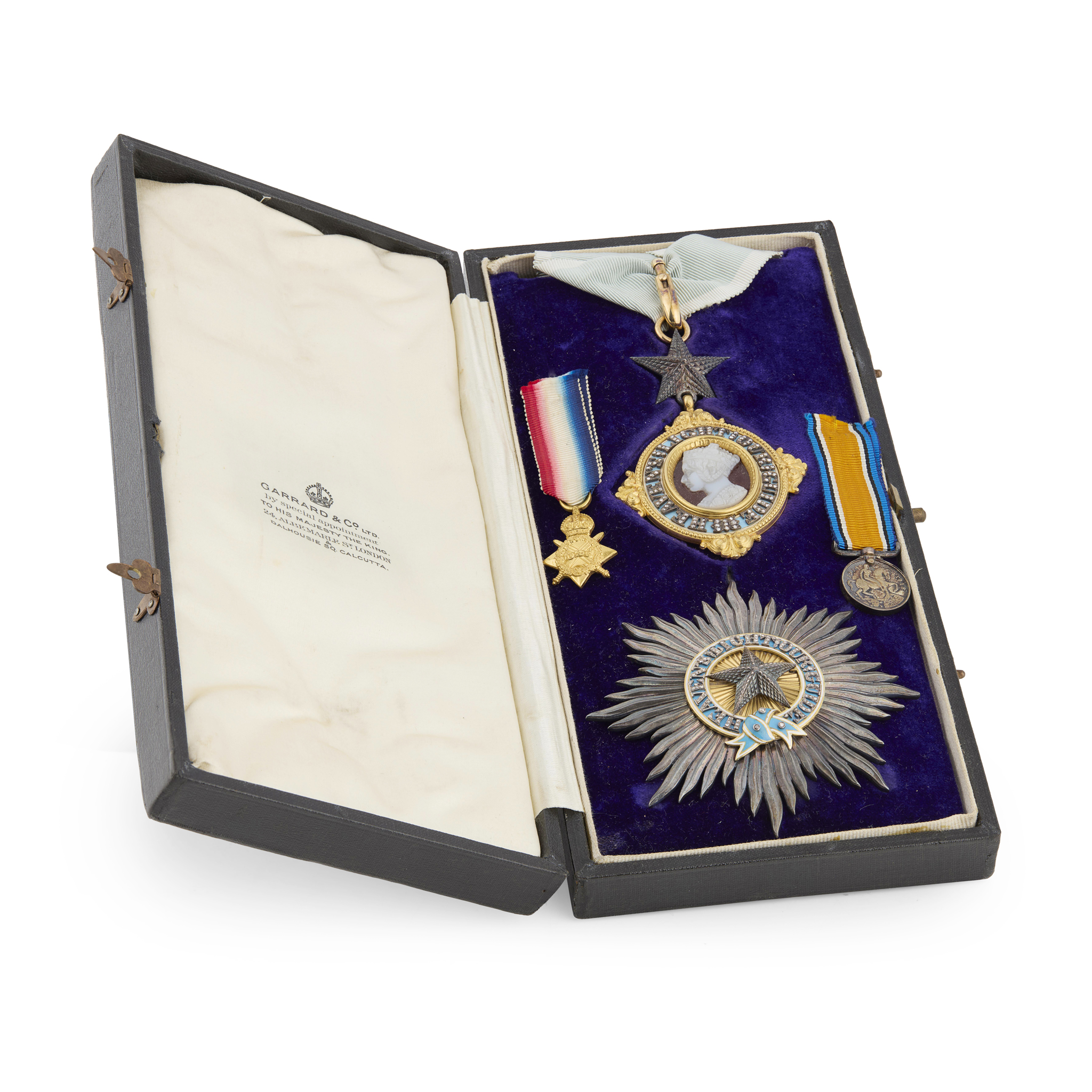
THE MOST EXALTED ORDER OF THE STAR OF INDIA
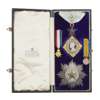
K.C.S.I.,KNIGHT COMMANDER'S SET OF INSIGNIA
Auction: 22 September 2026 from 10:00 BST
Description
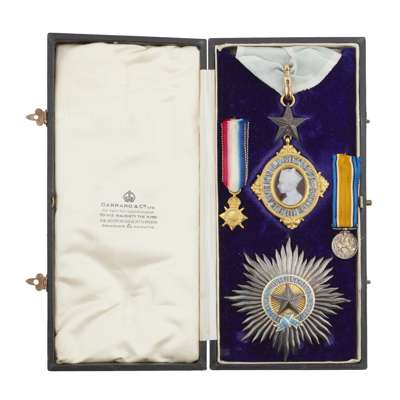
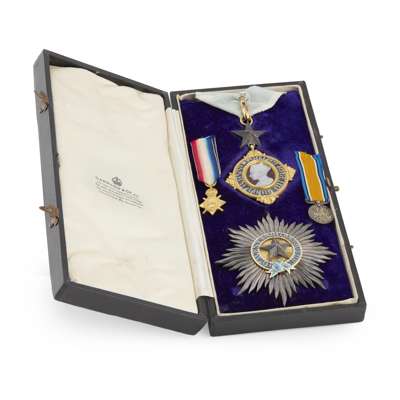
Comprising neck badge and breast star, the central carved cameo of a youthful Queen Victoria, in a blue enamel border, the motto of the Order set with small diamonds, suspended from a five-pointed white metal star with yellow metal ring and ribbon loop with spring-catch, the breast star in white and yellow metal and enamels, the motto of the Order set with diamonds, the reverse fitted with pin for wearing, the set contained in its Garrard & Co. Ltd case of issue with ribbons; together with miniature medals of 1914-15 Star Medal and a George V British War Medal 1914-18
Footnote
Sir Alexander Frederick Whyte (1883 –1970)
Frederick Whyte was a British civil servant, diplomat, and writer, notable for his contributions to both governance and literature, particularly for his contributions to understanding the political and cultural landscape of the early 20th century.
Born and educated in Edinburgh at Edinburgh Academy, and then Edinburgh University. He was the founder and editor of The New Europe (1917–1920), a well-known weekly read by political leaders and students.
The son of Alexander Whyte (1836 – 1921), who became Moderator of the General Assembly of the Free Church of Scotland in 1898. The family lived in a townhouse at 7 Charlotte Square, in Edinburgh's First New Town. Whyte encouraged education and as an ecumenicist, would have encouraged his family in all pursuits. The house is now owned by the National Trust for Scotland and open to the public as The Georgian House, Edinburgh.
Whyte began his career in the Indian Civil Service, where he held key administrative positions, including membership in the Central Legislative Assembly of India. His experience in colonial administration provided him with a deep understanding of political and social structures, which he later reflected in his writings.
Whyte also served in diplomatic roles, representing British interests abroad, and was recognised for his efforts in fostering international understanding during a period of significant political change. It was this work which he was awarded the Order of the Star of India for in 1925.
In addition to his public service, he was a prolific author, publishing works on politics, society, and the governance of India. His writings combined practical insights from his administrative career with broader reflections on culture and diplomacy.
In 1927, Sir Frederick sat for the photographer Walter Stoneman (1876–1958) and this bromide print is in the collection of the National Portrait Gallery accession number NPG x162725
Throughout his life, Frederick Whyte exemplified a commitment to public service and intellectual engagement, leaving a legacy that bridges the worlds of administration, diplomacy, and literature.